

Tender for major upgrade of Changi Airport Terminal 3 to be issued in second half of 2026
The update will emphasise digitalisation and robotics, some of which will be pilot projects for Terminal 5

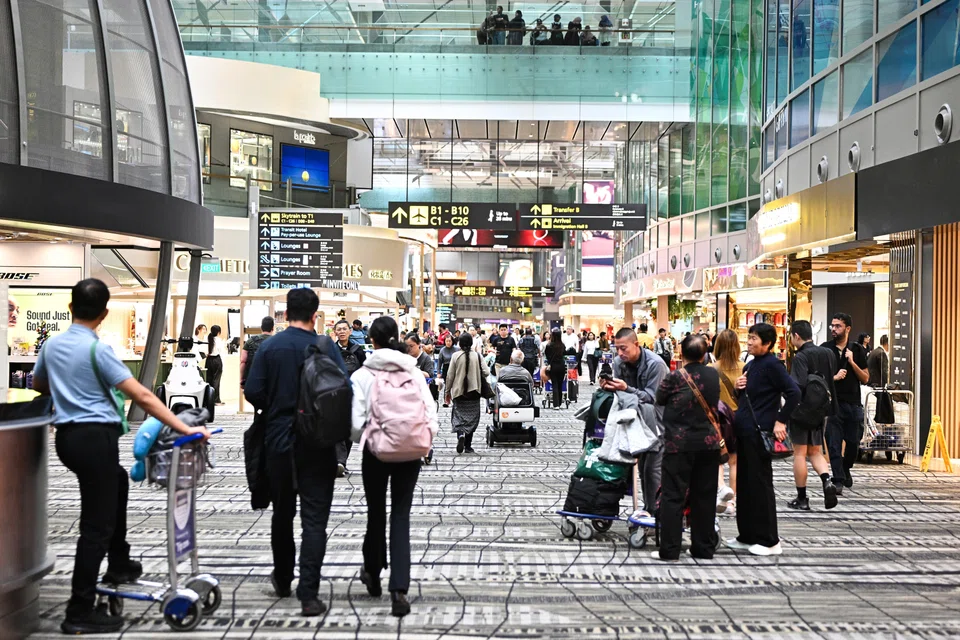
[SINGAPORE] A major upgrade to Changi Airport Terminal 3 (T3) will kick off this year, with the tender to be issued in the second half of 2026, said Acting Minister for Transport Jeffrey Siow.
Speaking at the Changi Airline Awards on Wednesday (Apr 29) evening, Siow said that the main objective of the upgrade is to improve passenger throughput, especially during peak hours.
More digital technology and robotics will be included to improve self-service check-in, security screening and toilet cleaning. Some will serve as test beds to be implemented at a larger scale when Terminal 5 (T5) begins operations.
He added that the update emphasises passenger throughput because the airport’s traffic will continue to grow between now and the completion of T5, which is expected to take around 10 more years.
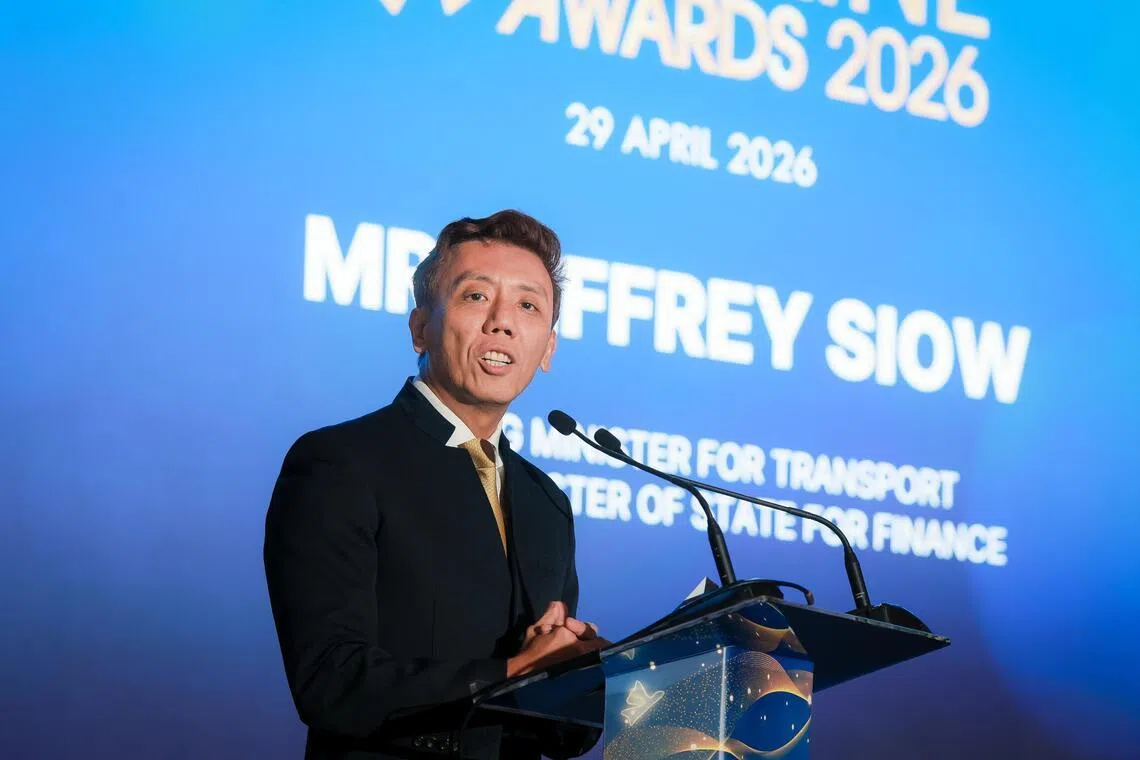
“We want to make sure Changi passengers continue to experience the same level of comfort and service that they are used to,” he noted. It is likely to be the airport’s final, major upgrade before T5 is completed, he added.
Part of airport’s S$3 billion upgrade
Mayur Patel, commercial and industry affairs leader for the Asia-Pacific at travel data provider OAG, said the update is a “natural next step” following the revamp of Terminal 2. That refurbishment was completed in 2023 and continued Singapore’s approach of introducing new technology and elevating the passenger experience across the airport.
Mabel Kwan, managing director at consultancy Alton Aviation, said T3’s update will help to maintain Changi’s competitiveness.
Noting that “it has been some time since T3 has been upgraded, and T5 will take a decade or so”, she said: “If we believe in the continued growth of the region, then this is a step towards making sure that we maintain and grow market share.”
She also pointed out that competing regional air hubs including Kuala Lumpur, Bangkok and Hong Kong have either recently finished upgrades or are planning improvements.
SEE ALSO

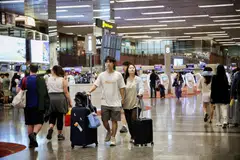
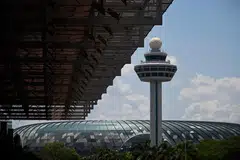
The enhancements to T3, the works for which are expected to begin by the end of 2026, are part of a S$3 billion move to upgrade the airport over six years that was announced by operator Changi Airport Group (CAG) in November 2024. It is being funded by increased airport fees for passengers and airlines.
Then, the operator said T3’s improvements would boost handling capacity, along with commercial offerings and energy efficiency. The terminal opened in 2008 and has not undergone any major refurbishments since.
Upgrades to other parts of Changi include more Skytrain cars and refreshed sub-systems, a new inter-terminal baggage-handling system on the rooftops of Terminals 1 and 3, preparing airside infrastructure to accommodate Boeing B777-9 aircraft, and larger immigration halls at Terminal 1, among other things.
The upgrade will also allow new technologies to be tested ahead of larger-scale adoption in T5, added Kwan.
“With T5 some time away, you need to ‘crystal ball’ what it will become, to plan it all out, and that carries some element of risk,” she said. “Doing test beds at T3 alleviates some of the risk of implementing new technologies at scale.”
Positive on long-term trajectory
In the 12 months ended March 2026, Changi handled a record 70.4 million passengers.
Siow said that while many flights have been affected by the Middle East conflict, Singapore worked with airlines to launch more than 90 alternative flights to locations such as Europe and Australia. The Republic is also improving its standing as an air cargo hub, he noted.
Changi handled more than half a million tonnes of airfreight in the first quarter of 2026, nearly an 8 per cent improvement year on year. Both exports and imports grew, with key markets including China, the US, Australia and India.
As part of Singapore’s Economic Strategy Review, the country is shoring up its air cargo sector and is bringing in more freight partners to complement existing ones such as FedEx, DHL and UPS.
Such a move will allow the Republic to play a larger role in key freight routes, such as between Australia and Asia.
According to the International Civil Aviation Organization, global air traffic, including passenger and cargo, will nearly treble by 2050 and the Asia-Pacific will lead the sector’s growth.
“Therefore, notwithstanding the immediate challenges, the long-term trajectory for aviation continues to be upward,” Siow said.
At the Changi Airline Awards, Singapore’s low-cost carrier Scoot was named Partner of the Year for its contributions to strengthening Changi’s connectivity and stimulating travel demand, said CAG.
The airline added 13 new destinations, 10 of which are new to Changi, improving the airport connections and extending its network to more cities in South-east Asia. Scoot also created partnerships with six airlines at Changi and worked with the airport on joint marketing efforts.
Singapore Airlines won the top spot for passenger carriage, ahead of Scoot, AirAsia, Qantas and Cathay Pacific Airways. It also clinched the top award for cargo carriage, ahead of FedEx Singapore, Scoot, Cathay Cargo and China Airlines.
Decoding Asia newsletter: your guide to navigating Asia in a new global order. Sign up here to get Decoding Asia newsletter. Delivered to your inbox. Free.
Copyright SPH Media. All rights reserved.
TRENDING NOW

DBS, OCBC, UOB rout lops billions off STI as inflation, rate concerns spook investors

Grab CEO’s wife Chloe Tong on life with Anthony Tan and finding her purpose

OCBC sheds S$8 billion in value as shares close nearly 6% down; analysts cautious on banks

Deal between tycoon friends sparks scrutiny of Philippine power sector

