

Fewer delays, more secure transactions: How interoperable digital documents are speeding up cross-border trade
Using public blockchain and cryptographic standards, open-source TradeTrust allows electronic bills of lading to be securely issued, verified and transferred in a decentralised framework
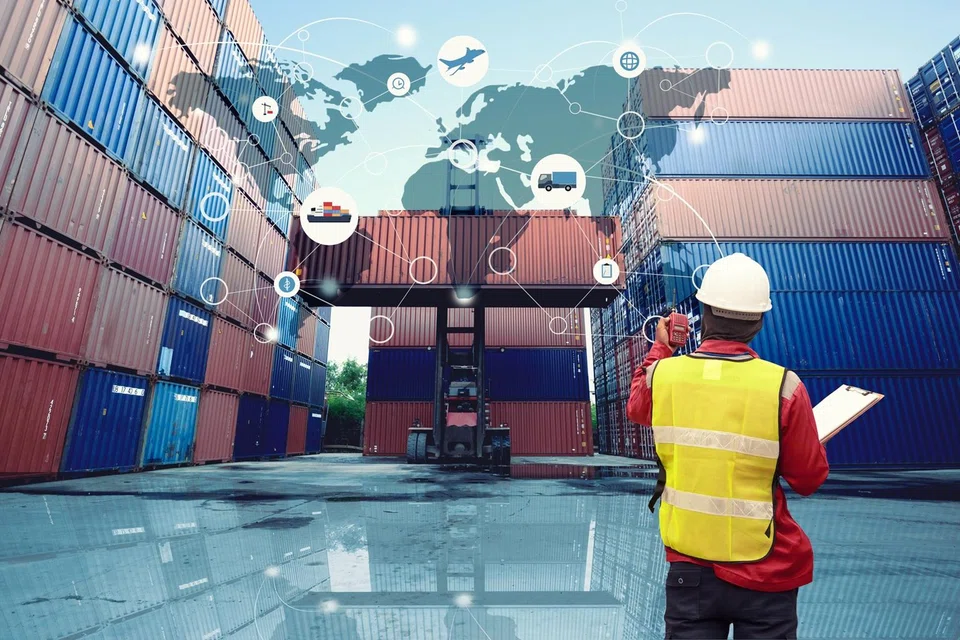
When one of China’s largest agri-food processing companies first used a digital trade document to facilitate a shipment to Singapore in 2023, its team was unsure what to expect.
Going digital promised faster transactions for COFCO Industrial Foods, as well as fewer errors and lower costs. But could an electronic bill of lading (eBL) – a key shipping document that confirms ownership of goods – be trusted? Would it be legally recognised? And would every party handling the shipment accept it?
That first shipment – a container load of canned food manufactured in Xiamen and bound for Singapore-based distributor Yit Hong – answered COFCO’s questions.
The documents linked to the shipment, which were previously sent by courier, were exchanged digitally and securely. This helps to speed up cargo release by reducing document transfer time from days to just a few hours. And every party in the supply chain could independently verify the provenance and authenticity of the eBL.
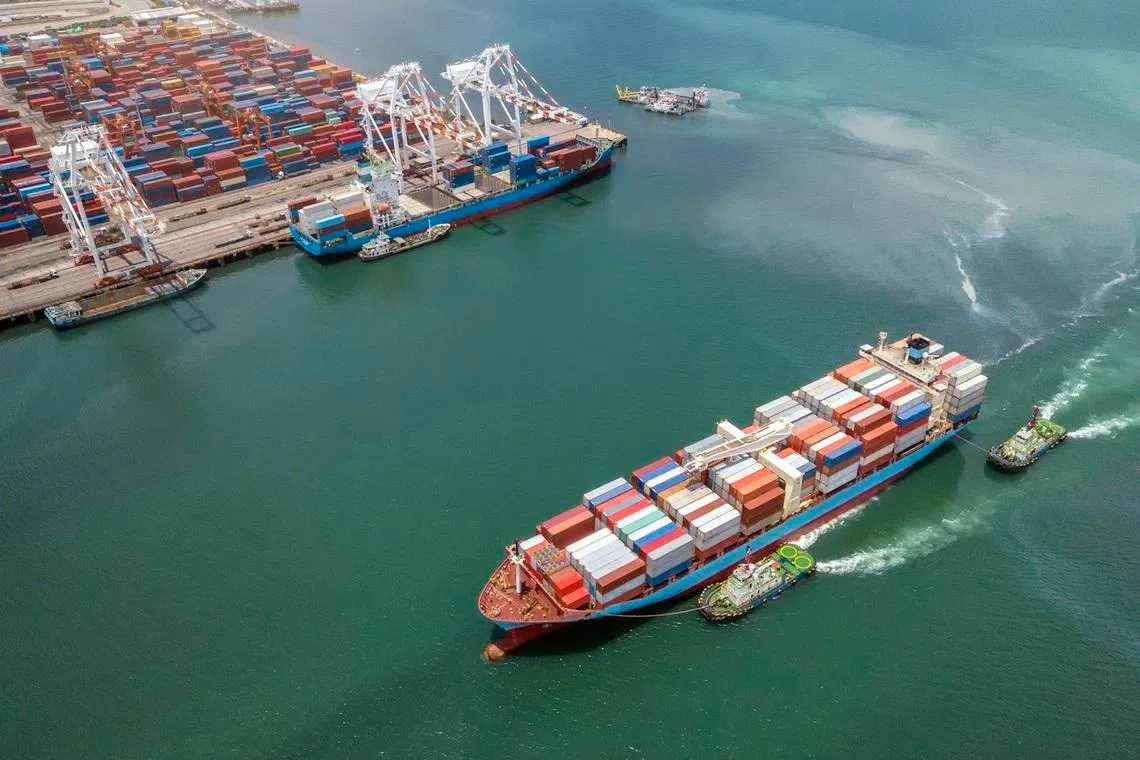
Following the trial, COFCO has begun adopting paperless trade document workflows using AEOTradeChain, a digital trade platform developed by Beijing-headquartered AEOTrade. The latter is a “one-stop shop” for digital trade transactions, supporting end-to-end processes between businesses, financial institutions and government agencies, including supply–demand matching, logistics fulfilment, customs clearance processing and payment settlement.
These workflows are enabled by TradeTrust, an open-source framework developed by Singapore’s Infocomm Media Development Authority (IMDA).
Mr Liau Eng Soon, cluster director at IMDA’s digital utilities cluster office, says that TradeTrust was created to address both interoperability and legal enforceability, two critical pillars for cross border digital trade to scale.
IMDA observed that as global trade increasingly digitalised, many solutions were being developed independently but were not interoperable.
“Platforms were creating their own ecosystems, but cross-platform exchange remained complex or impossible,” says Mr Liau.
Enabling cross-platform interoperability
AEOTrade founder Mr Yang Zetao says that interoperability is one of the key concerns of companies involved in international trade, and it is also the core starting point of the AEOTradeChain’s architectural design.
“Most of the companies we approach welcome this collaborative model, but some worry about what will happen to their existing digital systems if they adopt it,” says Mr Yang.
He explains that TradeTrust is not a tech or digital system on its own but an open-source framework that can be plugged into existing platforms, helping enterprises connect to the global digital trade network without replacing their original systems.
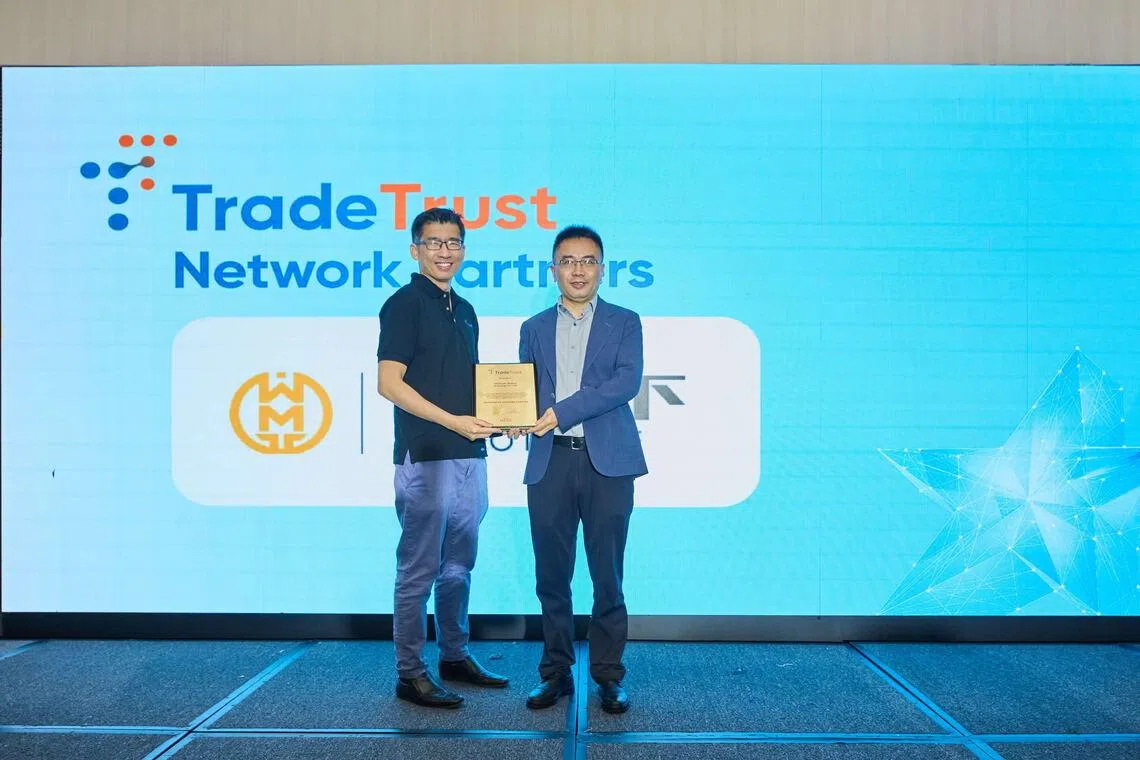
“We’re not trying to replace their systems. Once everyone connects through TradeTrust, all systems can interconnect and interoperate instead of remaining isolated silos,” he says. “The distributed design does not rely on a single central platform, ensuring data security while enabling enterprises to achieve paperless transactions and automated operations at a lower cost.”
Mr Liau explains it as an “Internet of trade documents” that ensures electronic documents can be verified for authenticity, provenance and title transfer while they are exchanged across different systems.
It works similar to email – just as you can send an email from Gmail to Outlook without both platforms using the same provider, TradeTrust allows different systems, governments and businesses to exchange electronic trade documents seamlessly.
While the 2023 shipment validated digital eBLs, a 2025 pilot marked a breakthrough in true cross-platform interoperability.
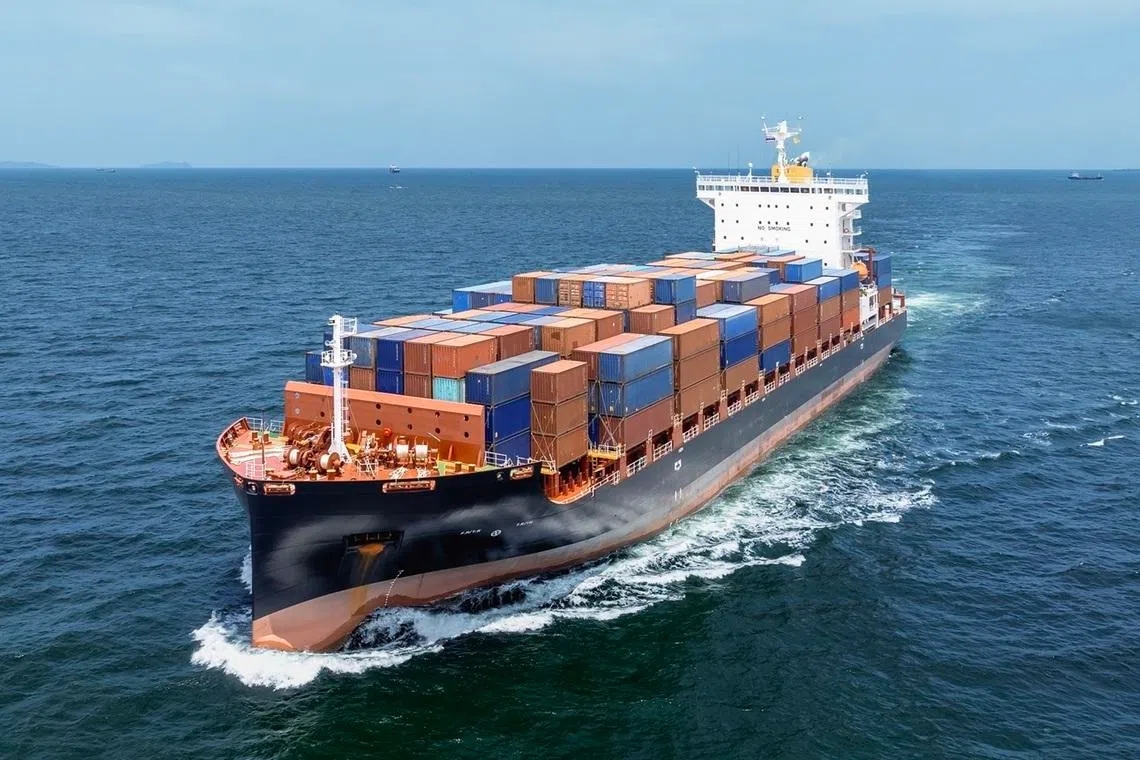
TradeTrust facilitated not only COFCO as the exporter, but other players in the supply chain, including importer Yit Hong, carrier Pacific International Lines (PIL) and banks to do paperless cross-border trade end to end. Bank of China and Industrial and Commercial Bank of China acted as remitting banks, and Singapore’s DBS and UOB served as collecting banks.
The project also demonstrated how TradeTrust uses public blockchain technology and cryptographic standards to digitise, verify and transfer ownership of eBLs securely and in a decentralised manner, without the need for a central authority.
The seamless digitalisation and cross-platform interoperability have enabled Mr Yang to convince more Chinese companies to adopt TradeTrust.
Today, AEOTrade works with 10 Chinese trading companies, including COFCO, that adopt TradeTrust through AEOTradeChain, as part of a growing ecosystem comprising thousands of partners worldwide, including logistics providers and banks.
Cross-border ready
Beyond the China-Singapore route, TradeTrust has also proven its effectiveness across borders, with the completion of a successful cross-region trade transaction involving China, Singapore and South Africa in January this year.
The project, an end-to-end interoperable digital Documents against Payment (D/P) live trade, involved the import of anode copper by China’s CNMC New Bridge Logistics & Trading from Durban Port located on South Africa’s east coast to Ningbo Port in the Chinese province of Zhejiang. AEOTradeChain supported the project that involved PIL as the carrier initiating the eBL, with DBS Bank and OCBC Bank acting as remitting banks, and Bank of China’s Jiangxi Branch serving as the collecting bank.
All parties reported significant gains in efficiencies.
For the carrier PIL, the time taken for title transfer dropped from 20 days under the traditional paper-based model to just five days, and the eBL processing time was reduced from five to 10 days to just five minutes. Cross-border digital collaboration saved mailing costs of around 400 yuan (approximately S$73) per transaction, and reduced document error rates by 93 per cent.
For the banks, Bank of China was able to directly verify documents through TradeTrust, significantly enhancing the security and efficiency of its cross-border trade finance. For OCBC, the use of blockchain-enabled eBLs not only supported the bank’s sustainability strategy but also reduced fraud risk, strengthened internal controls and lowered verification costs.
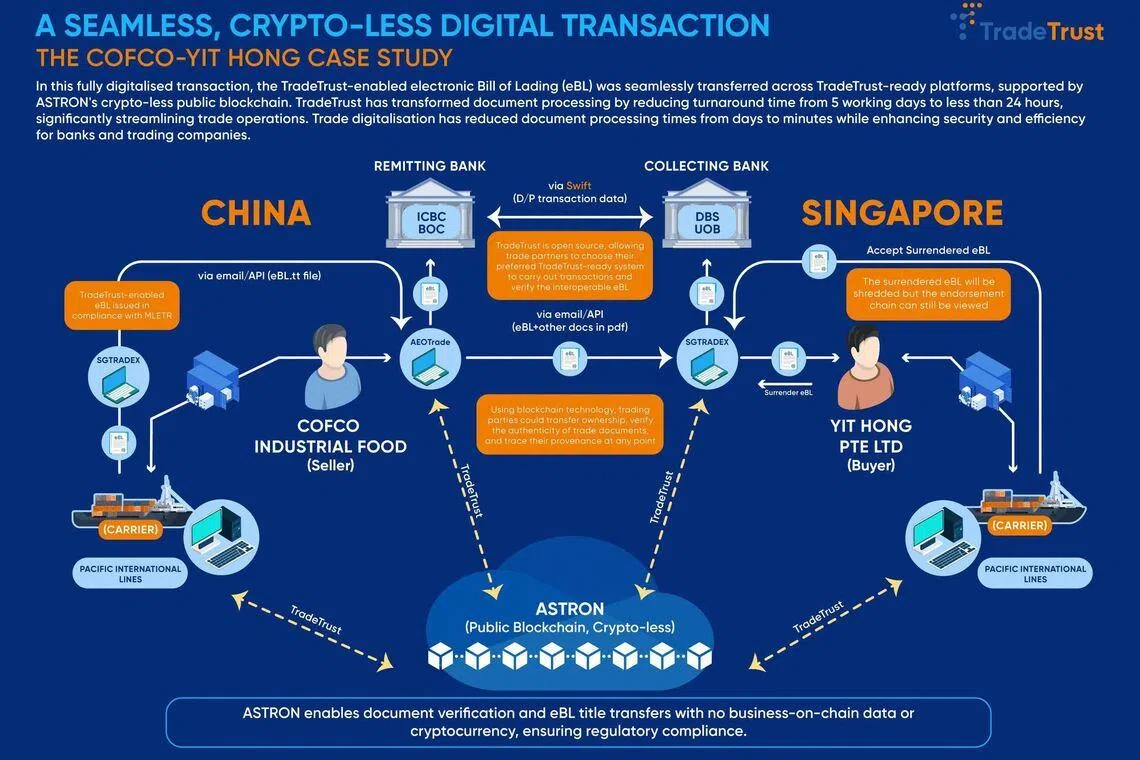
Measurable outcomes such as these have encouraged companies globally in the trade, logistics, finance and supply chain sectors to adopt TradeTrust. The TradeTrust network today spans across more than 25 countries and over 47,000 companies.
Mr Yang notes that as the digitalisation of trade accelerates, companies will need trusted frameworks such as TradeTrust to transact securely and efficiently across borders.
“Trust is the most important element in cross-border trade, and AEOTradeChain embeds that trust directly into the entire process of digital trade documents and transactions through technologies such as distributed digital identities and blockchain attestation,” he says. “TradeTrust’s open-source framework allows this trust to be verified across systems and national borders.”
“IMDA developed TradeTrust as an open-source platform because Singapore believes no single platform should dominate international trade, but systems should be able to operate seamlessly,” says Mr Liau.
“By anchoring TradeTrust in open-source technology and aligning it with international legal frameworks, Singapore demonstrates our commitment to transparency, neutrality and trust,” he says.
“Singapore aims to play a constructive role as a neutral convenor, bringing together governments, financial institutions, carriers, traders and technology providers to support interoperable frameworks that benefit the wider ecosystem.”
What is TradeTrust?
- It is an open-source framework that digitises, verifies and transfers trade documents on the public blockchain, including bills of lading, certificates of origin, invoices, warehouse receipts.
- This open-source platform can be used by a wide range of parties including shippers, consignees, logistics service providers, financial institutions, and government agencies for customs clearance.
- It functions as an “Internet of Trade Documents”, a network where electronic trade documents move seamlessly across different platforms.
- It provides implementation support with technical standards, and embeds legal assurance aligned with international frameworks such as UNCITRAL’s Model Law on Electronic Transferable Records (MLETR).
- It is recognised by global bodies, including the World Customs Organisation, Digital Public Goods Alliance, and International Chamber of Commerce (ICC) UK.
Find out more about TradeTrust here.

Decoding Asia newsletter: your guide to navigating Asia in a new global order. Sign up here to get Decoding Asia newsletter. Delivered to your inbox. Free.
Share with us your feedback on BT's products and services
TRENDING NOW

Good Class Bungalow market activity picks up pace on ‘realistic’ pricing
Indonesia imposes US$116 million in fines over manipulation of Sinar Mas, Prajogo-linked stocks

Singapore identifies 7 firms responsible for haze fires, notices issued urging action: Grace Fu

Once staunchly pro-China, Malaysian Chinese businesses are now distancing themselves from Beijing

