

Training providers face tougher SkillsFuture funding criteria to prioritise industry-relevant skills
New guidelines apply to 500 training providers delivering about 9,500 courses
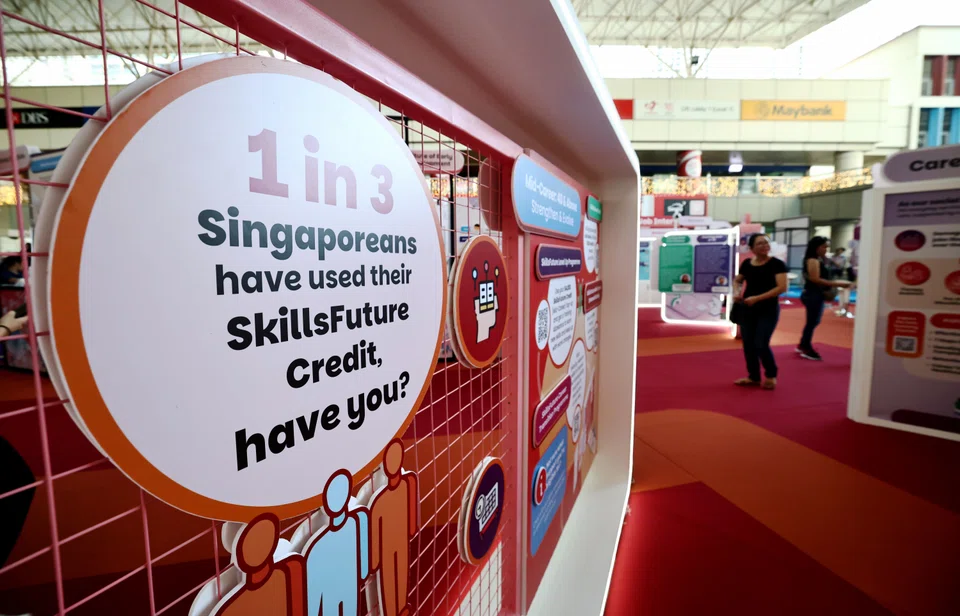
[SINGAPORE] Funding guidelines for some SkillsFuture courses have been tightened, in a move to prioritise industry-relevant skills.
From Dec 31, 2025, training providers seeking SkillsFuture Singapore (SSG) funding for new courses that aim to develop skills currently in demand must attain approval through either one of two routes, said the agency on Tuesday (Jan 27).
One way is to ensure that at least half of the skills being taught in a course must be found on SSG’s Course Approval Skills List. This list includes skills that “support good growth jobs and are important for Singapore’s economy’’.
The second way is by ensuring that courses are approved under regulatory or professional development frameworks endorsed by designated course endorsement bodies. These bodies promote mandatory skills-based training courses or Workforce Skills Qualifications-accredited classes required by government agencies or appointed entities.
Funding guidelines will also be tightened for course renewals.
From Dec 31, 2025, such providers must ensure that at least 40 per cent of course participants are sponsored by employers.
Further, from Jun 1, 2026, courses must achieve at least a 75 per cent response rate in a training quality and outcomes measurement survey, and must not fall in the lower quantile of the survey’s quality ratings.
These new guidelines will apply to about 500 training providers delivering about 9,500 courses, said SSG.
It noted that courses that cater to emerging skills or that seek to equip a person to take on a very different job are not affected by the change.


Top skills in 2025
The updates to the funding guidelines were announced at the annual Training and Adult Education Conference on Tuesday.
At the conference, SSG also identified the top “in-demand and growth skills” according to “skill clusters”.
In-demand skills refer to those that are highly sought-after by employers in the Republic, based on job postings in the past year. Growth skills refer to those for which demand has increased from 2022 to 2025.
These skills were grouped into clusters based on their content, and further refined by domain experts.
SSG found that demand for artificial intelligence (AI)-related capabilities more than doubled across sectors between 2022 and 2025. For example, within the “IT and data management cluster”, skills related to generative AI principles and applications experienced the fastest growth in demand based on jobs posting data.
“At the same time, there continues to be strong demand by employers for critical core skills such as problem-solving, collaboration and communication,” added the agency.
It has also started analysing the impact of AI on the component tasks of jobs. As AI-related capabilities expand rapidly, SSG has observed a shift in digital roles from traditional IT maintenance to AI-driven applications.
It also found that a quarter of work tasks can be significantly aided by AI, either with existing tools or by customising workflow and software.
But its analysis found a wide range of tasks that are ‘‘far less automatable and more enduring’’, thus making soft skills such as decision-making and learning agility more valued by employers.
Decoding Asia newsletter: your guide to navigating Asia in a new global order. Sign up here to get Decoding Asia newsletter. Delivered to your inbox. Free.
Share with us your feedback on BT's products and services
TRENDING NOW

Once staunchly pro-China, Malaysian Chinese businesses are now distancing themselves from Beijing

Looking beyond looming CEO succession, should UOB potentially pursue a transformative merger?

Could stablecoins be the future of money?

Grab CEO’s wife Chloe Tong on life with Anthony Tan and finding her purpose

