Trump’s pharma tariffs put Singapore at ‘greatest risk’ among major exporters if no exemptions granted: economists
Without exemptions, the effective tariff rate on the Republic’s shipments could exceed 30%, compared with 4% now

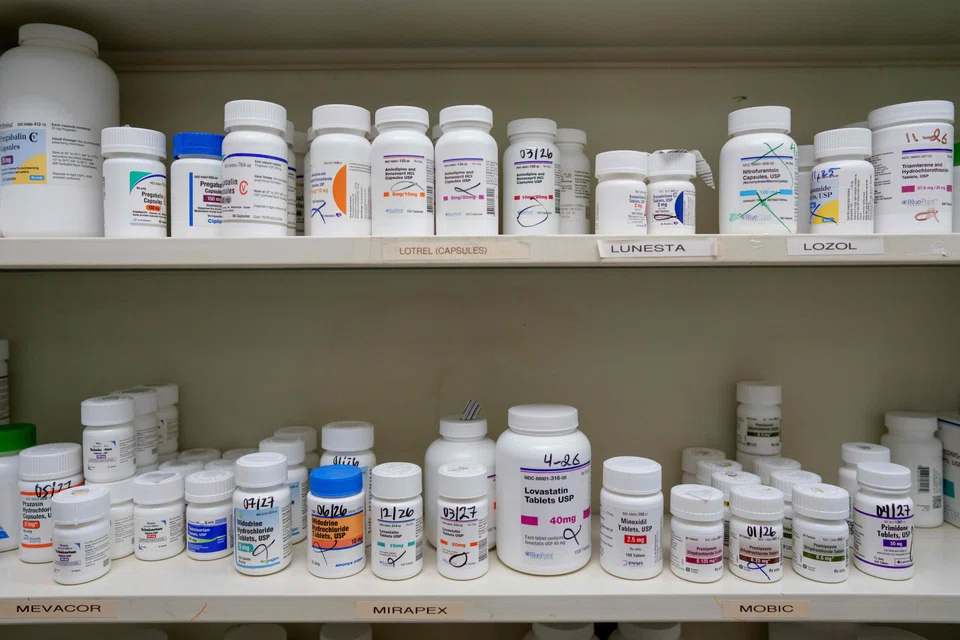
[SINGAPORE] The Trump administration’s latest tariff salvo – this time aimed at branded or patented pharmaceutical goods – could hit Singapore particularly hard, economists warned.
On Thursday (Sep 25), Trump announced a 100 per cent tariff on imports of branded or patented pharmaceutical goods from Oct 1, unless a company has already begun construction of a plant in the United States.
Pharmaceutical firms that have broken ground on US facilities will receive exemptions, Trump said.
The move marks the latest escalation in tariffs. The pharmaceutical sector had been spared from reciprocal tariffs announced in April, while Singapore remains subject to the 10 per cent baseline rate.
In response to queries from The Business Times, a spokesperson from Novartis said the 100 per cent tariff “should not have an impact” on the company, as it already has “ongoing construction” in the US.
In April, the Swiss pharmaceutical giant announced a US$23 billion investment over five years in US-based infrastructure. It expects to “announce five new sites to be under construction” before the end of the year, the spokesperson said.
Louise Loo, head of Asia economics at Oxford Economics, said that Singapore, being “focused on high-value patented drugs, faces the greatest risk unless its firms secure exemptions through active US manufacturing investments”.
She noted that without exemptions, the effective tariff rate on Singapore’s shipments would rise to well over 30 per cent, compared with 4 per cent currently.
She added that other major exporters are less exposed: Japan and South Korea are effectively shielded by trade-deal safeguards, while India may avoid the additional tariff as it mainly exports generics rather than the branded or patented drugs covered under the new measure.
DBS economist Chua Han Teng described the new pharmaceutical tariffs as a “negative development” for Singapore’s high value-added drug exports to the US. While details are scarce, he said the “downside trade impact would be mitigated by the exemption for drugmakers building a production facility in America”.
“Singapore hosts nine of the top 10 global pharmaceutical firms, with major players already establishing or expanding manufacturing operations in the US,” he added.
Yun Liu, Asean economist at HSBC, said pharmaceuticals made up 8 per cent of Singapore’s non-oil domestic exports in 2024, though only about one-third were shipped to the US.
Still, she warned that the tariff could “incentivise big pharmaceutical companies to move the supply chain to the US”, raising longer-term risks for Singapore.
She also cautioned that while the US is not the only destination for Singapore’s pharmaceutical exports, “it makes us wonder (about) the trade prospects to other markets if the sectoral tariff would trigger a supply chain relocation”.
The uncertainty lies in how quickly investment commitments already announced by major drugmakers can meet Trump’s requirement, she said.
Singapore Manufacturing Federation president Lennon Tan flagged the “uncertainty” surrounding the tariffs.
“Let’s say I’m Pfizer: I have 10 different drugs, but if I only produce two drugs in the US, does this mean there are no tariffs on all of my drugs?” he asked.
Tan said that based on his conversations with major industry players, “intense negotiations” are under way between US authorities and pharmaceutical giants. “It’s not clear on how much leeway or concessions they will get (from the US), so we’re waiting for their feedback,” he said.
He also pointed to Singapore’s latest factory output data, which showed a 7.8 per cent year-on-year fall in August, compared with economists’ forecast of a 1.9 per cent decline.
This suggests that front-loading activities are largely over, Tan said, noting that pharmaceutical players had been aware of the potential imposition of tariffs since April.
In recent months, several major companies – including Novartis, AstraZeneca and GSK – have announced plans to invest in the US or begun construction of new facilities.
The market response was muted: As at 9 pm on Friday, Novartis was up 0.6 per cent, while London-listed AstraZeneca rose 0.3 per cent.
Trump also said on Truth Social that tariffs would be imposed on kitchen cabinets, bathroom vanities and related products (50 per cent), upholstered furniture (30 per cent) and heavy trucks (25 per cent), all effective from Oct 1.