Trump’s threatened tariffs pose a win-lose conundrum for Singapore

US tariffs could hurt demand for Singapore-made goods, although the Republic may emerge as a relative beneficiary of supply chain shifts

Sharon See
Published Wed, Nov 27, 2024 · 05:00 AM
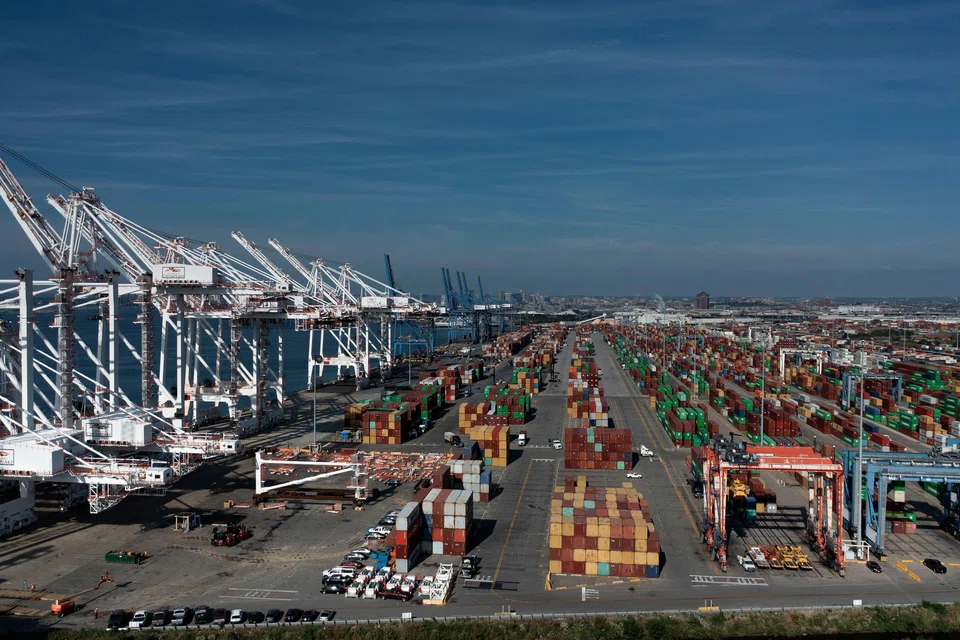
    • A view of the Port of Baltimore in Maryland. Trump's first tariff war caused a rise in outbound Chinese investment, with China's businesses setting up production plants in Vietnam as a workaround.
    • A view of the Port of Baltimore in Maryland. Trump's first tariff war caused a rise in outbound Chinese investment, with China's businesses setting up production plants in Vietnam as a workaround. PHOTO: AFP

    IF DONALD Trump’s intended tariffs dampen world trade, Singapore could be indirectly hurt – but the Republic also stands to gain from resulting supply chain shifts, said economists.

    President-elect Trump intends to slap tariffs on three of the US’ closest trading partners, including China, once he is inaugurated on Jan 20.

    He said on Monday (Nov 25) that he plans to sign an executive order to impose a 25 per cent tariff on imports from Mexico and Canada, as well as an additional 10 per cent on top of existing tariffs on China.


    If that happens, the direct impact on Singapore may be muted because, out of the three affected markets, only China is among Singapore’s top trading partners, said OCBC chief economist Selena Ling.

    But the indirect impact may be larger if the tariffs adversely affect China’s growth, she added.

    Noting that China and the US are among Singapore’s top markets for non-oil domestic exports, Ling said: “If both are in a tit-for-tat trade war, it may be a lose-lose situation with collateral damage to bystanders.”

    Asean Intelligence

    Get insights into businesses across South-east Asia

    Get the free report

    Another indirect effect is that US tariffs could hurt demand for goods that Singapore companies are involved in producing.

    President of the Singapore Manufacturing Federation Lennon Tan said: “Many Singaporean manufacturers are integrated into global supply chains that include the affected countries...

    “Components produced here might be exported to China for assembly, before being shipped to the US,” he added. “Higher tariffs could reduce demand for such products, affecting our export volumes.”

    More broadly, increased trade tensions raise uncertainty in global markets, which may affect business confidence and investment decisions in Singapore, said Tan.

    “Companies might face challenges such as longer lead times, increased costs and the need to find alternative markets or suppliers,” he added.

    Front-loading and rerouting

    However, as the tariffs will be levied in January at the earliest, Singapore could benefit from a front-loading of shipments now, boosting trade volumes in the interim, some economists pointed out.

    “We could see businesses start to front-load orders ahead of the potential tariff increase, and look for alternative supply from other markets,” said Khoon Goh, head of Asia research at ANZ.

    Maybank senior economist Chua Hak Bin said: “In the longer term, the additional tariffs on China would likely accelerate the shifts in manufacturing supply chains to South-east Asia, including Singapore.”

    “Singapore may emerge as a relative beneficiary if Asean and Singapore stay under the radar, and are spared from Trump’s tariff tantrums,” he noted.

    Such shifts happened when Trump waged a trade war against China during his first term. At the time, China’s exports to the US were rerouted through South-east Asia, noted Oxford Economics economist Sheana Yue.

    This time, there may be a similar increase in flows through Singapore, given its role as a re-exporting hub, she said.

    Trump’s first tariff war also caused a rise in outbound Chinese investment, she added. For instance, Chinese businesses set up production plants in Vietnam to circumvent US import requirements.

    “We saw that occur in Singapore too, primarily in the higher-value manufacturing and services space,” she said. “This will probably occur again during Trump’s second presidency.”

    Keep guessing

    However, South-east Asia could now come under fire for benefiting from the diversion of Chinese trade, and may also face tariffs in Trump’s second term, said Moody’s Analytics economist Denise Cheok.

    “Singapore is especially vulnerable because of its heavy reliance on exports to drive the economy, compared to other Asean economies such as Malaysia, Indonesia and the Philippines, which have a resilient domestic market to buffer against external shocks,” she said.

    OCBC’s Ling agreed that even if supply chains shift, it is uncertain if more economies will be “increasingly caught in Trump’s tariff net”.

    Yue of Oxford Economics noted the tariffs signal that free trade agreements – which Canada, Mexico and Singapore have with the US – are not a “foolproof shield” from Trump’s wider agenda.

    Still, Singapore’s trade deficit with the US might mitigate the amount of tariffs potentially levied on the Republic, said Cheok of Moody’s Analytics.

    What Trump actually does in January remains to be seen. The tariff levels in his Monday announcement are lower than what his campaign promised – 60 per cent on imports from China and 10 to 20 per cent on those from the rest of the world.

    This discrepancy has led some analysts to speculate that the latest announcement may be a bargaining chip.

    “The rationale for the tariffs goes beyond the usual unfair trade practices,” said Maybank’s Dr Chua. For instance, Trump said the intended tariffs on Mexico and Canada are a response to illegal border crossings and drug trafficking.

    Dr Chua believes the 10 per cent tariff on China is “probably just the first salvo which will be ratcheted up gradually closer to 60 per cent over his term, unless China moves quickly to address his grievances”.

    Decoding Asia newsletter: your guide to navigating Asia in a new global order. Sign up here to get Decoding Asia newsletter. Delivered to your inbox. Free.

    Copyright SPH Media. All rights reserved.