

Umbrella body for social enterprises to work with partners to raise S$10 million for the sector
The Singapore Centre for Social Enterprise will provide the initial sum and lean on blended finance for the rest
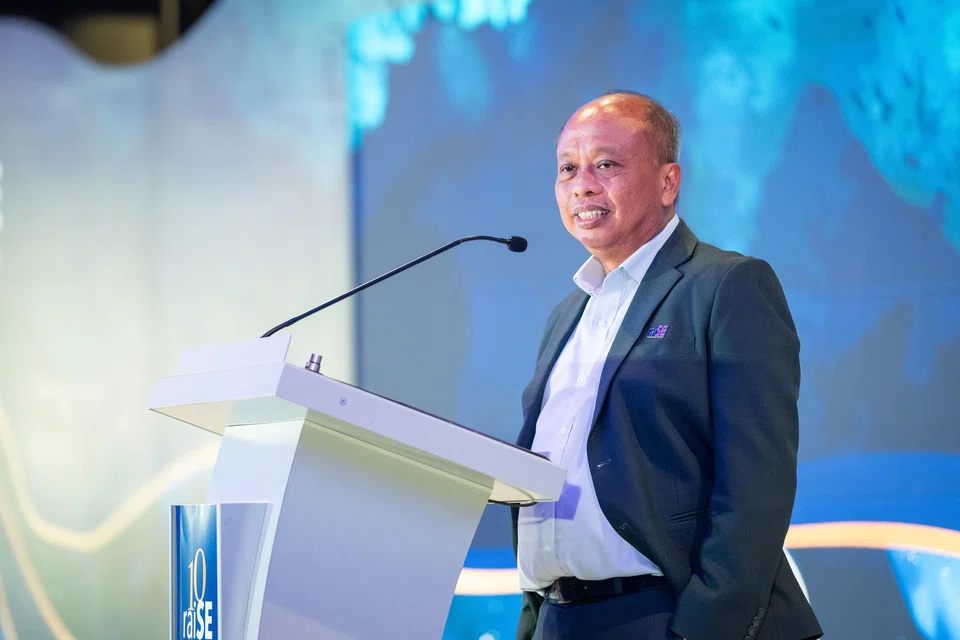
[SINGAPORE] The Singapore Centre for Social Enterprise (raiSE) aims to catalyse S$10 million in blended finance options over the next five years, in partnership with funders, to strengthen the Republic’s ecosystem of social enterprises.
It will curate pathways between social enterprises and follow-on funders, including foundations, venture capital funds and private investors.
Alfie Othman, chief executive officer of raiSE, said: “raiSE’s role is to build a trusted bridge by preparing our portfolio of social enterprises to be investment-ready, while also engaging funders early to understand their thematic interests, risk appetites and ticket sizes.”
Based on its annual report for 2024 to 2025, the organisation has nearly 700 social enterprises as members.
This move addresses the “missing middle” of the funding continuum beyond early-stage support, where enterprises often struggle to find catalytic capital needed for sustained growth.
Martin Tan, CEO of philanthropic organisation The Majurity Trust, said: “Our research shows a persistent ‘missing middle’ in Singapore’s funding landscape, where organisations that have outgrown grants are unable to access suitable growth capital. For social enterprises, this gap is most acute in the S$500,000 to S$1 million range, limiting their ability to scale.”
Therefore, raiSE’s goal to galvanise S$10 million can help social enterprises at different stages of growth, with more intentional matching to scale their business and impact, said Alfie.
Mitigating risk
The blended finance approach involves raiSE providing the initial portion of funding for social enterprises to build a strong foundation. Partner funding is released once they achieve agreed-upon milestones.
Alfie said: “This structure allows social enterprises to access capital at a lower cost while giving partners confidence that funding is deployed strategically. Early-stage funding is tied to clear business and impact milestones, mitigating risk for partner funders.
“Follow-on funding is released only when social enterprises demonstrate progress and proof of concept, ensuring that both growth and impact are measured and accountable.”
He added that this approach enables social enterprises to scale more sustainably and responsibly.
Alfie also noted that the centre is not raising the full S$10 million on its own, nor will the funds be held within the organisation.
“Instead, the blended finance model enables us to work with partners across the capital spectrum, including philanthropic, impact-driven and commercial funders, each with different return expectations and risk appetites,” he said.
For example, raiSE will work with intermediaries such as The Majurity Trust and Community Foundation of Singapore.
The aim of this initiative is to attract more partners into the social enterprise ecosystem, so that more sustainable funding pathways can be created and social enterprises reduce their dependence on grants.
Verified Leading Social Enterprises
Alfie said a long-term aim of raiSE is to have Verified Leading Social Enterprises (VLSEs) – its new membership category – taking the lead in inspiring other social enterprises to create impact.
“We envision an ecosystem where trust and credibility are central to every interaction… We aspire to have our VLSEs set the benchmark for credibility in the sector, while all social enterprises are recognised and supported by the market for the value of their products and services,” he added.
VLSEs are now the highest level of recognition for social enterprises that are members of raiSE. Membership is based on the key principles of intentionality, additionality and proportionality – which the centre uses to articulate the impact of social enterprises.
At raiSE’s 10th anniversary celebration in January, 17 organisations were recognised as the inaugural cohort of VLSEs.
One such organisation is Amazing Speech Therapy, a therapy practice providing speech and swallowing services. It serves a diverse range of beneficiaries, including persons with disabilities, and offers subsidised rates.
Its founder Beatrice Teo said: “We want to inspire other social enterprises to move beyond anecdotal success and embrace structured data to validate their mission… The ‘verified’ status acts as a seal of trust and credibility, assuring our partners and stakeholders that our impact is authentic.”
In partnership with Singapore University of Social Sciences and National Council of Social Service, raiSE will launch a sandbox programme in the second quarter – supported by S$1 million in funding – to provide a credible test-bed for social impact startups to pilot solutions directly with social service providers.
“The S$1 million in funding will be used to enable pilots, validate solutions on the ground, and generate early evidence of impact and viability,” said Alfie. “We hope to see solutions that improve service accessibility, efficiency and outcomes for beneficiaries, and that have the potential to scale beyond pilots into sustainable, long-term models.”
Decoding Asia newsletter: your guide to navigating Asia in a new global order. Sign up here to get Decoding Asia newsletter. Delivered to your inbox. Free.
Copyright SPH Media. All rights reserved.
TRENDING NOW

Once staunchly pro-China, Malaysian Chinese businesses are now distancing themselves from Beijing

Looking beyond looming CEO succession, should UOB potentially pursue a transformative merger?

Could stablecoins be the future of money?

Grab CEO’s wife Chloe Tong on life with Anthony Tan and finding her purpose

