US traders’ gold rush sparks Singapore’s bullion boom
US players stockpiling amid trade disruptions and Republic’s tariff-free status on yellow metal

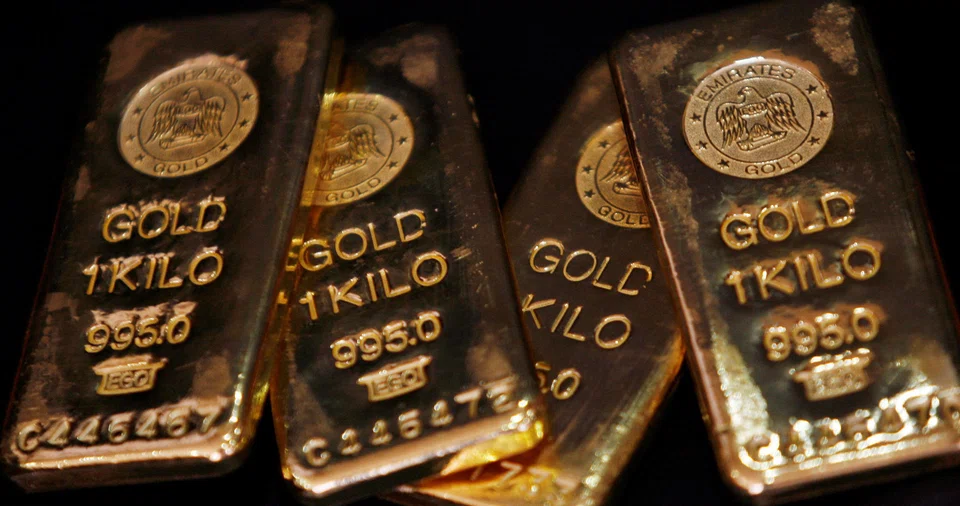
SINGAPORE’S gold exports to the US have surged as traders there scramble to secure physical supply, driven by fears of trade disruptions and the Republic’s status as one of the few trade partners with zero US tariffs on the yellow metal in any form.
In January alone, Singapore shipped 11.3 tonnes of gold to the US – a volume that nears last year’s total; it already represents 77 per cent of the city-state’s total gold exports to the US in all of 2024.
That single-month shipment also made up more than half of Singapore’s total gold exports worldwide for January, indicated figures from Trade Data Monitor seen by The Business Times.
This sharp uptick in gold flows comes as US market players rush to stockpile bullion, fearing potential tariffs under US President Donald Trump.
Gold spot prices climbed steadily past US$2,900 per ounce on Feb 10. Meanwhile, gold futures in New York jumped sharply, trading at anomalous premiums exceeding US$40 per ounce over London prices in January – a sign of mounting physical supply concerns.
Concerned over potential disruptions to physical gold supply for derivatives settlement, US traders are rushing to import large volumes of bullion to shore up inventories. The New York Commodity Exchange’s (Comex) gold stockpiles have surged nearly 80 per cent since late November.
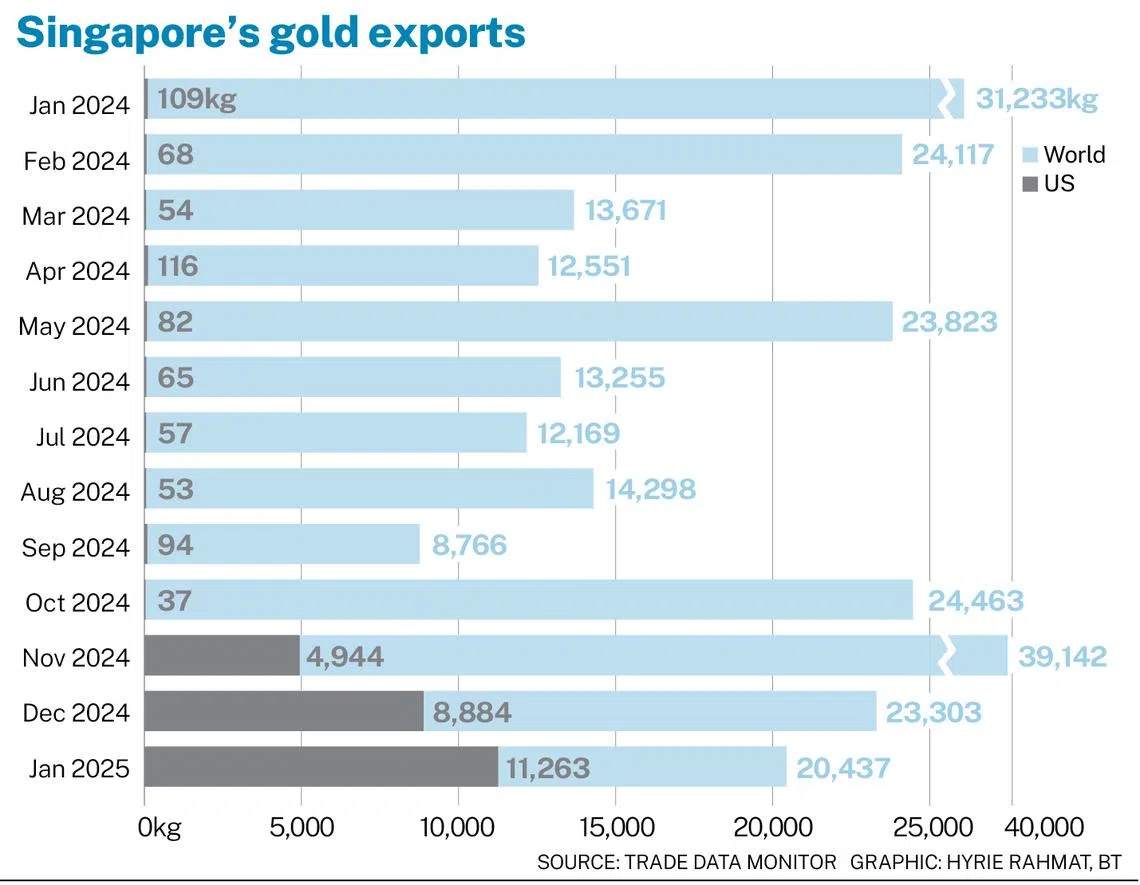
The surge in physical gold shipments to the US has directly boosted export figures in several countries.
In Singapore, gold exports propped up non-oil domestic exports (NODX) growth for the third consecutive month in January. NODX fell 2.1 per cent year on year, but the decline would have been steeper at 7.6 per cent if gold exports were excluded.
Nomura’s research analysts Euben Paracuelles and Charnon Boonnuch noted in a Feb 17 report that the upside surprise in NODX growth was driven by non-monetary gold exports, which surged 80.6 per cent year on year in January, following a 67.6 per cent rise in December.
Similarly, Thailand’s exports in January rose unexpectedly by nearly 14 per cent, mainly driven by an unusual surge in gold shipments.
“Exports of jewellery, which include gold, soared by 148.9 per cent, a 34-month-high,” noted Maybank’s director of macro research Erica Tay and regional co-head of macro research Chua Hak Bin in a note on Feb 25. They added that the spike occurred amid the US traders’ eagerness to import more gold to avoid potential tariffs.
Domestic flow yet affected
Amid a surge in gold shipments to the US, Singapore’s retail gold market remains robust, with bullion liquidity holding steady as demand continues to rise.
BullionStar, a gold dealer, reported a 176 per cent year-on-year increase in precious metals sales in January, driven in part by a growing number of international customers. The company attributed this trend to Singapore’s reputation as one of the safest jurisdictions for precious metal storage.
While institutional players are driving a surge in gold shipments to the US and fuelling a sharp rise in Comex inventories, retail investors in Singapore have not followed suit with large-scale withdrawals.
“The recent reports on gold movements to the US and rising Comex inventories primarily reflect institutional activity... However, from a retail and private investor standpoint, we have not observed an increase in withdrawals,” BullionStar’s spokesperson told BT.
Similarly, Gregor Gregersen, founder of gold and silver dealer Silver Bullion and the 180,000-square-foot storage facility The Reserve, noted that gold flows in Singapore remain strong. He highlighted that both the dealer’s liquidity and clients’ storage demand have remained steady, unaffected by US traders’ demand for bullion.
“There is much more paper gold out there compared to physical gold, and some of these entities incurred substantial losses during Covid when deliveries from London were interrupted,” he noted, adding that the banks and dealers in the US are covering some of the possible liabilities.
Banks in Singapore that offer retail gold investments continue to see robust demand.
Kelvin Ng, head of group global markets at UOB, told BT that US traders building up gold inventories have seen “no disruption to UOB’s gold investment services in Singapore”.
Singapore’s position as a major gold and wealth management hub stands to benefit as investors look to diversify and preserve wealth, he said. However, he added that price dislocations between trading centres should not be the primary reason for someone in Singapore to invest in gold.
OCBC’s managing director of investment strategy, Vasu Menon, highlighted gold’s longstanding role as a safety net for investors. He noted that between October and November, gold transactions accounted for nearly one-third of the year’s total volume in OCBC, driven by macroeconomic uncertainty.
Tariff tantrums could add to the shine
Tariff risks on gold could boost demand further and elevate prices.
Menon noted that Trump’s unpredictability augurs well for gold, as the precious metal is seen as a safe haven.
Meanwhile, increased shipments of gold to the US market, coupled with continuously strong demand for gold in other markets, could boost premia in other exchanges.
Alexandra Symeonidi, corporate credit analyst on William Blair’s emerging markets debt team, highlighted that rising gold premia in other markets can serve as a broader catalyst for already elevated gold spot prices.
“We do note, however, that record-high prices can have a detrimental effect on gold’s physical demand drivers as high prices usually disincentivise jewellery demand,” she added.
Nonetheless, tariffs on gold are still speculation.
Fan Shaokai, World Gold Council’s head of Asia-Pacific (excluding China) and global head of central banks, said that the impact of tariffs is still uncertain “because the policies are changing every day”.
He added: “At this point, we don’t believe that the tariffs would target monetary metals, but it is subject to change at any moment.”