

Young Singaporeans devote two-fifths of income to family, delaying financial readiness: Manulife survey
At least 75% of respondents under 35 feel family responsibilities hinder their long-term financial readiness

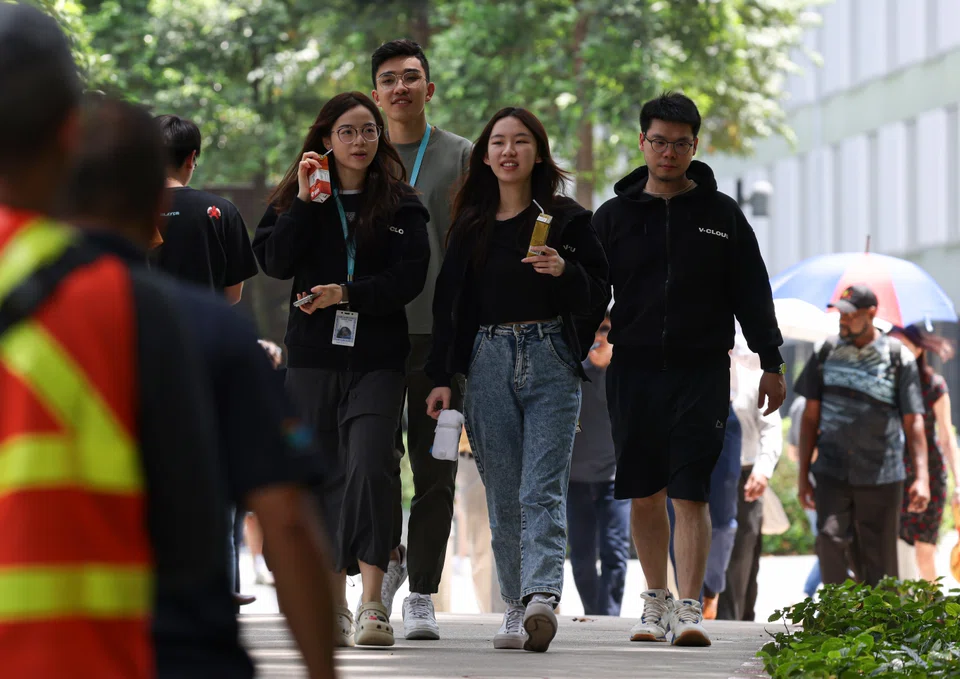
[SINGAPORE] Young Singaporeans are dedicating two-fifths of their monthly income to family obligations, delaying their own financial independence and shouldering heavier caregiving burdens than their Asian peers, according to a survey.
The Manulife Asia Care Survey 2026 found that 81 per cent of respondents aged 18 to 24 and 75 per cent of those aged 25 to 34 felt family financial responsibilities were hindering their ability to achieve long-term financial readiness. These figures outstrip the regional averages of 76 per cent and 69 per cent, respectively.
This is despite 92 per cent of Singaporeans surveyed saying their goal is to remain self-sufficient for as long as possible without relying on others.
The annual survey by the insurer polled 1,074 respondents in Singapore, forming part of a broader study of more than 9,000 adults across nine regional markets conducted between February and March this year.
The independence paradox
Beyond basic financial security, 46 per cent of Singaporeans surveyed associated self-sufficiency with having privacy and dignity, 44 per cent with the autonomy to make decisions without family pressure and 42 per cent with the freedom to travel while accessing quality care.
The respondents indicated that they want to avoid passing financial and physical strain down to the next generation, with 61 per cent defining “freedom in a long life” as not becoming a burden to their loved ones.
“Many are supporting families, building their own lives and thinking about their future at the same time,” said Benoit Meslet, CEO of Manulife Singapore. “This comes with real trade-offs, and it is unsurprising that many feel that their long-term planning is delayed or out of reach.”
The immediate strain also extends beyond the wallet and is affecting preventive health habits.
Caregiving duties have prompted 73 per cent of Singaporeans aged 18 to 24 to delay seeking personal medical care. This specific health sacrifice is significantly higher than the local average of 51 per cent across all age groups.
SEE ALSO




It also eclipses the regional average of 65 per cent for the same 18 to 24 demographic.
These delays compound long-term risks, especially as Singapore’s life expectancy climbed to 83.9 years in 2025, cementing it as one of the highest globally.
As lifespans stretch, 78 per cent of adults said they worry about outliving their money, and 70 per cent were concerned about affording future care needs – a figure higher than the regional average of 66 per cent.
Shifting investment strategies
Despite the widespread fears of running out of money, 78 per cent of respondents said they still rely primarily on their personal savings to fund their retirement.
However, a shift towards more diversified strategies is beginning to emerge among those actively trying to bridge their preparation gaps.
Asset diversification emerged as a theme, with 43 per cent indicating plans to invest across different asset classes.
More than a third also said they were pivoting towards income-generating investments to build steady income streams that can cover living expenses over an extended retirement.
Decoding Asia newsletter: your guide to navigating Asia in a new global order. Sign up here to get Decoding Asia newsletter. Delivered to your inbox. Free.
Copyright SPH Media. All rights reserved.
TRENDING NOW

GCash parent Mynt rises in market debut after South-east Asia’s top 2026 IPO

In the age of AI, what is a university education for?

Singapore to use ‘every legal and regulatory lever’ against companies linked to haze: Shanmugam

‘IPOs are not the only vehicle’: KKR heads for record exits even as firms stay private for longer

