


A new decade of possibilities
At Possibilities 2020, key voices in the fields of government, business and analysis gave their take on how Singapore businesses can position themselves and prosper in the new decade.


Singapore
AT Possibilities 2020 last Friday, Senior Minister of State Chee Hong Tat, together with thought leaders and distinguished speakers shared their views on how Singaporean businesses may come out strong for the new decade.
The event is the fifth in a series of business empowerment seminars organised by SGSME.SG and is supported by RHB Bank and U SME, an NTUC initiative.
In his keynote speech, Mr Chee said the Asean region is still a bright area for growth, beating other advanced economies with a forecasted 5.1 per cent growth that will be fuelled by a burgeoning digital economy.
He reassured businesses that the government is evolving in tandem with the times to improve efficiency and governance, and that there are extensive programmes and initiatives to support companies seeking to improve productivity.
"On our part, the government is committed to fostering a pro-enterprise environment and ensuring that we have sufficient regulatory agility to support companies who wish to try out new business ideas," he said.
"Achieving these win-win outcomes will require government agencies, companies and the trade associations and chambers to work in close partnership."
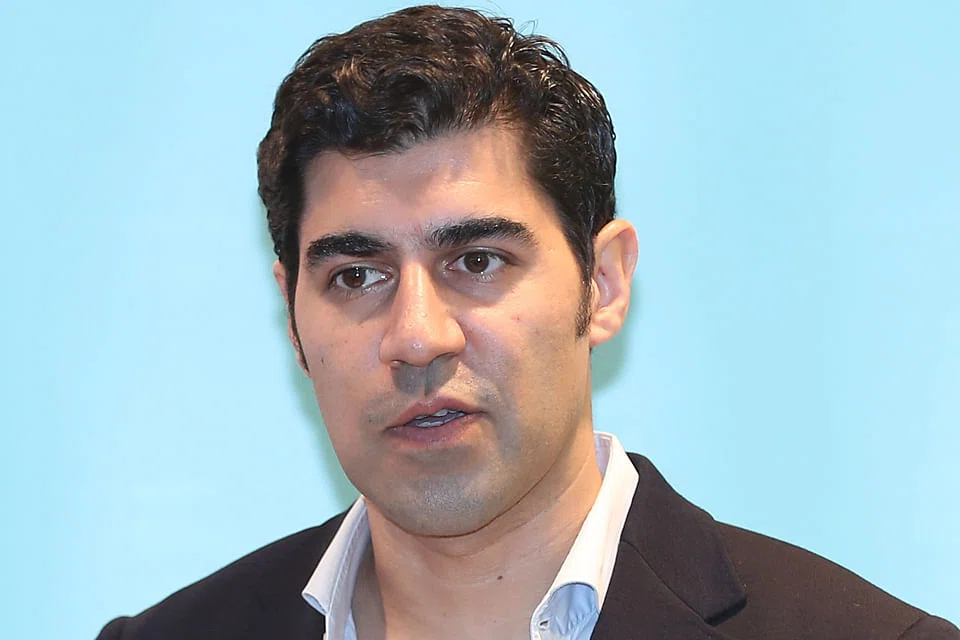
Parag Khanna, founder and managing partner of FutureMap, touched on the wave of growth expected for the Asean region.
Dr Khanna said Asia now accounts for 50 per cent of global GDP in Purchasing Power Parity (PPP) terms, signifying that domestic production and consumption in the region has overtaken foreign imports.
"Asia now has 60 per cent of its trade within the region, second only to the EU. This will further accelerate as a result of trade agreements such as the RCEP (Regional Comprehensive Economic Partnership)."
The combination of urbanisation, digitalisation and ease of financing are driving Asia's market forward by reducing grey markets, and promoting financial inclusion.
"These Asean countries are saying, what can we do to professionalise our companies? And as these firms become more capitalised, they're borrowing international capital so they can invest more. Their supply chains expand and they're subcontracting to boost production increases. You want to be in those ecosystems that are benefiting from this internationalisation of finance."
The Belt and Road Initiative is a Chinese strategic project to promote its own supply chain diversification, but also promotes Asia-to-Asia growth in terms of Asian countries trading more with each other.
Dr Khanna suggested that Singapore, as a port, may benefit from the initiative as a world-class exporter of infrastructure services to emerging Asian markets from Kazakhstan to Myanmar and many other countries as far as West Asia.
Shekhar Jaiswal, head of equity research at RHB Research Institute, gave a bright economic outlook for the new decade, stating that economic data points towards a recovery.
"There may be slight difference here, we see a lot of monetary policy support and what we think 2020 is going to bring is fiscal policy support. You'll see a lot of infrastructure projects happening globally."
While there is positive sentiment in the markets, uncertainty indexes are at their highest, he added.
"The geopolitical risks are there, there are small incidences, but you never know which one will blow up. Don't be complacent, but be mindful of the risk."
He advised investors to position themselves for earnings growth recovery and build positions in cyclical stocks that could offer meaningful upside as growth improves and if stronger GDP growth is delivered.
Investors should also balance their portfolio to cover for global macroeconomic risks by buying into yield investments such as Reits and stocks that offer sustainable yields.
Garick Kea, executive director of consumer insights at Nielsen Singapore, provided several consumer perspectives. He noted that while European consumers are pessimistic, the North American and Asia-Pacific regions are flat on the consumer confidence index.
He also said consumers are becoming increasingly spoilt for choice and cautioned B2C-focused businesses not to hold on to the assumption that retaining a customer is cheaper than prospecting for new ones.
"It is not a situation where you make do with a simple loyalty programme or have good customer service. You need to constantly innovate your business, and challenge your opposition.
"In the Asia-Pacific region, consumer appetite for risk and trying new things is prevailing as a result of greater affluence."






