Code of conduct covering retail space leasing to be turned into law
MTI to gather feedback on key provisions


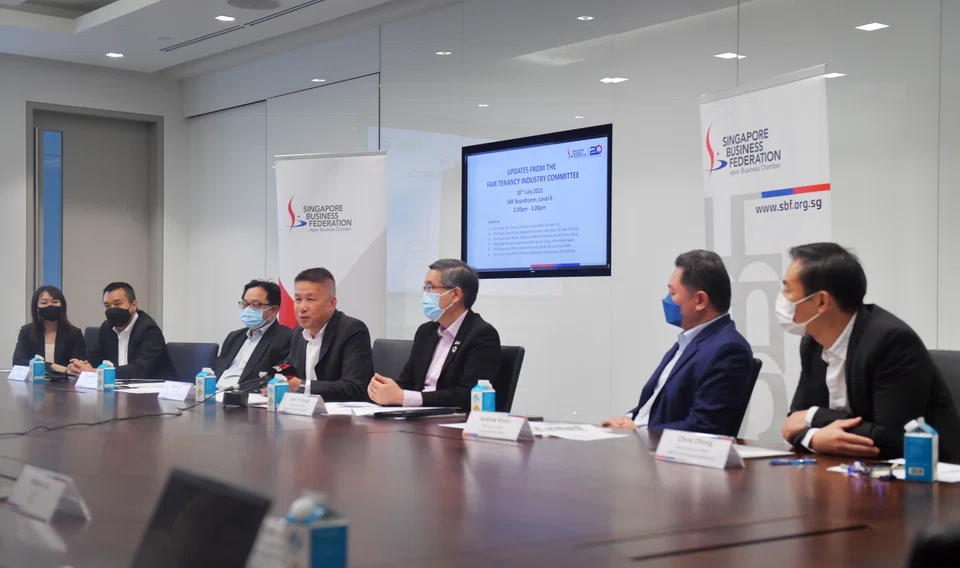
THE recommendation by the Fair Tenancy Industry Committee (FTIC) to legislate compliance with the code of conduct (COC) for fair tenancy has been accepted by the Singapore government, the Ministry of Trade and Industry (MTI) and Singapore Business Federation (SBF) announced in their respective press statements on Jul 18.
In the lead up to the impending legislation, MTI will conduct a public consultation from Jul 18 to Aug 5, 2022 to gather feedback on the key provisions, which will also include the establishment of a facilitated dispute resolution process.
Low Yen Ling, Minister of State for MTI, said the establishment of the COC has been a significant step forward for the retail sector.
“MTI has been consulting widely with key stakeholders. We are now ready to move forward on the public consultation exercise and to make compliance with the code mandatory,” she added.
Once legislation is implemented, abiding by the COC will become mandatory for all retail leases in Singapore, said Lam Yi Young, chief executive officer (CEO) of SBF. He was speaking at a media conference sharing updates from the FTIC on the COC.
Said Lam: “We do encourage landlords to come in as early as possible, during this period when it’s still voluntary, so they can get used to it.”
Currently, 8 major private sector retail landlords and all government landlords have voluntarily committed to abiding by the COC, which came into effect on Jun 1, 2021.
Should certain principles in the COC not be abided by once legislation is effected, that clause in the lease agreement will be rendered invalid, Lam noted.
The FTIC also has the ability to “name and shame” certain landlords or tenants who persistently engage in behaviour that does not comply with the COC, he added.
More landlords are looking into compliance with the COC ahead of the legislation, noted SBF, the secretariat of FTIC.
“We have received declarations of mutually agreed deviations from a further 21 private sector landlords, which shows that at least 29 private sector landlords are complying with the COC for some or all of their leases. Beyond these 29 landlords, we also received enquiries from a further 14 private sector landlords about the COC,” SBF added.
With the Covid-19 pandemic exacerbating long-running tensions, the COC was introduced to provide clear guidelines on fair retail tenancy negotiations.
SBF received and answered 364 enquiries on the COC and fair tenancy from landlords, tenants, law firms and property agents between Jun 1, 2021 and Jun 30, 2022.
The FTIC also received 1,111 declarations of mutually agreed deviations permitted under the COC in 4 specific areas — exclusivity, sales performance, security deposit and rental structure.
Of the declarations received, the largest number was for deviations on rental structure. Under the COC, rental formula must be based on a single rental computation throughout the lease term — this means that the rent structure must not have an “either/or, whichever is higher” formula.
The bulk of rental structure deviations saw tenants and landlords agreeing to have their rent structure computed based on the “either/or, whichever is higher” formula, said Lam.
Chris Chong, CEO of CapitaLand Retail & Workspace, noted that different tenants may prefer a different rental structure, depending on the industry and trade category they are in.
“For example, if they are very seasonal in nature, they prefer to have a rental structure that is different from that prescribed in the COC…which takes care of perhaps the different nature of consumer businesses, where business cycles are more predictable and necessity-driven,” he said.
Andrew Kwan, managing director of Commonwealth Capital Group, said that though the FTIC wants to allow room for “fair play and flexibility”, it will be monitoring deviations to avoid the situation whereby the “exception becomes the rule”.
Gathering the feedback since the launch of the COC, the FTIC published a revised COC on Mar 15, 2022 which came into effect on Jun 1, 2022.
Revisions to sharing of integration costs for point-of-sales systems address how new tenants will share costs with the landlords under specific conditions — such as when the landlords’ prescribed system options are limited or are too expensive.
As for floor area alterations, the requirement to survey new lettings before it is handed over to the tenant can be waived by parties if the floor area of the unit is below 300 square feet. Two new clauses were also added to elaborate on responsibilities in the event the lease is terminated due to the surveyed floor area being smaller than the floor area specified in the lease agreement by more than 10 per cent.
With respect to building maintenance under the lease agreement, an additional clause was added to “clearly indicate” the areas that landlords are responsible for.
The COC specifies a cap of 3 months’ gross rent on the security deposit to be paid by tenants for leases involving floor area of up to 5,000 square feet and lease term of up to 3 years. The latest revision to this allows for an exception to be made when the security deposit amount is S$500 or less.
Tenants previously had to submit to landlords invoices of their fit-out works for the purposes of compensation in the event of pre-termination by landlords — this requirement can now be waived if the landlord accepts the pre-agreed estimated value of the tenant’s capital expenditure works.
To help landlords and tenants with compliance with the COC, there is a step-by-step guide on the process of filing deviations and a COC-compliant lease agreement template that landlords and tenants can use, SBF noted.
Max Loh, chairman of FTIC, noted that landlords and tenants have provided feedback that the COC has been beneficial in guiding their lease negotiations, and that their inputs and suggestions have been a useful guide for the revision of the COC.
“Together with my fellow FTIC members, we will continue to serve as custodians of the COC to strengthen collaboration between landlords and tenants, and support the growth of Singapore’s retail, F&B (food and beverage), and lifestyle sectors,” Loh added.
Lam noted that the FTIC will be reviewing the COC at least once a year, though not every review will lead to amendments in the code.
Any revisions will also be put forth for at least 3 months before taking effect, in order to give industry players “sufficient notice” to implement the changes, he said.
“We do envisage that every few years we will have to continue to make updates and changes to the COC based on new scenarios that come up,” he said.