From used chopsticks to sustainable furniture
Canadian startup ChopValue's first international franchise in Singapore will serve as the flagship and training facility for the upcycling company's regional expansion.
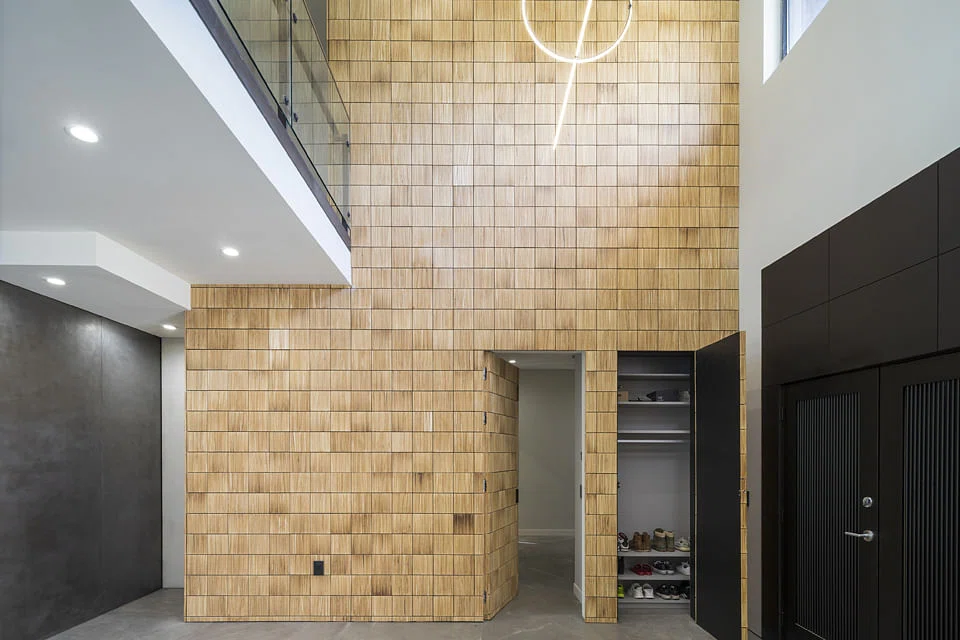
TURNING used chopsticks into sustainable furniture such as desks, side tables, shelves, cutting boards and more may soon become a reality for Singapore.
Canadian startup ChopValue has announced its first international franchise team in Singapore, slated to open in the fourth quarter of 2021.
The business collects used chopsticks from different partners and transforms them in micro-factories into sustainable furniture.
ChopValue's Singapore franchise will serve as the flagship and training facility for ChopValue's regional expansion, the company said in its press release.
ChopValue Singapore's community builder Hsu Hui En says some items that could be upcycled by used chopsticks include adjustable desks (which are made with over 10,854 chopsticks); side tables, (1,800 chopsticks); shelves (4,397 chopsticks); and cutting boards (6,652 chopsticks). "We might even produce a mahjong set in the near future and listen closely to what the local market demands," she shared, adding that once chopsticks are pressed into tiles, they will be "stronger than oak, harder than maple, and as durable as teak".
The company was founded in Canada by the current chief executive officer Felix Böck back in 2016, when he had an "eye-opening moment" connecting the chopsticks he ate dinner with to the vast amount of under-utilised resources. "I thought the humble little chopstick was a more relatable resource to show how you can build a viable business simply from a resource efficiency perspective," he said. "ChopValue was founded in 2016 to prove just that."
Since the company was founded, it has recycled over 34 million chopsticks and transformed them into home and office products.
Mr Böck also maintains that ChopValue's micro-factory concept has "found a way to run cash-flow positive since the beginning", which allowed the team to "continuously re-invest and explore how to expand in the most socially and environmentally responsible way".
"ChopValue is the world's first circular economy franchise," he said. "It's our strategic approach to accelerate the global environmental impact we can have on making the circular economy simply the norm."
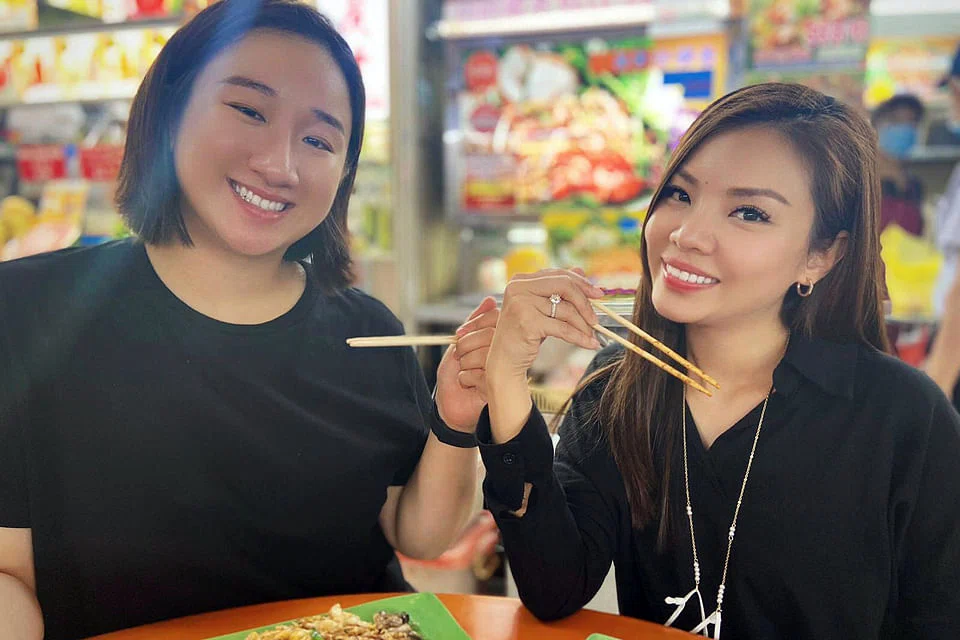
The Singapore franchise is headed by owner Evelyn Hew and Ms Hsu. Their commitment is to transform
35 million chopsticks within the first three years in business. That is equivalent to 100 tonnes of urban resources that would otherwise be discarded.
Ms Hew is currently managing SmartCity Solutions, an SME that provides small digital solutions in the waste-management and built-environment sectors. She is also a serial entrepreneur, running businesses ranging from restaurants to private fleet leasing services.
Ms Hsu, a recent graduate from the University of Manchester, was drawn to ChopValue because of her interest in sustainable global movements and enhancing Singapore's environmental landscape.
As Singapore is well-known for its clean governance and well-developed landscape for business within Asia, Ms Hew said that the ChopValue team decided to open its first international franchise here. The country's push for zero waste and sustainability, as well as the announcement of the Green Plan and Green Ambitions were other pull factors that made Singapore stand out as the best choice in South-east Asia, she added.
Despite the nation's lack of natural resources, ChopValue's method of "urban harvesting" may "help rewrite those textbooks".
ChopValue Singapore will target to partner with 300-400 restaurants and dining establishments in the initial phase, said Ms Hsu. In a later phase, the company will then urban harvest from hawker centres and coffee shops, and even help with the recycling efforts of households and offices.
Ms Hsu added that ChopValue has partners who order the products the company upcycles to give chopsticks a "new purpose in their second life".
"Our sustainable material can be used as a green building component to create corporate lounges and reception areas, furnishings in malls, and feature pieces in residential or commercial spaces," she said. "Airports, schools and even food delivery businesses can join in the fun by ordering products for their audience, custom engraved with a design of their choice - the possibilities are truly endless."
Although disposable chopsticks do not constitute a large portion of the 7.3 million tonnes of solid waste generated in 2019, Ms Hew highlighted that the goal is to inspire others to transform urban waste into a viable resource. "Our goal is for ChopValue to lead the way for an alternative view of how to handle the waste we create," she said.
"We could potentially light a fire to accelerate the journey to zero waste and to make recycling and upcycling as normal as consumption is to Singaporeans - not in 20 years, but right now. If we're lucky, we might be able to catalyse the movement to save Pulau Semakau," she added.
As of December 2020, ChopValue has successfully diverted 32,167,240 chopsticks from landfills in Canada, which is the equivalent of 150 basketball courts, said its 2020 Urban Impact Report. About 96,502 kg of waste has also been diverted from landfills, the equivalent of 800 adult pandas.
Despite the ongoing pandemic, Ms Hew maintained that the ChopValue team will push on and "with a little bit of luck", the expansion plans will not experience delays. "No matter how long the pandemic will be around for, the world has to keep on turning," she said. "Climate change did not pause for the global lockdown."
Ultimately, ChopValue aims to make a circular economy and urban harvesting the norm by transforming waste into a resource, one chopstick at a time. Mr Böck claims this can be done by opening micro-factories around the world to locally source and manufacture products by local talent and, at the same time, empower entrepreneurs. "There is an urgency that we owe to the planet we call home, and we can't afford to think the way it's been done is enough," he said.