SCI takes its global ambitions seriously
With a franchised distributor model, the company has been profitable for 38 straight quarters and last year bagged its fourth E50 award.
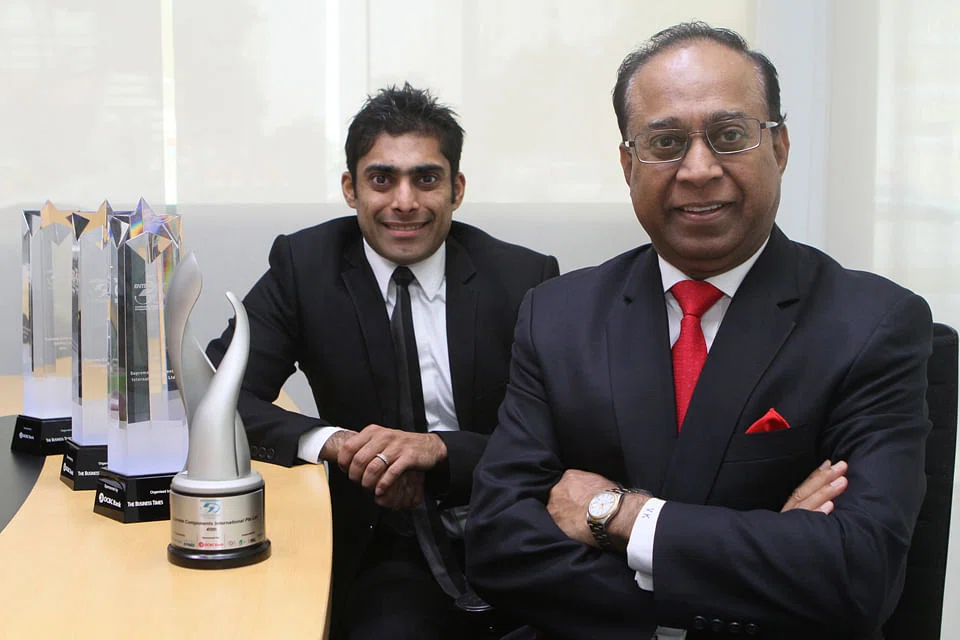
VICK Aggarwala, the CEO of Supreme Components International (SCI), has a grand vision for his electronic components distribution company: to be a globally franchised distributor with local pricing.
Having established branch offices in Hong Kong, India and most recently Thailand, and with plans to open a new office in Australia within the near future, SCI is taking concrete steps to realise this vision.
Founded in 2001, SCI was initially a spot trader in electronic components and was in poor financial health. It has since transformed into a formidable regionally franchised distributor with an appetite for international growth.
This transformation took place after Mr Aggarwala, having over 40 years of leadership experience in multinational electronic components distribution which includes a stint as president for Asia Pacific at Nu Horizons (now part of Arrow Electronics), the world's 2nd largest electronics components distributor by sales, acquired SCI in 2005.
Tapping Mr Aggarwala's extensive contacts in the electronic components distribution space, SCI was gradually able to attain the status of authorised distributor, or franchisee, for several major brands, including Citizen, Philips, Kyocera, Rubycon, KEC and Taiwan Semiconductor.
Today, SCI has secured over 50 franchises for its electronic components and LED divisions, and counts Samsung, Foxconn and LG among its of over 1,000 clients.
With the franchised distributor business model firmly in place, the company has also seen profits for 38 consecutive quarters, and in 2014, bagged its fourth consecutive Enterprise 50 (E50) award for the company's outstanding performance among SMEs in Singapore.
Going global is embedded in SCI's DNA and is a core part of the company's operating model. To create the best customer experience, SCI engages native employees from 10 different countries who collectively speak more than 12 different languages.
"It is very important for us, for our customers to get service from people who understand them well, their values, their customs and their regulations," explains Mr Aggarwala.
Despite time zone differences, the company always serves international customers at the speed of local distributors. The Singapore office operates 24 hours a day, ensuring no business opportunity is missed.
Every few months, sales managers from the Singapore office fly back to their native countries to liaise with existing clients and contact new ones. This operating model has allowed SCI to serve customers in over 40 countries, represent suppliers from over 15 countries and rank among the top 50 SMEs in Singapore by overseas sales turnover in 2015.
While SCI has enjoyed great success under its "virtual office" business model, local support is critical, as operating mainly from Singapore will not be sustainable on its own.
A physical presence, Mr Aggarwala notes, can be the deciding factor of a business deal. "(Companies in) mature countries, such as Australia, expect to see a local number and address contacting them, (even more so) in countries like Thailand, where they still like to have the hard copies, and they don't want to work on the computer." It is in these emerging economies in Asean that SCI sees immense potential for their products.
What else is it about SCI that resonates with customers all around the world? The secret could lie behind SCI's business philosophy, and it is important, insists Mr Aggarwala, to start with why.
"Why do we exist? We exist because we are obsessed with adding value at the speed of thought for our customers and suppliers, only then they will see a need to work with us, otherwise they do not need a distributor."
Speed is the key to success in an industry where technology is constantly changing and the risk of product obsolescence or a large fall in component prices are high.
Queries are responded to within 24 hours of notice. "Sometimes our competitors have not even quoted to the customers and we've already got the orders and have already shipped the parts to the customers," adds Mr Aggarwala.
This speed is enabled by well-trained employees, as well as investments in an Enterprise Resource Planning (ERP) system which allows for the automation and consolidation of key work processes.
However, as it sets its sights on the international electronic components distribution space, the company faces formidable competition from multi-billion dollar multinationals.
SCI acknowledges that speed cannot be the only edge that they have, as larger competitors have the resources to close the gap in response time.
Nevertheless, being an SME has its own advantages, notes SCI business manager and Mr Aggarwala's son, Piyush. Being small, SCI can be more focused and specialise in certain product lines, tailoring its value-added services for its franchises.
The company positions itself as a technical distributor, bringing technical knowledge and value-add in the distribution role, opening up new markets and business opportunities for their franchisors, some of whom have entrusted distribution in South East Asia solely to SCI.
Additionally, SCI also strives to add value to customers by providing additional design and engineering services instead of handling mere physical distribution and product marketing. At SCI, every sales manager is well-versed in engineering and most are armed with a relevant degree. This enables them to readily provide the technical support and knowledge their customers might need.
SCI has also taken steps to ensure that their distributed products meet and exceed international quality standards. In addition to achieving an ISO 9001 certification, the company also operates an electrostatic discharge-protected warehouse to prevent damage to sensitive components during storage and transit. Regular tests are conducted on components to ensure the quality of products being shipped to customers.
Though electronic components remains the core business for SCI, looking forward, CEO Mr Aggarwala believes that LED, which is increasingly being adopted as a more efficient and durable source of lighting, will be the company's key engine of growth.
Growing to become one of the leading distributors of LED-related components in Asia, SCI now represent some of the industry's largest brands including Citizen, Philips and LEDIL, and is well poised to ride the wave of growth in demand for LED solutions.
The LED business division now accounts for more than 20 per cent of SCI's revenue stream since its establishment eight years ago. "We had zero distribution in 2007, but we now have a better understanding on how to distribute LED lighting components and we have built up a reputation for ourselves," he says.
The timing of SCI's entry into LED lighting distribution was especially opportune. SCI made headway in securing its LED-related franchises, just when adoption became increasingly widespread. "We rode the wave before the industry became saturated. If we had entered only five years later, we'll be too late to catch up to it," explains Mr Piyush Aggarwala.
With new offices planned overseas and the promising growth in the company's newer LED distribution business, SCI seeks to make a lasting impact in the region beyond Singapore's shores, and quite possibly, the world.