Seeking creative ways to titillate diners' taste buds
Creative Eateries thrives in a challenging industry by constantly coming up with innovative dining concepts for customers
Singapore
FEW things in life are as frustrating for restaurant owners as the subjectivity of taste: a plate of food can be salty to one man and bland to another. Creative Eateries Pte Ltd, therefore, chooses to satisfy its customers not just through its food but also its creative concepts.
Its creativity has won the company the Enterprise 50 Award for two years in a row - 2017 and 2018.
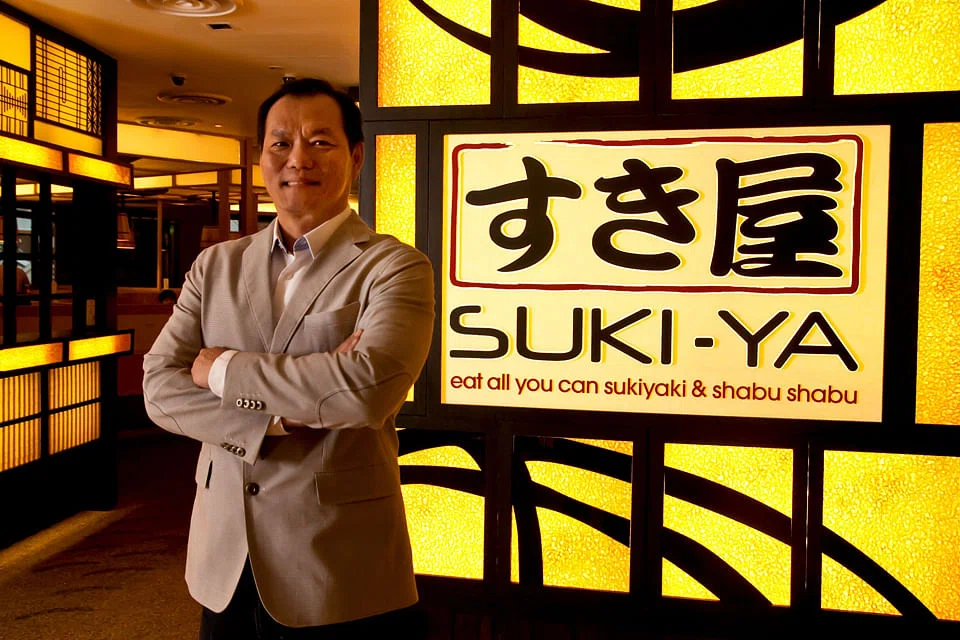
Established in 1992 by Mr Anthony Wong, 60, Creative Eateries manages 16 restaurant brands and two catering providers in Singapore, Taiwan and Malaysia.
Mr Wong's recipe for success is more than just food.
"Consumers today, especially the millennials, are very demanding. Is the food Instagram-worthy? Do they enjoy the experience? These are the things on their minds," he said.
Mr Wong, who is also the chief executive officer of Creative Eateries, keeps these things in mind when planning dining concepts for different market segments.
Those who appreciate interesting decor would be keen to patronise Bangkok Jam, a Thai restaurant chain with an interior design inspired by the trendy cafes in the Thai capital. Decorated with flowers and bright neon signs, Bangkok Jam restaurants offer diners a contemporary interpretation to traditional Thai fare.
The more adventurous diners would find Hot Stones Steak and Seafood Restaurant appealing. The Western steak and seafood restaurant offers juicy chunks of meat served on volcanic stone slabs at the table.
What is the source of this creativity? "Talent, interest and the ability to observe," explained Mr Wong. "With these, everything comes naturally. It's similar to how Steven Spielberg came up with Jurassic Park, E.T., and Jaws - and he still has more ideas than he could ever turn into movies."
Mr Wong's journey to the F&B business was not straightforward. In 1980, he quit the engineering programme at the National University of Singapore before the first semester, so that he could study the discipline of his interest - food and beverage. This took him across the globe to the University of Hawaii.
Armed with a degree in hotel and restaurant management, Mr Wong made his first foray into the services industry when he began his career at Hyatt Hotels.
The eight years with Hyatt Hotels turned out to be a pivotal time in his life: during his posting in Jakarta, he met several young serial entrepreneurs. That's when it dawned on him that he too wanted a life fuelled by a sense of fulfilment derived from managing his own businesses.
So, in 1992, when Mr Wong heard there was a shop space for lease on Lorong Mambong in bustling Holland Village, he started a venture - Hot Stones Steak and Seafood Restaurant - in what was "probably the only thing he knew how to do".
"Getting the right location is important," pointed out Mr Wong. Aside from footfall and ensuring that the general profile of customers fits a restaurant's concept, maintaining good relations with landlords is also key.
"Without the landlord, I will not have a place to operate my restaurant. Without a restaurant, I won't have customers."
As such, Mr Wong strives to keep landlords engaged with the value proposition that his restaurants can offer to them, and reassures them that it will remain relevant to mass consumers.
Using technology
With the advent of technology to drive efficiency in the economy, Creative Eateries has also latched on to the digitalisation trend.
For example, the company's customer relationship management system gathers valuable feedback from customers to shape future marketing campaigns.
A self-ordering system in restaurants like EAT @ Taipei in Kallang Wave mall allows the company to focus on providing better food and service quality while keeping manpower needs lean.
Operationally, Creative Eateries keeps food wastage low through an inventory tracking and procurement system. These digital enhancements have laid the foundation for the group's sustainable growth.
Over the years, Singapore's labour crunch has worsened, especially in the F&B industry. Realising that the problem is permanent, Creative Eateries implemented measures to improve efficiency such as the establishment of a central kitchen in Senoko to ensure the availability of menu items during peak hours.
In the past, its restaurants could not meet customers' demands during certain periods of the day.
Equally important is the quality of service delivered by its staff. To motivate employees to provide a pleasant experience to customers, they are featured on the company's blog as "Service Heroes" when they receive positive feedback.
Determined to promote creativity and get employees to take ownership of their work, Creative Eateries has been exploring ways to implement a flatter corporate structure. Employees are encouraged to suggest ideas for improvement to the management.
As a fast-growing company, this allows Creative Eateries to leverage its talents to generate innovative solutions. "Your business should never be too dependent on any stakeholder," cautioned Mr Wong.
He is constantly vigilant of the risks in his business. Shifting some work to a central kitchen and using machines have mitigated some challenges posed by an unpredictable labour supply.
On the leadership front, Mr Wong counts himself blessed to be able to delegate certain vital business responsibilities to his two daughters - Bernadette, 32, and Bonnie, 30, who left corporate jobs to help Creative Eateries expand.
Bernadette is director of corporate affairs and human resources, while younger sister Bonnie is the chief operating officer.
With globalisation and the prevalence of the Internet, customers today are savvier, more demanding and have ever-changing taste buds. For Creative Eateries, this means remaining nimble and constantly keeping its finger on the market's pulse and having a constant stream of ideas.
When it comes to chefs, too, Creative Eateries does not take any risks. Cantonese and Shanghainese cuisines demand culinary finesse, so Creative Eateries' strategy is to work with cuisines that do not demand exceptional cooking skills. This gives it the flexibility of re-deploying chefs to another restaurant if needed.
Coming from a small country may be perceived as a limitation, but Creative Eateries has always defied that conventional thinking.
"Until you overcome (the perceived limitations), you become more and more threatened and you start to think smaller until you finally diminish. To me, the small and medium-sized enterprise must continue to grow bigger and bigger," emphasised Mr Wong.
For the past 27 years, Creative Eateries has set a good track record of opening at least one new restaurant a year. It has also been growing its regional presence, and will be entering the Philippines market this year with two restaurants in Manila and hopes to enter the Vietnam market in 2020. To date, it already has more than 14 outlets in Malaysia and Taiwan.
What drives this growth? Grand ambition and the unwavering conviction that it has the resources, know-how and guts to compete globally.