Seoul Garden Group goes full steam ahead to digitalise
Singapore
DIGITALISATION has been the name of the game throughout the pandemic, as companies turn to online channels for much-needed sales and overhaul processes to reduce operating costs.
For Korean restaurant chain Seoul Garden Group, this meant setting up an e-commerce business in seven days during last year's circuit breaker and accelerating its five-year digital transformation roadmap to be completed in just two years.
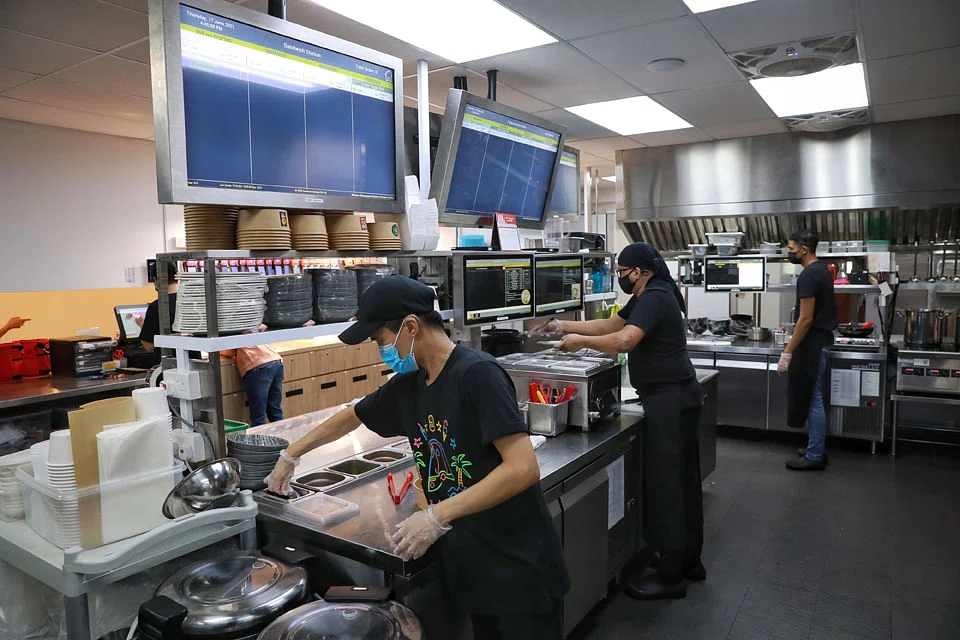
A major project in the roadmap was rolled out in January this year - a "dark kitchen" where food can be prepared for multiple virtual brands without a storefront.
Each workstation can serve as many as five to six virtual brands, which maximises resources.
The kitchen also employs automation and other technology so that workers can easily view the dishes they need to prepare, the order in which to prepare them, and the recipes for each.
Not only does this improve productivity and accuracy by removing the need to memorise recipes or juggle multiple orders manually, but it also makes the job easier and more attractive to locals, who often perceive such roles to be hot and tiring with long hours.
In particular, the dark kitchen is helpful for people with disabilities (PWDs) and mature workers whom Seoul Garden Group has been actively hiring since 2005, said Garry Lam, the group's chief development officer.
"There are some limits to tasks that PWDs and mature workers can do, but they can be very focused in certain tasks. Some of our PWDs have risen up in the ranks to become supervisors and managers," he said.
"As long as the job is redesigned for them and accommodates them, with some technology assistive tools, they can perform tasks well and are very focused."
This inclusive hiring policy started out as a practical solution to the manpower shortage that the food and beverage (F&B) industry has always faced, resulting in its heavy reliance on foreign labour.
The group decided to make inclusive hiring a part of its hiring and human resource policies, after uncovering "many hidden gems" who did their jobs well and were able to coach other staff including non-PWDs.
Today, about a quarter of Seoul Garden Group's workforce are PWDs, and many are mature workers, some of whom have been with the company since its beginning in 1983.
Mr Lam urges other F&B operators to explore this alternative to foreign manpower.
Seoul Garden Group itself was less badly hit by the labour shortages caused by border closures, because its inclusive hiring has reduced its dependence on foreign labour.
"Whether it's the bigger or smaller players, do consider hiring PWDs. There are a lot (of them) looking for job opportunities," he said.
Even for a company that embraces automation and technology, it has been hard to stay profitable during this period.
Mr Lam said the group has "lost millions" with the reduction in capacity at F&B outlets, especially in its Korean barbecue restaurants where the seating layouts cannot be modified due to the exhaust systems.
He hopes that manpower and rental support can be extended to the industry for a couple more months to help them recover, and for more support for smaller operators with one to three outlets to digitalise.
"(Support like) the productivity grants does help, but if you want to go into full digitisation and automation to cope with the manpower shortage, it might not be enough," he said.
"We are talking about lean management, minimum manpower to run the business. We need to look into how we can streamline work processes to be more productive."
Seoul Garden Group is planning more transformation and new concepts this year as it looks ahead to the "next normal" for F&B, said Mr Lam.
One new trend he expects to reshape the industry is that of customers being "cautiously extravagant" - health-conscious and choosier about where they spend their money.
"Customers will expect a bit more with dining out being part of their leisure activity," he said. "They won't eat out as often, but when they do go out and eat with family and friends, their expectations for the service and experience will be higher than before."
READ MORE: