


SMEs to get help adopting PayNow Corporate from providers
StanChart partners MC Payment to offer merchants ability to generate dynamic QR codes for easy digital payment
Singapore
IN an effort to get more small and medium-sized enterprises (SMEs) to adopt digital payments, payment service providers (PSPs) who handle credit card transactions for such firms are being roped in to process PayNow Corporate transactions too.
Standard Chartered Bank (StanChart) has partnered digital payments firm MC Payment to offer merchants the ability to generate dynamic QR or quick response codes for easy payment via PayNow Corporate, without the need for additional software or new point-of-sale (PoS) terminals.
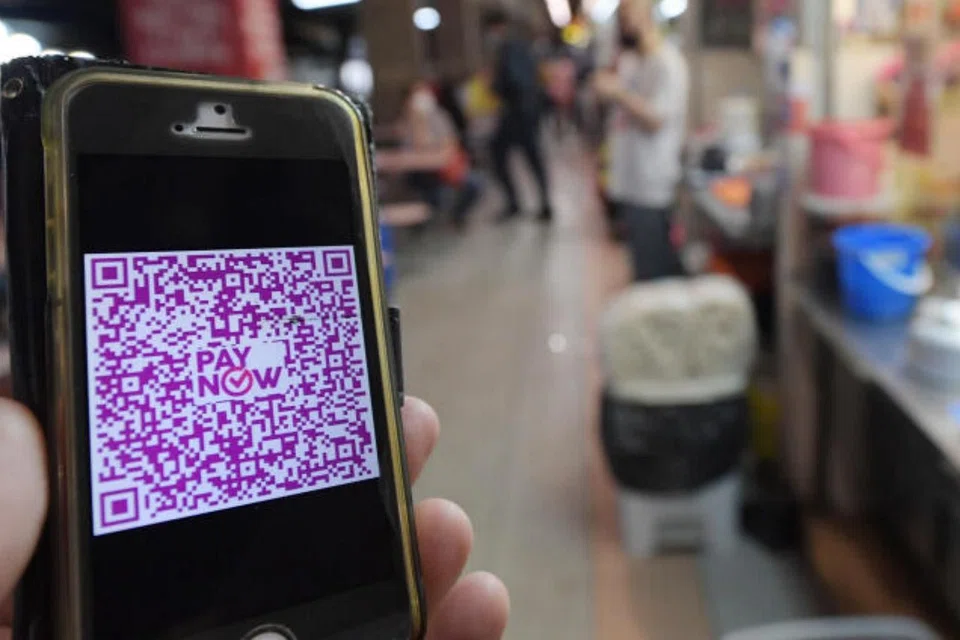
Dynamic QR codes are generated for individual transactions, so the exact amount that each customer pays is pre-filled when they scan the QR code. The ability to reduce payment errors is a key advantage they have over static QR codes, which can be displayed permanently at stores or on websites but require customers to input the payment amount manually.
In an exclusive interview, StanChart head of cash products for Singapore and Asean, Ankur Kanwar, told The Business Times that StanChart is leveraging the vast client base that PSPs already have, to make dynamic QR code generation for PayNow Corporate payments accessible to many more merchants at one go.
"The middle men (the PSPs) are our clients. We're simply empowering them to use our technology to collect for the SMEs," he explained. "It gives us great scale and great reach because we don't need every SME to be our client."
Mr Kanwar said this "master merchant model" that StanChart launched in February is a departure from the approach major banks have been taking, which has so far been slow going.
Before this, StanChart and other banks primarily worked directly with SME clients to download mobile apps, replace PoS terminals and integrate application programming interfaces (APIs) to generate dynamic QR codes for in-store and online transactions.
But during the Covid-19 pandemic, StanChart found that clients were struggling to integrate these solutions into their businesses, and wanted more "light touch" options.
In September 2020, StanChart launched a simplified digital payment link solution using weblinks generated on the bank's website. The solution developed in partnership with the Hindu Endowments Board (HEB) enabled HEB to send devotees URL links that directed them to StanChart's payment gateway page showing the specific donation amount requested and PayNow as the payment method.
StanChart also started working with PSPs like MC Payment to create the master merchant model for PayNow Corporate transactions, and is currently in talks with more PSPs to provide the same solution.
"The underlying tools like PayNow, QR codes and dynamic QR codes have been around for a while, and we've seen huge amounts of volumes come through our books on these tools. But to make it mass scale, we needed to think out of the box," Mr Kanwar said.
"It had a lot to do with Covid. Had we not been hit by this, we would still be doing PayNow and QR codes (with individual merchants) one by one. Covid made us think, we obviously have to do something different."
PSPs usually process credit card payments made via PoS terminals in stores or on e-commerce websites for online transactions. The credit card payment funds are routed to merchants a few working days after the transactions.
Under StanChart's master merchant model, the PSPs will use StanChart's technology to generate the dynamic QR codes for merchants to provide customers for PayNow Corporate payments.
The funds from such payments are deposited instantly into the PSP's account with StanChart and routed to the merchant later, within the same day or by the next day. This is similar to the process for credit card transactions, albeit slightly faster.
While this method is slower than cash or direct PayNow collection for merchants, who could receive the funds into their own accounts instantly if they set up their processes using the bank apps and APIs, Mr Kanwar believes it is a small price to pay for the convenience.
"If you want instant collection, it's possible but there will be some level of integration with the bank. Having the middle man, the PSP, is far more beneficial because the merchant doesn't have to worry about anything like integration or APIs," he said.
Additional benefits of adopting digital payments to replace cash include accessing more data that SMEs can mine for insights, reconciling accounts more easily and handling smaller amounts of cash.
Mr Kanwar said StanChart does not intend to charge for the service in the near future, as its primary goal is to ensure it remains relevant and help SMEs go digital, with the added benefit of gaining market share.
"With Covid behind us, digital disruption is going to be more acute," he said. "It's not about how much money we earn, but how we are relevant in the current industry landscape and how we support these players to be more digital."
StanChart will continue to offer dynamic QR code generation to individual merchants via StanChart's Merchant App for in-store transactions, and via API integration for online transactions.
Mobile apps used by other banks to generate dynamic QR codes for in-store transactions include DBS MAX, UOB mCollect and OCBC OneCollect. HSBC and Maybank offer PayNow-enabled PoS devices.
Aside from Maybank, which does not currently offer this service for online transactions, they all use API integration to generate dynamic QR codes for online transactions.
Citi Singapore uses API integration for QR codes for both in-store and online transactions.
TRENDING NOW

DBS, OCBC, UOB rout lops billions from STI as inflation, rate concerns spook investors

OCBC sheds S$8 billion in value as shares close nearly 6% down; analysts cautious on banks

IOI Properties and CapitaLand Investment closer to acquiring One Raffles Place in joint bid

Grab CEO’s wife Chloe Tong on life with Anthony Tan and finding her purpose

