Biological threats, misinformation among AI’s risks, says ex-Google CEO

Sharanya Pillai
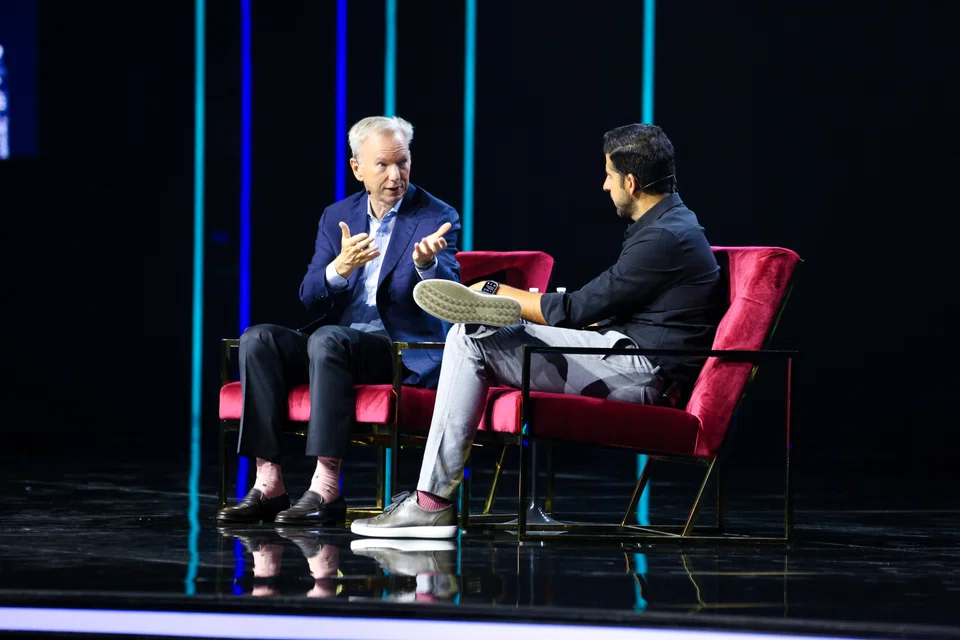
[SAN FRANCISCO] The creation of dangerous pathogens and spread of misinformation are among the near-term risks of artificial intelligence (AI), said former Google chief executive Eric Schmidt, adding that the technology is set to be regulated for significant dangers.
“The simplest way to frame it is that there are scenarios of extreme risk, and these systems are going to get regulated around extreme risk… I’m talking about thousands and thousands of people harmed and killed from something,” he said in San Francisco on Thursday (Jun 29), at the Data + AI Summit organised by software company Databricks.
AI systems could be used by bad actors to “accelerate at scale”, said Schmidt. “If you sit down with Google long enough, and you understand enough about biology, you can probably get to a bad pathogen. These systems make that somewhat more likely. So we have to think about that.”
He also noted that generative AI – comprising content-producing models such as ChatGPT and Dall-E – is going to be “used enormously” for misinformation and disinformation.
Schmidt, who led Google from 2001 to 2011, has been vocal about his concerns over AI risks.
On Monday, he told CNBC that the 2024 US elections “are going to be a mess because social media is not protecting us from false generated AI”. Prior to that, he flagged in May that AI could pose an “existential risk” if misused by evil people.
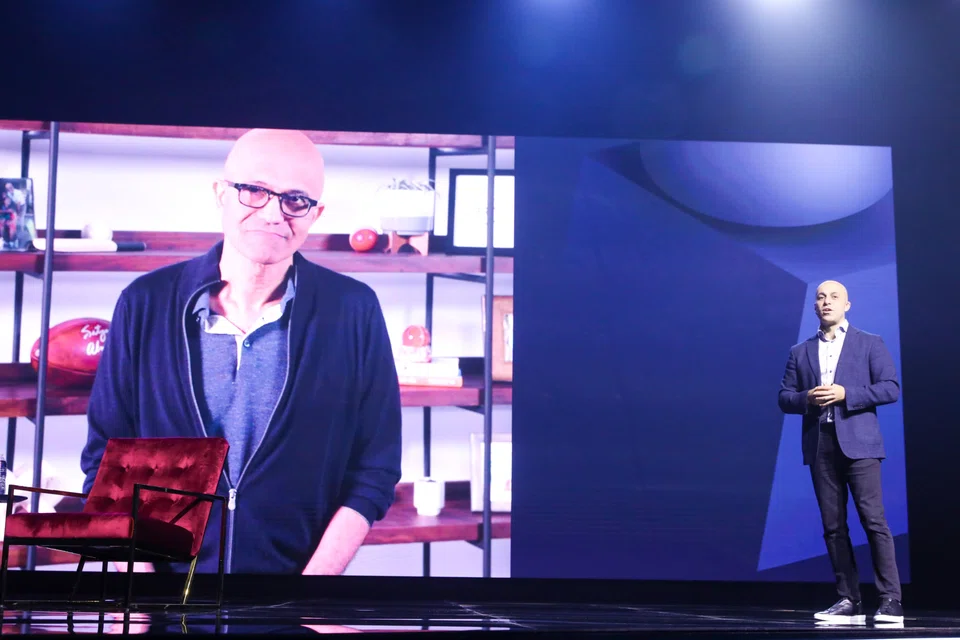
Microsoft chief executive Satya Nadella, who spoke at the Databricks summit on Wednesday, similarly identified bioterrorism and cyberattacks as risks of AI. He called for conversations on responsible AI and the technology’s societal impact.
“One thing that I encourage our teams is, remember we’re responsible here as engineers to introduce new technology that is safe by design. So we shouldn’t abdicate… our responsibility to produce responsible AI,” he said.
For instance, the risk of AI chatbots spewing false information, also known as “hallucinations”, could be mitigated with engineering innovations such as retrieval-augmented generation, where the system obtains additional data from outside the AI model to ensure an accurate response.
“But before that, you can even put a human in the loop, (as) a design choice. I think there are a lot of choices we as developers of this technology can make, that can make it safe to use today, while solving some of the harder problems and ensuring that there is never an AI take-off that we’re not in control of,” Nadella added.
Death by paper clips?
While highlighting AI’s dangers, Schmidt on Thursday also addressed overblown fears and ignorance about the technology.
“It’s interesting that every single politician that I speak with, every single leader I talk to, is now an expert in AI, and they know nothing about what you all are doing,” he said, addressing the crowd of mostly data-science and engineering professionals.
“Maybe that’s always been true, but it’s sort of alarming to me. And so the first thing I always tell them is: ‘Do you remember that movie where the robot gets out, and then the female scientist slays the robot at the end? That’s a movie, okay? We’re not building killer robots yet.’ And that usually sort of disarms them.”
Other Silicon Valley executives who spoke at the Databricks summit called for a balanced approach to discussing AI’s risks.
High-profile tech investor Marc Andreessen, who runs venture firm Andreessen Horowitz, noted the fear in some quarters that AI could inadvertently wipe out humanity.
He referenced a thought experiment known as the “paper-clip maximiser”, which posits that an AI system designed to make paper clips could go out of control with its singular objective, destroying humanity and the world just to make as many paper clips as possible.
Criticising the concept, he said: “(AI) doesn’t have its own will… And then there are just practical limitations; where’s it going to get the chips to rival sophisticated algorithms to make all the paper clips? Because sitting here today, we can’t even get chips to run AI in our startups.”
AI progress will not be “like a Terminator scenario where it’s gonna wake up one day and decide that it hates us”, he quipped.