Crypto hearings in Singapore throw up quirks, legal novelties
More sticking points around this novel technology are expected to surface


Sharanya Pillai &
Claudia Chong
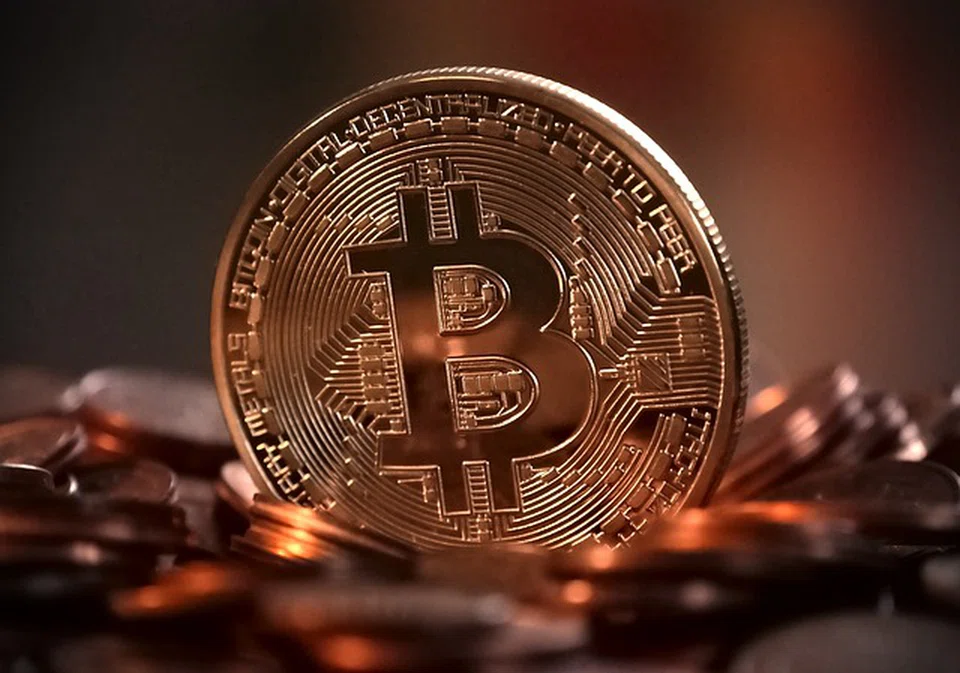
SHOULD crypto be recognised as money under Singapore law? If it is, does it mean that any obscure form of currency – even seashells – would have to be recognised?
These are some of the tricky and unorthodox questions that have surfaced in Singapore courts in recent months. As court proceedings involving troubled crypto companies intensify, legal experts have had to navigate unchartered territory.
In a High Court hearing on Mar 30, the question of whether crypto is money sparked a colourful exchange between the judge and the lawyer representing a blockchain company called the Algorand Foundation.
Algorand was seeking to wind up the Singapore entity of failed crypto fund Three Arrows Capital, with a claim of 53.5 million USD Coin* (USDC).
One big question that arose was whether Algorand’s claim, denominated in crypto, is considered to be for a sum of “money”. That would determine if Algorand was a creditor and could proceed with the winding-up application.
To make the case for the winding-up, Daniel Chan of law firm WongPartnership noted that foreign currencies are recognised by Singapore law as money, despite not being legal tender, nor widely accepted or used as a medium of exchange here. He argued that a similar principle could be applied to crypto.
But Justice Vinodh Coomaraswamy questioned: “I mean, what if you had a (community) in the world that used seashells as its internal medium of exchange? Would the Singapore courts have to recognise that as money?”
“Your Honour poses an extreme example,” replied Chan.
“I think seashells were a form of money at one time in history,” said the judge.
The winding-up application was eventually dismissed. Justice Coomaraswamy said that Algorand had standing to bring about a winding-up application, but he did not accept that crypto is money.
“The word indebtedness, in my view, must require a debt which is in fiat currency… Determining whether or not a particular intangible, such as cryptocurrency, is money would require a detailed examination of evidence which is not appropriate in the context of insolvency,” he said in his decision.
While the question of recognising crypto as money remains unanswered for now, cases revolving around this issue will be something to watch. Chan noted that it is fresh territory even in other countries.
“We searched around and based on the research, it doesn’t seem like the question of whether cryptocurrency can be regarded as money has been extensively discussed in any court decision to date,” he said, pointing to jurisdictions such as the UK and Australia, which Singapore cases typically reference.
Other crypto cases have also surfaced novel issues for the Singapore legal system. In a landmark decision last year, the High Court granted an injunction to freeze a non-fungible token (NFT)* of the popular Bored Ape Yacht Club variety. In doing so, it ruled that NFTs are a form of property – not simply information on a blockchain. Furthermore, the injunction was granted against a person known only by their online pseudonym: “chefpierre”.
The first bitcoin trial in Singapore occurred in 2019, when crypto exchange Quoine was found to be in breach of contract over the reversals of certain trades by market maker B2C2. Lawyer Danny Ong, who represented B2C2 at the time, recalls having to go back to the basics for this novel case.
“The team researched in depth the genesis of the law of mistake – which allows parties to treat contracts as invalid – all the way back to the 19th century, and (traced) the development through three centuries...”
“It was certainly very interesting, learning of the philosophical foundations and reading cases such as those involving the barter of horses for wheat,” said Ong, who was previously with Rajah & Tann, but recently started his own firm Setia Law.
More cases to come
Court cases involving crypto companies have been mounting ever since the Terra-Luna implosion brought down once high-flying names, including Three Arrows Capital and Hong Kong crypto lender Babel Finance. The latter was once valued at US$2 billion.
A total of US$1.5 trillion in value was wiped out last year after crypto’s market capitalisation fell 64 per cent. Since then, a variety of crypto companies have filed for restructuring in Singapore (see table).
As more insolvencies and disputes come before the courts, more sticking points around this novel technology are expected to surface.
“One critical set of questions that is at the frontier of law, is how the actions of DAOs interact with the legal environment,” said Drew & Napier director Chua Tju Liang, referring to decentralised autonomous organisations*.
Chua pointed out that some DAOs exist solely in the digital space, without any legal entity or form. It is often difficult to pinpoint any person who controls the space.
“As our legal system is premised on rights and responsibilities of specific and identifiable legal persons, we will have to evolve new principles to address how our laws can be applied to DAOs, and to persons participating in DAOs,” he said.
The next frontier of cases could involve ownership in the metaverse, said Ong of Setia Law. “For example, what does one own in the metaverse, what rights does such an owner have, and how does he or she go about enforcing rights against unknown wrongdoers operating in the virtual world?”
Another issue is the liability of crypto investment or exchange platforms for risk management failures, he added. For instance, when a platform collapses and leaves customers high and dry, to what extent would the management have to take responsibility?
Then there is the existence of crypto mixers*, which throws up further complexities when it comes to the traceability of stolen funds.
“As far as I’m aware, the courts across the Commonwealth have yet to provide guidance on what principles should be applied to assist in identifying and tracing digital assets which have been laundered through mixing services, to determine ownership,” said Ong.
These novelties make crypto law an exciting field for lawyers. Chua, who is passionate about tech, notes that many technical advances challenge assumptions that we have made as a society, upon which many legal rules are designed.
“And yet our fundamental legal principles remain intact. Once the change in the technical advances are well understood, the court can then apply the underlying legal principle in a different way to accommodate these changes,” he said.
*Crypto DeFinitions
USD Coin (USDC): A type of crypto known as a stablecoin, meant to be exchangeable one-for-one with the US dollar.
Non-fungible token (NFT): An asset whose ownership is recorded and verified via blockchain technology
Decentralised autonomous organisation (DAO): A community of users who coordinate and act collectively through digital interactions.
Crypto mixers: Services that blend crypto of various users to make it harder to trace the origins of the funds