Deutsche Telekom showcases app-less AI smartphone concept
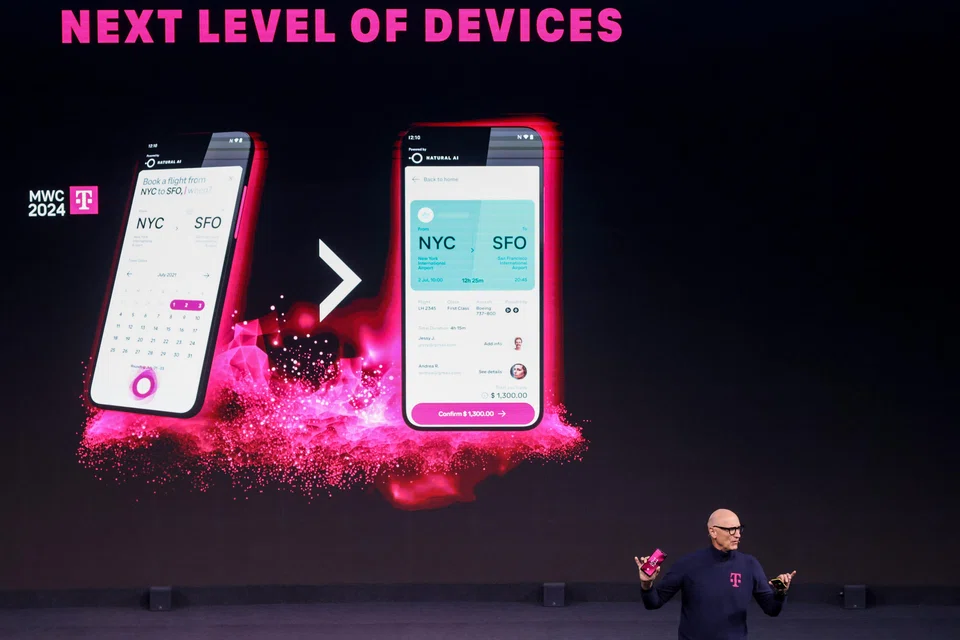
DEUTSCHE Telekom on Monday (Feb26) showcased a futuristic smartphone concept that relies on artificial intelligence rather than applications (apps) to handle users’ specific needs.
Smartphones today typically use apps for everything from messaging and social media to video games and banking.
The German company said the concept, which it is showcasing on its “T-phone” device, will have an app-free user interface developed in collaboration with partners Qualcomm and Brain.
“I can tell you that in 5-10 years from now, nobody from us will use apps anymore,” said CEO Tim Hoettges in a keynote presentation at the MWC tech conference in Barcelona.
Examples of what the phone could do include responding to prompts and generating tailored recommendations for travel destinations, buying a product for its owner, or sending pictures and videos to contacts, the company said in a presentation.
“The showcased product reflects Deutsche Telekom’s belief that multi- and crossmodal Large Language Models (LLMs) will soon become integral to devices, enhancing and simplifying the lives of its customers,” Deutsche Telekom added.
Technology and telecom companies are launching new products and concepts at the annual Mobile World Congress (MWC) in Barcelona, hoping the buzz around AI will boost business prospects. Many experts say the technology can raise legal and ethical concerns. REUTERS
Decoding Asia newsletter: your guide to navigating Asia in a new global order. Sign up here to get Decoding Asia newsletter. Delivered to your inbox. Free.
Share with us your feedback on BT's products and services