

Tech stocks that rely on gig workers must address the social aspect of ESG

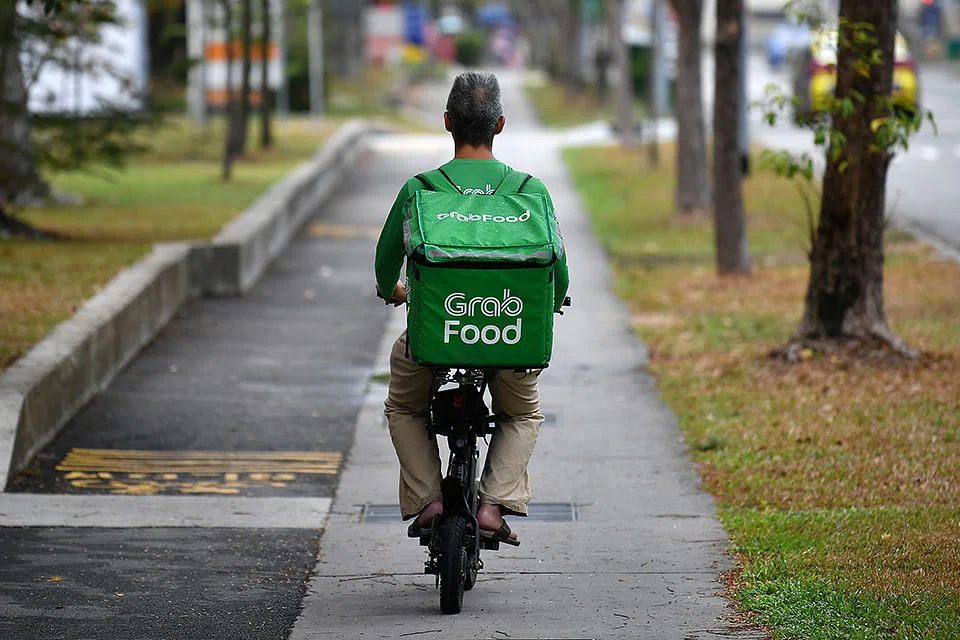
TECH platforms like Grab and GoTo are investing in electric vehicles and announcing initiatives to support their employees and partners, as they seek to build their environment, social and governance (ESG) credentials. But their reliance on a gig workforce is still the elephant in the room.
ESG-minded investors should pay more attention to the growing debate over regulation in this region, and what the platforms are actually doing versus what they say they stand for. This is especially since there isn't a clear framework to evaluate these companies' labour policies.
Lack of best practices
Regulators, platform operators and workers disagree over whether gig workers should enjoy employee status or remain independent contractors.
This disagreement has resulted in regulation that tries to strike a middle ground of classifying workers as independent contractors while attempting to give them employee-like benefits such as minimum wage and insurance guarantees.
Unfortunately, most of such middle-road regulatory attempts have significant shortfalls for workers and regulators.
In February, Ontario proposed legislation to guarantee app-based gig workers a C$15 minimum wage as well as other protections such as dispute resolution.
But the proposal was criticised for not going far enough. The minimum wage is only applicable to active hours completing a trip, discounting the often-long waiting times that gig workers face.
A similar divide emerged in California. Proposition 22 - supported by Uber, Lyft and other platforms - was supposed to retain gig workers' contractor status while guaranteeing at least 120 per cent of the minimum wage.
But this was later found to be unconstitutional by the state's superior court, as it could limit the legislature's powers in future to define gig workers' status.
ESG gap
As regulators struggle to reconcile the demands of platforms and workers, investors will face investment risks from an ESG perspective. A growing market emphasis on ESG credentials could weigh on platform stocks.
Already, questions are being asked about how well gig worker policies gel with ESG expectations. Uber made it to the 41st position in this year's edition of the Just 100 - an annual compilation of the top 100 US companies, based on ESG metrics, by the non-profit Just Capital.
Uber was, nevertheless, denied the seal that top 100 awardees get.
The company was instead placed "under review", alongside gig economy players Lyft and DoorDash, because of a lack of transparency around how benefits and policies are applied to employees versus independent contractors.
In a CNBC article, Just Capital's chief executive said it had been hard to get the necessary data. Just Capital therefore didn't feel it had a strong handle on the implications of a business model built on contingent workers.
Another challenge is the divergent parameters used to arrive at an ESG score, said Swarup Gupta, industry manager at the Economist Intelligence Unit (EIU).
"In fact, some asset managers completely avoid adding companies dependent on gig work to their portfolios altogether," he noted.
It isn't clear that this practice is universal. A JP Morgan analysis found no evidence that reliance on gig workers is a significant factor in ESG considerations, a February Financial Times opinion piece said. But continued negative publicity about the ills of the gig economy could well lead to changes.
South-east Asian context
The risks for South-east Asia's gig economy stocks, Grab and soon-to-be-public GoTo, are no less serious even though regulatory action is still nascent in the region.
Singapore is reviewing measures for housing and retirement adequacy, financial protection for work injuries and bargaining power.
And Malaysia is set to debate a bill that could confer employment status to gig workers, according to media reports this month.
In this part of the world, too, there is limited consensus about what needs to be done. A new survey by Blackbox Research of 175 Singapore food delivery riders found that almost all value their job flexibility, and are anxious about losing it.
There are also concerns among riders that if they gain employee status they will need to contribute more of their earnings to the Central Provident Fund (CPF), Singapore's social security savings scheme.
As self-employed individuals, riders are only required to contribute to Medisave, the medical savings portion of CPF, as long as they earn over S$6,000 annually. But Blackbox found that 45 per cent of its respondents are not contributing to Medisave.
More worryingly, only 22 per cent of this group said they would be inclined to make CPF contributions, even if the government made it compulsory.
The rise of the gig economy has clearly changed individual views on work and fair compensation. Platform operators are winners in this shift, but the result could be poorer outcomes for workers if some attempt isn't made to ensure labour safeguards and retirement adequacy.
In Indonesia, a report by Fairwork found that pay and work conditions in Indonesia's gig economy, including Grab and Gojek, are well short of "decent work standards". For instance, no platform could provide evidence that they paid all workers a fair wage as per government guidelines.
In Singapore, a report by the Institute of Policy Studies highlighted a risk that gig economy workers end up trapped in their jobs.
Of nearly 1,000 private-hire car drivers surveyed, only 31 per cent agreed they could easily get another job similar to one they held before becoming a driver or one that was related to their education or training.
A worker interviewed for the study said: "The incentives that they have are crap, (you've) got to hit 150 points or something like that, which will translate (to) about 30 rides a day. That means you have to work non-stop, 14 to 16 hours a day."
Algorithmic bias
Data transparency is another big issue. "One of the key issues that we've come across in a lot of contexts is the lack of transparency around how the algorithm allocates work and evaluates performances," said Tay Pei Chin, policy lead for digital government at the Tony Blair Institute for Global Change.
There are also perceptions of unfairness around algorithm-driven decisions, she noted. The European Union is proposing new rules for these decisions to be more transparent, which could set a precedent.
In all of these issues, there is no clear-cut answer on whether platforms are heroes or villains. But when looking through the various ESG communications of Grab, GoTo and other tech platforms, the social trade-offs will be key for investors to bear in mind.
TRENDING NOW

Peter Kwee’s Ridley Park bungalow on the market with S$100 million asking price

Motoring tycoon Peter Kwee is back in court: Here are his previous legal battles

Demand, tech capabilities position Apac and AI as Skyscanner’s next growth frontiers: CEO Bryan Batista

South-east Asia has lost Nvidia’s best salesman

