

Gig-economy players raise concerns as Singapore unveils new worker protections

Sharanya Pillai
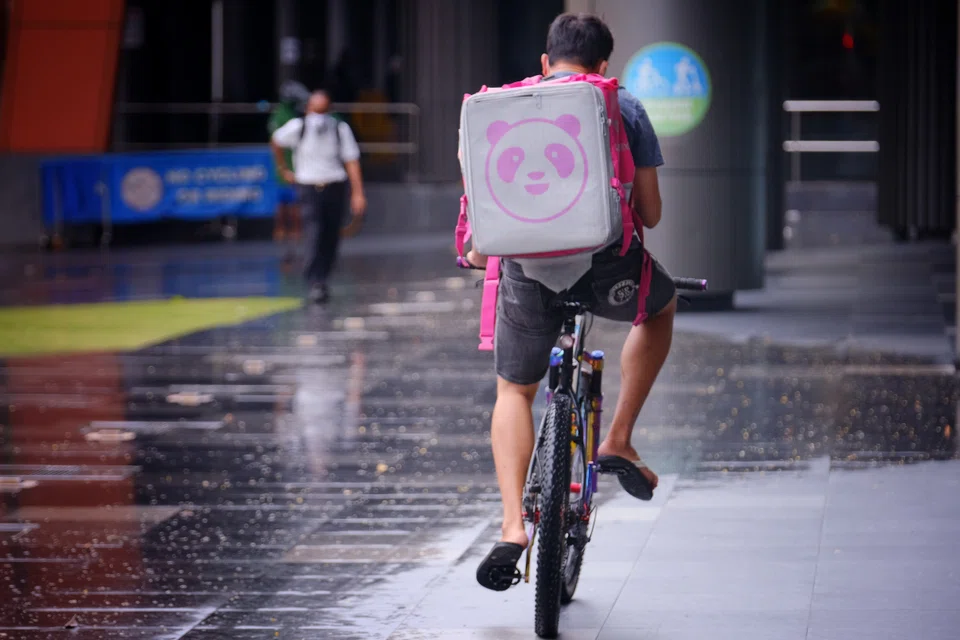
SINGAPORE’S main gig-economy platforms welcomed the country’s move not to classify ride-hailing drivers and on-demand delivery persons as employees, but are opposing how street-hail taxis and certain logistics companies are excluded from the new regulations.
The government on Wednesday (Nov 23) accepted a set of recommendations by the Advisory Committee on Platform Workers, which has spent the past year reviewing how Singapore should better protect this vulnerable group. Platform workers have thus far been treated as self-employed persons (SEPs).
Chief among the recommendations is that platform workers and companies will need to make contributions to the Central Provident Fund (CPF) at the same rate as employees and employers, excepting those aged 30 and above, in the year the measure kicks in.
For instance, if CPF for platform workers is implemented in 2025, those born in 1995 and earlier will have the choice of whether to opt in for the full regime.
Platform companies will also be required to insure workers to the same level of employees under the Work Injury Compensation Act (Wica). The coverage will be based not just on earnings from a single platform, but all the platforms that the worker earns from in the sector.
Take a scenario in which a driver who works with both Grab and Gojek is injured while serving the latter. In that case, Gojek will need to compensate him based on his earnings from both Grab and Gojek.
Besides CPF and injury coverage, the advisory committee has also recommended that platform workers be given the right to seek formal representation. It had set up the Tripartite Workgroup on Representation for Platform Workers back in August to formulate a new framework for this.
Despite the employee-like protections, platform workers will not be recognised as employees. They will instead be in a new category for workers who are neither employees nor SEPs.
In an e-mailed statement on Wednesday evening, the Digital Platforms Industry Association (DPIA) – which represents Grab, foodpanda and Deliveroo – welcomed the decision not to recognise platform workers as employees.
“As our members and the Singapore government work on and eventually implement the recommendations, we stress that none of these additional protections should be construed as acknowledgement of an employment relationship,” it said.
Exclusions
The recommendations do not apply to street-hail taxi trips because the committee deemed them “not subject to a significant level of control by taxi companies, as the companies generally do not play a role in matching the driver to the customer”.
At a press conference on Wednesday, Prof Danny Quah, the advisory committee’s vice-chairperson, said that the exclusion of street-hail rides in fact makes the playing field more level, by separating “like-for-like” operating models.
“With street-hailing, a driver comes into the taxi operator company, rents out the taxi hardware and then goes off with it. How they spend their time is completely up to them… There is an arm’s-length relationship between the taxi operator companies and the drivers themselves.
“With ride-hailing, you are constantly on the app and through the app. The platform company has a good idea of how you are performing your tasks. In turn, you get implicit directions from the platform company… The platform company puts in place incentive schemes, nudges and different kinds of directed control,” he said.
Logistics companies that use self-employed delivery workers on an ad-hoc basis, without algorithmic matching of demand and supply, are also excluded. The committee said these companies are unlikely to exert significant management control over the workers.
The DPIA disagreed with the exclusions. It said: “The potential exclusion of some third-party logistics and taxi street-hail platforms, which also use platform workers for their business needs, could lead to price and market distortion.”
In a separate statement, Grab said that the exclusions “may also encourage other industry players to innovate and fit their business models to the exclusion guideline, which may then render the recommendations ineffective”.
Grab also raised the challenge of providing Wica-like coverage for their earnings across the whole sector, instead of for just one company like a typical employer. It asked for a trial of the concept involving a smaller group of workers across platforms.
Increased costs were another concern. Grab called for the increase in CPF contribution rates to be slowly phased in over the five-year timeline.
The DPIA said the CPF-related measures will place “upward pressure” on business costs, and could result in increased prices for merchants and consumers, and reduce take-home earnings for riders. This sentiment was echoed in separate statements from foodpanda and Gojek.
The Gojek spokesperson said: “Implementing these recommendations will also impact costs to platforms and consumers, and drivers may experience lower demand for rides. Coupled with rising vehicle and fuel costs, we will work together with all industry partners to implement these changes while ensuring the sustainability of the ride-hail industry.”
At Wednesday’s press conference, committee chairperson Goh Swee Chen said that the committee is sensitive to factors that could push up costs for the platforms, but emphasised that the recommendations are “phased in a concerted manner” to mitigate this.






