Helping SMEs’ global pursuits: How cross-border payment platform breaks down financial barriers
With a focus on customer needs, XTransfer is building a fintech network to provide SMEs with the same financial tools as large MNCs
Melissa Kong HP
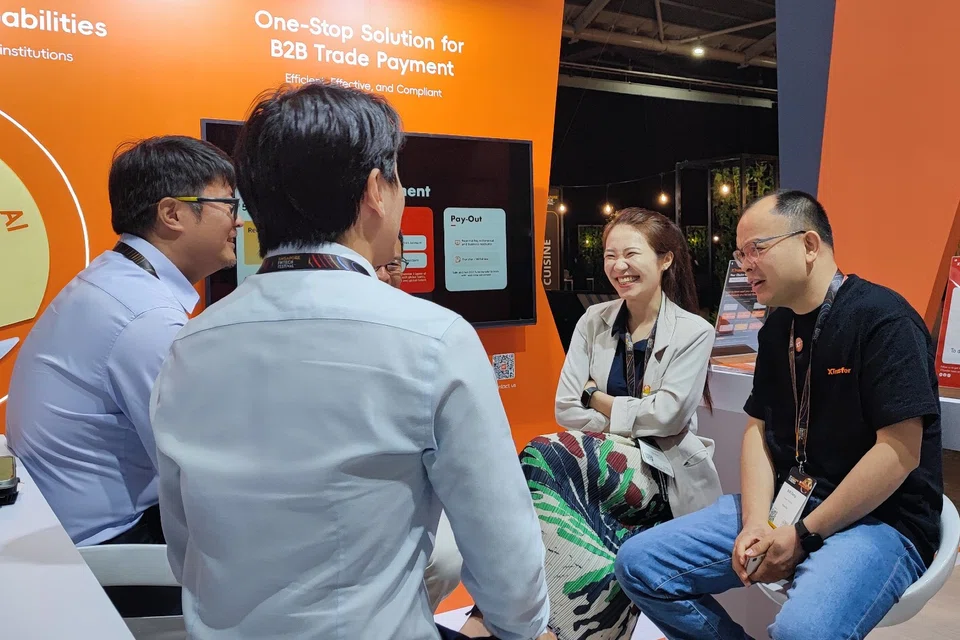
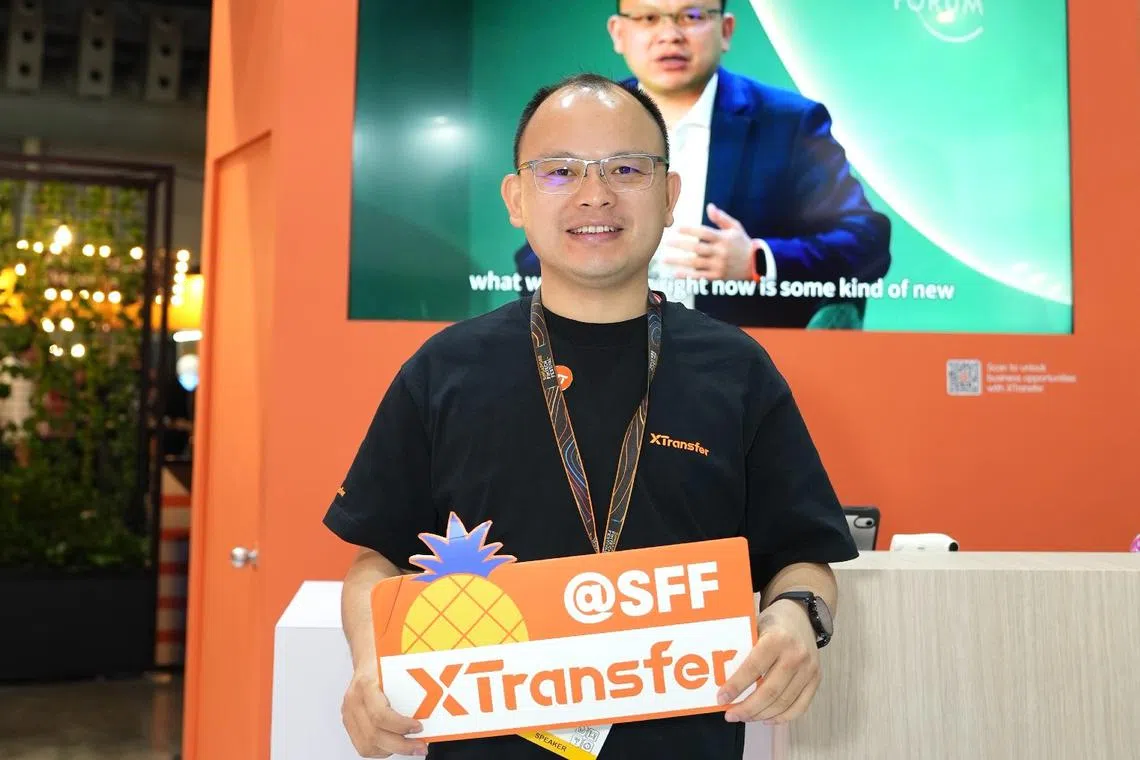
Despite being the chief executive officer of one of the world’s largest cross-border payment platforms, Bill Deng deliberately maintains a “da gong ren”, or hardworking employee, mentality.
This explains his packed schedule when he was in town for the Singapore Fintech Festival from Nov 6 to 8. His day would start with an 8am breakfast meeting and end with a 10pm cross-time zone call, filled with partner visits, speaking sessions and exchanges with trade visitors in between.
A Management Science and Engineering graduate of Fudan University, Deng recounted his company’s evolution from start-up to success. He says this hardworking mentality helps him manage and grow XTransfer, a Shanghai-based cross-border payment platform for small and medium enterprises.
Deng co-founded XTransfer in 2017 after working nearly 7 years at Ant Financial, now known as Ant Group, a subsidiary of the Alibaba Group. While there, he noticed a glaring gap in the market. Despite the explosion of business-to-consumer (B2C) payment solutions, business-to-business (B2B) transactions – a far larger market – were underserved.
“It was an opportunity of a lifetime. The B2B market is 10 times larger than B2C, and it was completely untapped.” Deng says.
Seizing this business opportunity, Deng and five colleagues made the bold decision to leave their stable jobs and embrace entrepreneurship. After countless discussions over coffee and hotpot, they came up with a plan to revolutionise cross-border payments for small and medium-sized enterprises (SMEs). Their vision was to create a platform that would level the playing field for small businesses in China and beyond, empowering them to access global markets with ease.
The result? Half a million SME customers in China, connected to over 200 markets around the world.
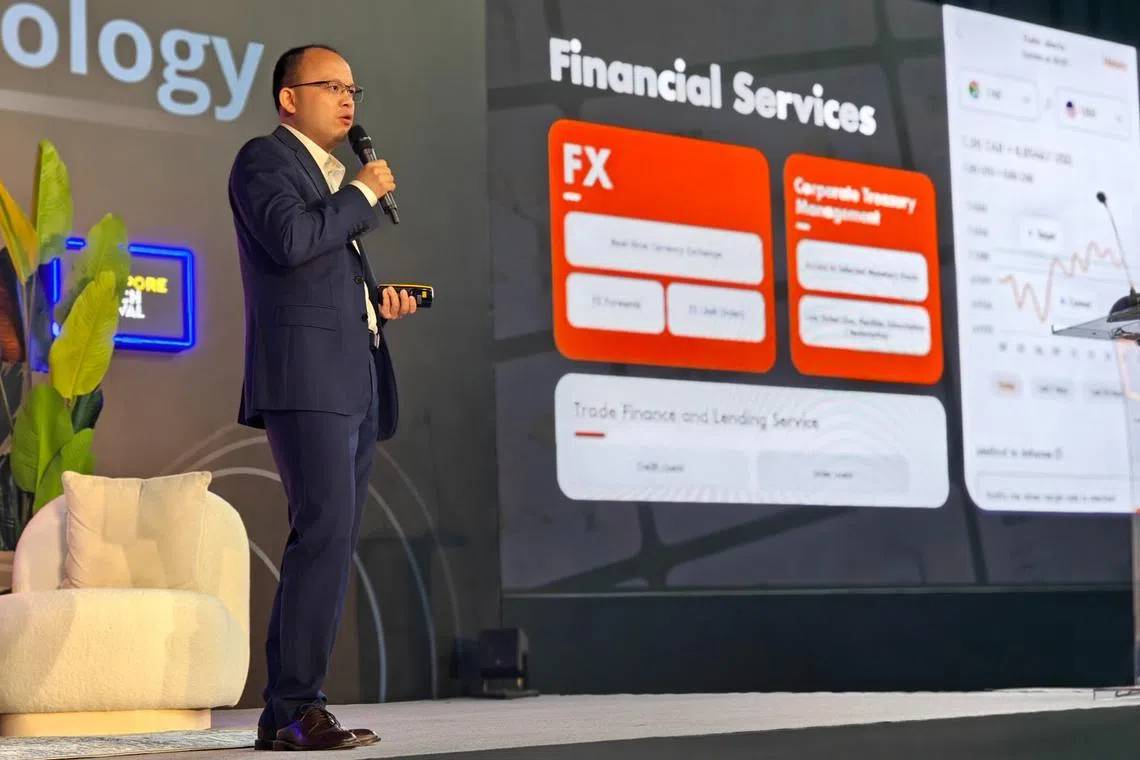
But what does the business model for XTransfer look like? Essentially, it provides its clients, most of whom are SMEs in China, access to local bank accounts in major global markets. This means they can collect payments from international customers with less hassle. Picture this: An SME in rural China producing niche agricultural tools can now sell to a buyer in Brazil without navigating cumbersome financial processes. XTransfer’s platform currently handles currency exchange, funds collection compliance and other processes at the back end to connect them to global markets.
In seven years, Deng built XTransfer into a global operation with 2,500 employees in locations such as China, Hong Kong, the United Kingdom, the Netherlands, the US, Canada, Australia, Singapore, Vietnam, Thailand, Malaysia, the Philippines, the UAE and Nigeria. Now a unicorn with a valuation of over $1.3 billion, it counts D1 Capital Partners LP, Telstra Ventures and China Merchants Venture as its investors.
Solving pain points
China’s SME sector, which exceeded 52 million businesses in 2022, plays a vital role in the country’s economy. According to the European Union SME Centre, these enterprises contribute around 50 per cent of China’s tax revenue and 60 per cent of its gross domestic product.
Deng says his company offers comprehensive cross-border financial solutions tailored for SMEs in China, addressing their struggles with accessing traditional banking services. These solutions range from global account opening to foreign currency exchange, bridging critical gaps in financial accessibility.
In markets where it operates, XTransfer specifically supports SMEs that traditional banks often classify as high-risk and low-profit, leaving them without reliable financial options. Previously, many of these SMEs were forced to depend on unofficial channels, exposing them to significant risks, including legal complications and potential financial losses.
“Our focus is solving real pain points,” says Deng. “We empower our SME clients to scale internationally, reducing barriers they have faced for decades.”
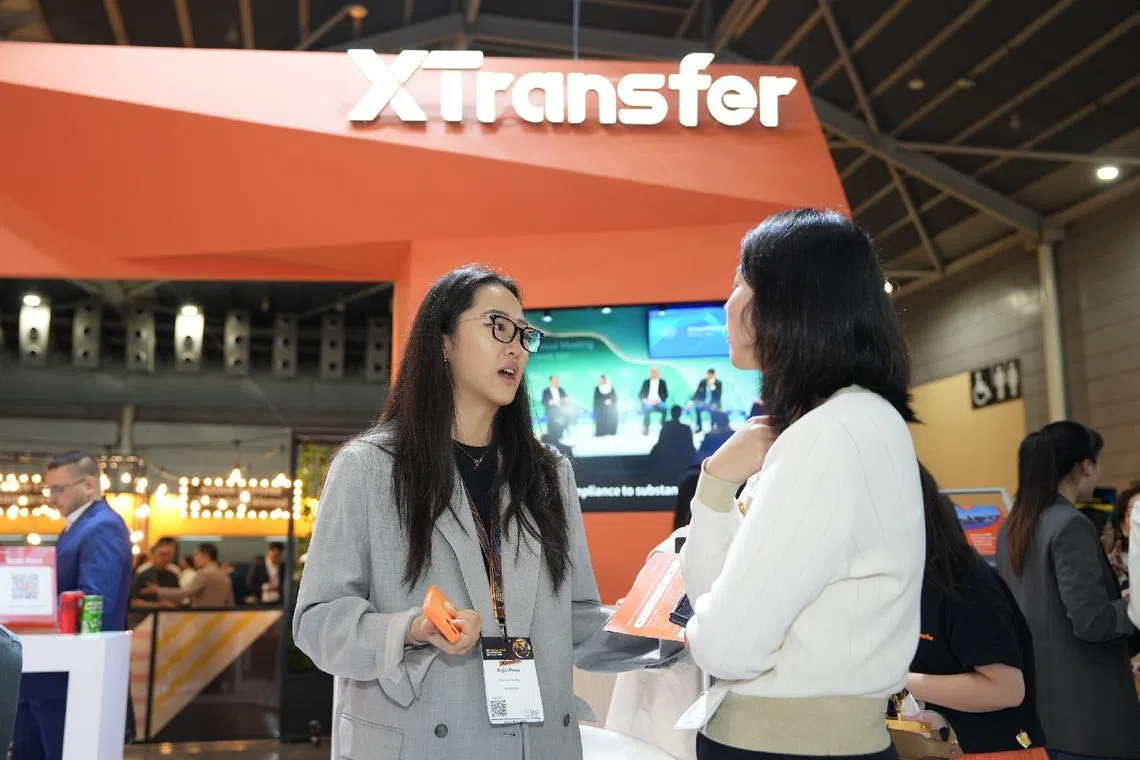
He adds that XTransfer has built a data-based, automated, Internet-based and intelligent anti-money laundering risk control infrastructure centred on SMEs.
By utilising artificial intelligence (AI), both in its own operations and also to assist banks and financial institutions in anti-money laundering and anti-fraud efforts, Deng explains manual operations are largely reduced, significantly improving efficiency.
With AI, XTransfer is also able to help larger banks assess their SME clients and serve them, where previously it would not have been economically efficient for these large banks to do so.
Expansion plans
Now, XTransfer is making a major push into South-east Asia. In July, it received in-principle approval from the Monetary Authority of Singapore for a major payment institution licence. The company plans to expand its presence here sixfold to 30 employees and to make Singapore its South-east Asia and Asean headquarters.
In the first nine months, collections from Asean clients by XTransfer’s clients in China nearly doubled compared to the same period last year, based on XTransfer’s data.
Plans to expand into South-east Asia are part of a broader global strategy, says Deng. The company’s Dubai office, set up in January this year, serves as XTransfer’s gateway to Gulf Cooperation Council countries, while London anchors its European operations. Plans are also underway for a Netherlands office as the country was the largest European Union importer of goods from China in 2023, and the company is also actively expanding into emerging markets across Africa and Latin America.
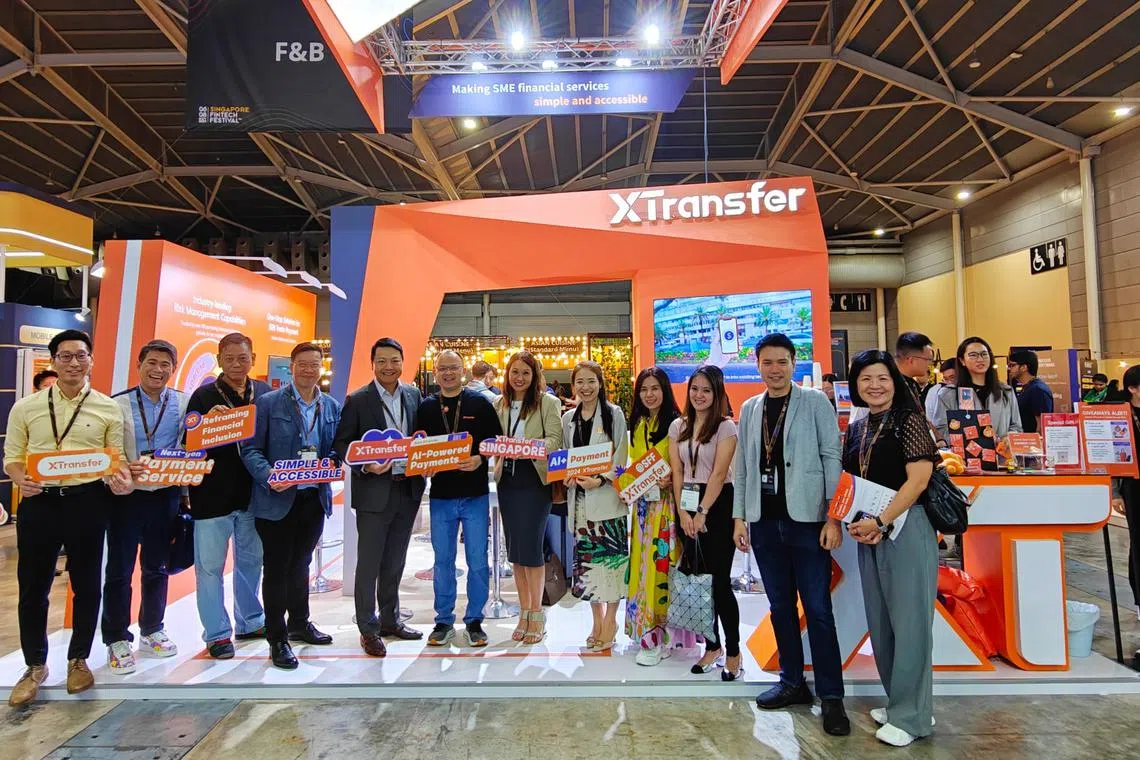
Despite this rapid growth trajectory, Deng maintains his focus on customer experience. He still personally reviews WeChat messages from SME owners, believing that direct customer feedback reveals more than any market research report.
“While many fintech companies prioritise technology, even the best technology will fail without a deep understanding of the customer’s experience,” he says. His advice to fellow entrepreneurs? “Always be agile, be customer-centric. The customer is king.”
Disclaimer:
This advertorial is for information purposes only, and does not seek to nor shall be construed to constitute any offer to, provide any type of payment service. No payment service is at the time of publication of this advertorial offered to any person in Singapore pursuant to this advertorial.
XTransfer is not at the time of publication of this advertorial registered, licensed or exempted in Singapore as a financial institution, financial adviser, payment service provider, or any other regulated entity under the Payment Services Act 2019. For the avoidance of doubt, no representation is made (i) that any e-money or payment account is available to be acquired by persons in Singapore; or (ii) that e‑money denominated in Singapore dollars is available to be purchased or otherwise acquired.

Share with us your feedback on BT's products and services