

Inside HR’s new AI playbook: Faster hiring, better job matches, smarter workforces
With artificial intelligence, companies are recruiting, training and organising talent differently as regional and global human resources leaders discussed at the recent CHRO AI Think Tank hosted by LinkedIn
 Add BT as a preferred source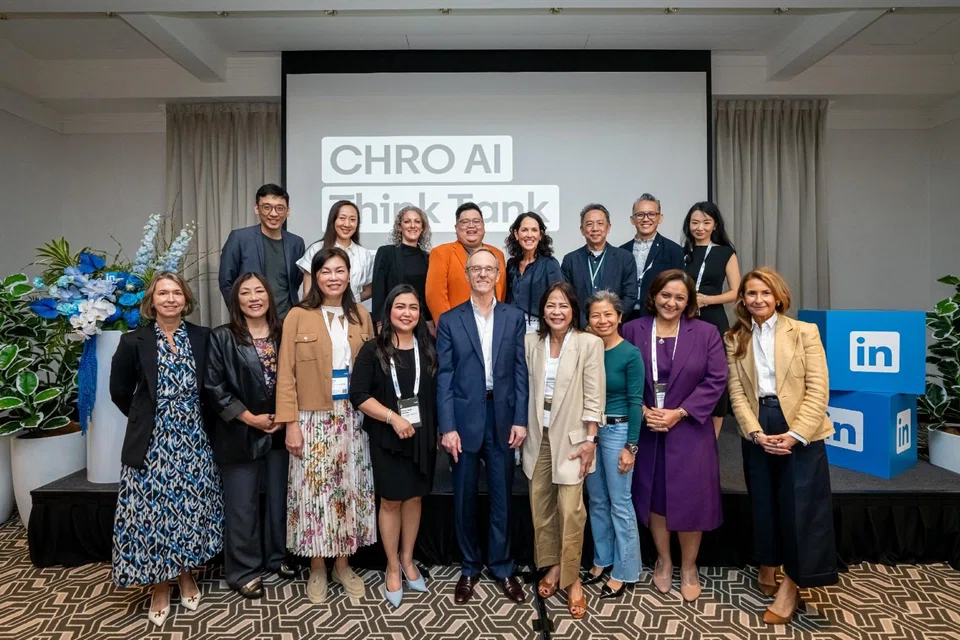
As artificial intelligence (AI) becomes embedded across industries, companies are moving beyond pilot projects and rethinking how work is managed.
According to LinkedIn research, 38 per cent of the skills required for jobs globally have changed since 2018. This figure is projected to reach 70 per cent by 2030 as AI reshapes the workplace.
Rather than signalling a retreat in the labour market, the shift reflects what LinkedIn describes as a “rotation”, with new roles emerging as businesses adapt to the technology.
Jobs that did not exist five years ago – such as AI orchestrators and data annotators – have now become essential.
However, this rotation has led to new anxieties – and excitement – around the impact of AI, and human resources (HR) leaders are grappling with this new set of challenges.
To navigate this paradigm shift, LinkedIn brought together 14 chief human resources officers (CHROs) from Asia and beyond, in a CHRO AI Think Tank.
The Think Tank reached a striking consensus: AI is no longer a “nice-to-have” innovation. Businesses are at a key moment where the technology transitions from a debated ROI line item to a foundational utility that no company can operate without.
Use AI where it makes a real difference
One of the insights surfaced by the Think Tank is a shift away from superficial adoption, with business leaders in general slowly coming to the same realisation as well. In particular, “AI-washing” needs to be avoided at all costs.
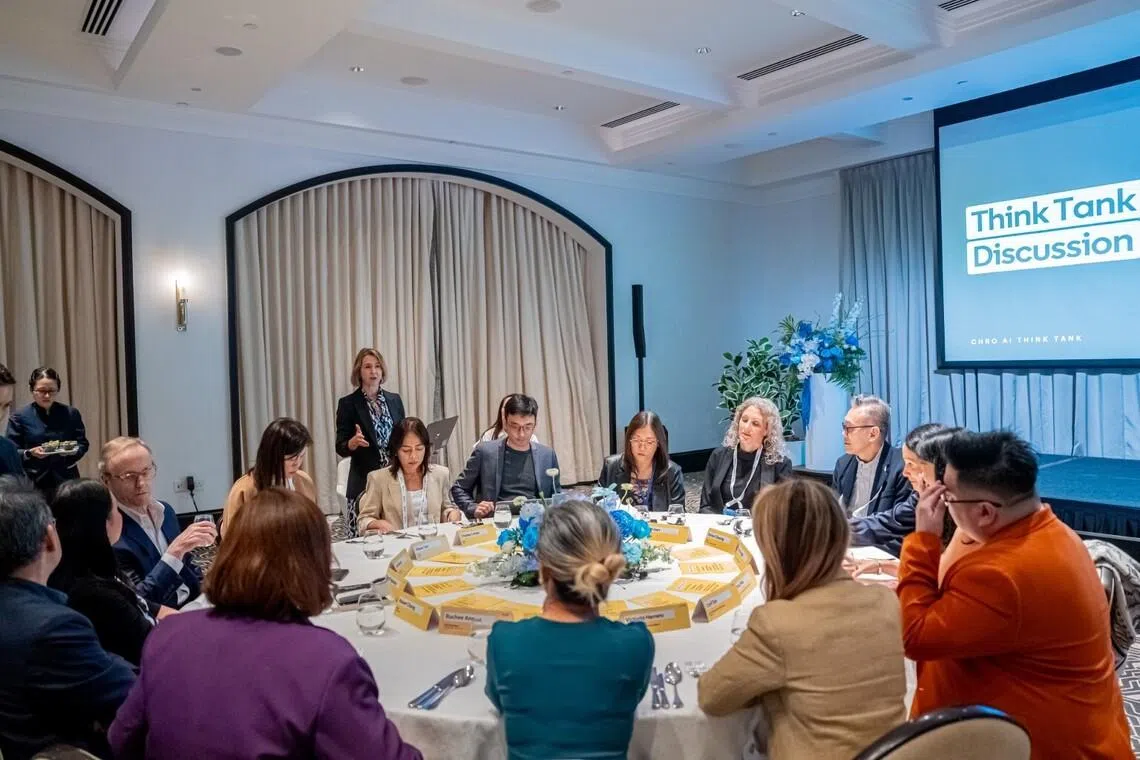
Aileen Tan, Singtel’s group chief people and sustainability officer, explained the term using a vivid analogy of a piece of toast, spread with a very thin layer of peanut butter – you can smell it, but you cannot taste it, and no one believes you when you say it is peanut butter.
In her view, many companies fall into the trap of wanting to use AI just because it is the thing to do, but they are not really using the technology at all.
This has happened in the corporate world before, with some legal repercussions. Two years ago, the U.S. Securities and Exchange Commission announced that it was fining two investment advisers for making false and misleading statements about their use of AI.
To avoid this, Josh Bersin, chief executive officer of HR advisory firm, The Josh Bersin Company, advised that leaders need to return to the fundamentals.
“Don’t think about it as AI, just think about it as technology and do what you would always do, which is: ‘What are some of the most important problems we should be working on, and how can we apply this technology?’” he shared. “It’s about what you can do to make your business better, your recruiting better, whatever it is you’re trying to accomplish.”
Navigating ROI and strategic investment
While AI investment should be treated like any other business investment, where returns are tracked and measured, participants at the Think Tank noted that the debate over AI’s immediate return on investment is maturing into an acknowledgment of strategic necessity.
“Nobody talks about ‘what is the return on investment if I use Microsoft Office?’” posited Simon Cheong, CHRO at Pacific International Lines. “I think AI is the same thing - it will come to a point where this is the bread and butter as a business solution.”
Growing AI adoption in the business world seems to signal that Cheong is right on the money, especially within the region. By 2024, nearly half (46 per cent) of South-east Asian firms had moved beyond AI pilots towards scaling, compared with 35 per cent of companies globally.
For HR, this ‘bread and butter’ utility can be found in the back office, where tools such as LinkedIn’s Hiring Assistant play a valuable role.
Hiring Assistant is an AI agent designed to make it faster and easier to source and screen candidates, by looking beyond traditional filters and identifying candidates based on actual skills and capability, helping recruiters find the “hidden gems” they might otherwise miss.
For security organisation Certis, Hiring Assistant has had a significant impact on its recruitment, boosting recruiter productivity by between 60 per cent to 70 per cent, streamlining work processes, and freeing staff from repetitive tasks.
“Hiring Assistant surfaced candidates we would have otherwise missed – including niche roles that had been open for months,” shared Jaclynn Lee, Certis’ CHRO. “That’s the real value: uncovering hidden talent.”
Build up AI-native workforces
According to LinkedIn data, Singapore professionals are among the most optimistic about the potential of AI, along with AI roles being among the fastest-growing jobs in the country. AI training is essential, but it must be executed properly.
“Everyone goes for AI training, but we make sure that they go for the training with a real business case and with tools that already exist in the company. Then it’s effective,” said Certis’ Lee.
The Think Tank highlighted that a successful “rotation” of the workforce requires more than just training – it requires an “AI-native” lens. This means redesigning roles rather than just “tacking on” tools.
This transition requires HR to act as the primary architect of mindset change. As Singtel’s Tan noted, companies must be bold enough to ask: “If you took an AI-native lens and looked at this system from scratch, what would you do differently?”
Laying the foundations for the future
For all that AI can do, the consensus among many leaders seems to be clear: AI cannot replace human judgment. Charee Lanza, CHRO at Philippines-based digital payments company Maya, shared a philosophy of AI helping work be “effortless when it should be, human when it matters”.
And as AI marches on, HR plays a crucial role in laying the foundations for employees and business to embrace the technology. By moving past the hype and focusing on foundational utility, HR leaders are not just adopting a tool – they are building the infrastructure for the next decade of work.
“[AI] can power many, many opportunities, but that calls for mindset change,” said Singtel’s Tan. “We need new muscles. But that’s where we as HR come into the play as… the architects to enable everyone to seize the opportunity.”
This article was first published in Tech in Asia.

Decoding Asia newsletter: your guide to navigating Asia in a new global order. Sign up here to get Decoding Asia newsletter. Delivered to your inbox. Free.
Share with us your feedback on BT's products and services
TRENDING NOW
Buyer for England striker Harry Kane’s former mansion must pay £3.4 million after abandoning deal

Ohmyhome Ltd sells real estate business for token US$1 due to poor business and continued losses

What’s wrong with Orchard Road? Experts weigh in on the street’s cachet and its future
Malaysian tycoon Vincent Tan’s sell-downs point to pruning rather than an exit plan

