No bubble, doom or trouble for Malaysia’s data centres
Some government planners worry that unchecked expansion could force difficult trade-offs
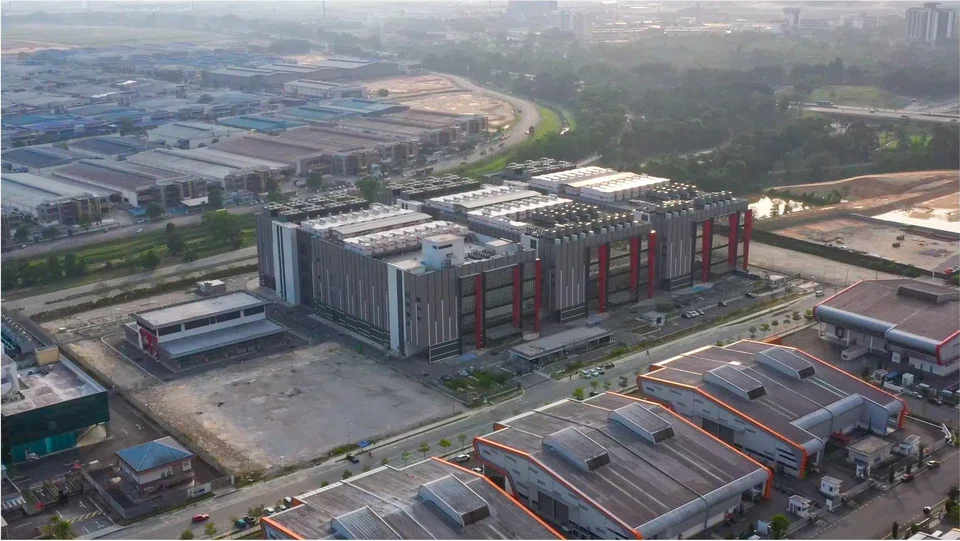
FOR over the past year, questions have persisted about Malaysia’s data centre boom. Is it sustainable? Will hyperscalers pull their chips? Is it in a bubble?
Malaysia’s data centre surge remains one of the largest in the world, but the physical and geopolitical limits surrounding it are no longer theoretical. Higher electricity tariffs, uncertainty around long-term energy pricing, constraints with water resources, and new US semiconductor rules are reshaping the calculus for developers and government planners. The concerns, however, are not exclusive to Malaysia. Data centres are also on the rise in Indonesia and Vietnam. Many analysts are worried, but others say there is no bubble and these countries are making a necessary investment.
A boom built on Singapore’s pause
Malaysia’s rise began with Singapore’s “temporary pause” on new data centres between 2019 and 2022 due to environmental and resource-related issues. The moratorium pushed global cloud providers to look for alternatives just across the border.
Johor, the Malaysian state north of Singapore, offers large plots of land suitable for data centres, proximity to its neighbour’s high-speed Internet infrastructure, and lower costs. Investment commitments have made Johor the hot spot for data centre construction in South-east Asia.
But even as construction accelerated, there were early warning signs.
Malaysia’s utilities sector began flagging challenges, and a recent report from Reuters cited increasing electricity tariffs and unclear long-term pricing for operators.
A more detailed warning came from a study by the Iseas-Yusof Ishak Institute. Researcher Sara Loo found that Malaysia’s committed data centre capacity, which is based on signed electricity supply agreements, was expanding significantly.
According to a July 2025 note, the country has 43 data centre projects in the pipeline with a combined maximum demand of 6.4 gigawatts, or around 23 per cent of peninsular Malaysia’s total capacity.
Those concerns have prompted action. In September, Malaysia tightened approval requirements for data centre applications and slowed the number of new projects. The process now includes feasibility and sustainability studies as requirements.
Water, water everywhere
Cooling is still one of the biggest challenges for data centres. Malaysian environmental groups have voiced concerns about the amounts of water needed for cooling in hot, humid climates.
Data centres in general – and graphics processing units (GPUs) in particular – need constant cooling to run efficiently, and that requires clean water. While Malaysia receives enough rain and water systems, it does not have enough facilities to process the water the country needs for all the data centres currently being proposed.
Johor and Selangor, the country’s other main data centre zone located outside of Kuala Lumpur, are both experiencing water supply issues related to their data centres.
Some government planners worry that unchecked expansion could force difficult trade-offs between industrial, residential and data centre water needs.
Peter Huang, global president for data centre and thermal management at energy titan BP, said data centres in the country were actively looking for alternatives to water. The London-headquartered firm supplies cooling technology to Malaysia and Singapore.
Huang said that Castrol, the BP unit focused on lubricants, has seen a rapid surge in demand from Johor, Cyberjaya, Batam and Singapore for liquid (non-water) based cooling systems such as NVL72 from chipmaker Nvidia.
The systems often use PG25-based coolants, which are more expensive upfront but often result in lower long-term operational costs, Huang added. He noted that while water remains the most efficient coolant, it carries a higher operational cost (opex) from contamination, corrosion, bacterial growth and heavy maintenance.
“Cooling is about 40 per cent of the opex cost of a data centre,” Huang pointed out, adding that liquid cooling systems can save companies more than 50 per cent of their opex costs.
Deionised water systems, which are still used for cooling in parts of China, require constant treatment and cleaning.
The geopolitics of compute
Geopolitics has added a new layer of uncertainty to the industry. In September, Malaysia released new rules on high-end GPU exports, a move meant to comply with US efforts to restrict China’s access to high-end artificial intelligence (AI) chips.
The policy did not halt development in Malaysia, but data centre operators began factoring in an extra layer of risk. Companies needing high-end Nvidia systems may face longer procurement timelines or greater administrative friction, sources told Tech in Asia.
Huang also said that some operators were already expecting future GPU shipments to be diverted to politically “safe” jurisdictions like Japan and South Korea.
Blocking the entry of new chips would have a financial impact on South-east Asia. If new data centres operate below capacity, utilities may struggle to recover grid-upgrade investments, and data centre developers without hyperscaler tenants may face financial pressure. Banks that financed these projects could also be exposed.
But Matt Walker, chief analyst at MTN Consulting, said that ultimately, the effects of a downturn would be felt by average people. “Usually it’s the taxpayers,” he told Tech in Asia.
Over RM11.5 billion (S$3.6 billion) of data centre investment comes from domestic sources, according to Bernama, but any major downturn that affects banks or utilities could trigger a government bailout.
Walker also pointed out that real estate developers who bought land for data centres and utility companies that make investments to support these facilities could also be affected.
“It won’t be the big companies run by businessmen wearing nicely tailored suits,” he said. “They are masters at deflection and evasion.”
Cloud prices for small and medium-sized enterprises (SMEs) could also go up if data centre operators try to offset increased power or cooling costs.
However, this does not mean that South-east Asia is in a data centre bubble, according to a source who asked for anonymity. They note that governments and enterprises were racing to expand capacity before demand fully takes shape, to avoid higher prices down the road.
Governments in Japan, South Korea, and parts of South-east Asia are now buying GPUs directly – sometimes with matching funds from domestic cloud providers – to offer lower-cost access to SMEs. They frame this as a “technology loan” model, designed to ensure that local companies can experiment with AI without upfront infrastructure costs.
Kim Soo-yeon, EY Asia-Pacific leader for artificial intelligence, agreed, adding that growth in data was not just specific to AI. She believes that GPUs and other powerful computing resources are still insufficient.
“Demand is much greater than supply,” she said. “So governments are securing computing power early to make sure enterprises can get what they need at the right time.”
With that in mind, she does not see a bubble in the region.
“There is going to be greater AI and computing resource demand in the next few years, at least,” she explained. “It’s an exponential curve, not a linear one.” TECH IN ASIA