‘No more WeWork-style growth’: Hmlet CEO Yoan Kamalski on his comeback and lessons learnt
‘Unfinished desires’ fuel his return and the pivot to sustainable growth under Mitsubishi Estate

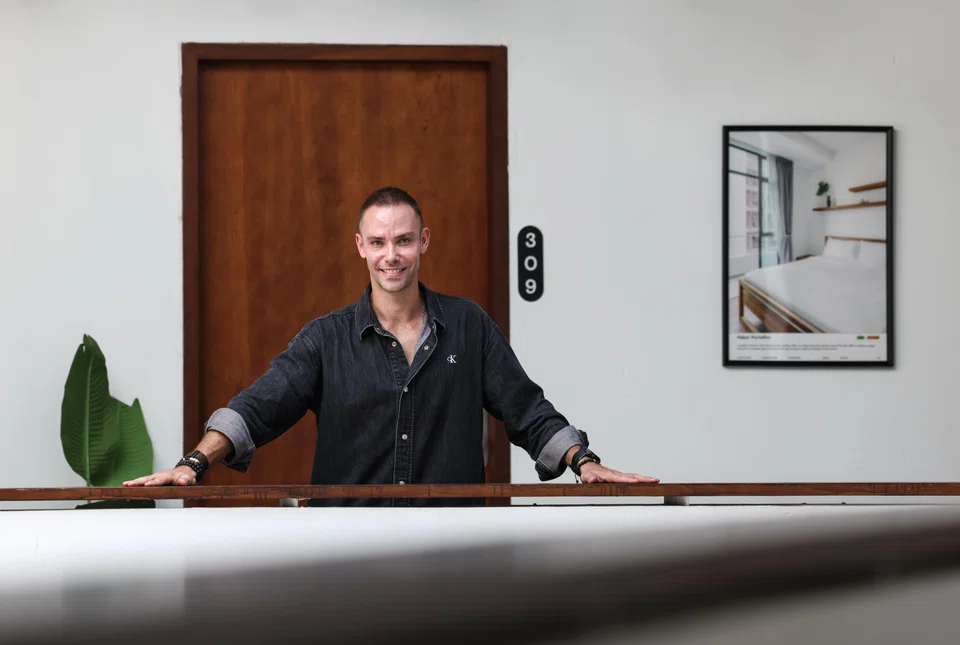
[SINGAPORE] About five years after stepping down as the chief executive officer of co-living operator Hmlet, co-founder Yoan Kamalski has returned to the helm, this time backed by real estate developer Mitsubishi Estate rather than venture capital (VC).
“I had unfinished desires to build something really cool,” he told The Business Times. His return comes as Hmlet’s Asia-Pacific operations were recently reacquired by European co-living operator Habyt.
In 2021, Burda Principal Investments – Hmlet’s former investor, which in 2019 led the startup’s US$40 million Series B funding round – stepped in to run the company amid the Covid pandemic, which had hit the co-living sector hard.
It was around this time that a slew of key executive departures unfolded, Kamalski’s among them.
“I wanted to save the company, save the staff, save the spaces – should I keep fighting or step down to make sure the company survives?” he said, reflecting on his decision to step aside.
Eventually, in April 2022, Hmlet’s investors brokered a deal to merge the company with European co-living operator Habyt to act as the latter’s Asia-Pacific operations.
After leaving Hmlet in March 2021, Kamalski explored employment, but ended up creating another startup: ZenAdmin, a platform for managing IT devices and systems for businesses dealing with remote teams.
The business is still operating, and he will hold the CEO position at both companies concurrently.
He also remained involved in Hmlet’s Japan joint venture and kept close ties with Kenichi Sasaki, CEO of Mitsubishi Estate unit FL Japan, discussing matters such as Hmlet’s – and later Habyt’s – expansion plans.
“If there’s a market shift, we will continue to support our real estate partners and not just run away and exit, betraying the partners that we had to convince to do business with us.”
Yoan Kamalski
About a year ago, Sasaki called Kamalski about possibly buying the Hmlet name back from Habyt, and if he could return to the company as a director.
“It’s our shot – how many times can such things happen?” Kamalski said, reflecting on the news that Habyt wanted to sell its Asia-Pacific operations.
Hmlet co-founder Zenos Schmickrath did not return with Kamalski – their relationship soured somewhat after the latter had asked him to step down.
This was a mistake, Kamalski admitted, as he lost his co-founder’s support during the challenging times in the pandemic.
“It was a really difficult situation that happened… (it was) like a break-up,” he said.
Looking back, he thinks that the biggest lesson he learnt was to not treat the real estate business like a tech venture. Hmlet will move away from “growth at all costs” – which means no longer snapping up any available space and figuring out the economics of it later, he said.
This strategy had resulted in “death by a thousand cuts” during Covid, when the market shifted rapidly, he added. The traditional VC way of cutting losses also dented Hmlet’s credibility among landlords, as the company abandoned leases and markets during the pandemic.
“When you exit that way, it’s horrible – no one wants to work with you again,” he said.
For instance, when Hmlet pulled out of Australia, it saddled its real estate partners there with the bills. Returning would be hard, he admitted.
Now that the company is backed by Mitsubishi Estate, Hmlet is building for sustainability – in both cash flow and customer experience, he said.
“If there’s a market shift, we will continue to support our real estate partners and not just run away and exit, betraying the partners that we had to convince to do business with us.”
He also highlighted this as the fundamental change that Hmlet will undergo as he returns to the helm.
New market dynamics
In the near term, Kamalski will review properties as they switch hands from Habyt to Hmlet, refresh selected ones, and complete their rebranding within 30 days.
Hmlet has a number of offerings, from hotels and serviced apartments to long-term rentals across Japan, Singapore and Hong Kong. In total, it has 2,915 units.
It will also roll out its property management software, which it spent the last year building, said Kamalski. With the platform, tenants and customers will have a fully digital experience. The data migration between Habyt and Hmlet is set to happen within the next 45 days.
There will also be some portfolio rationalisation, which means not renewing the leases on some properties as the returning CEO aims for profitability.
“No more of what happened back in the day, which was like WeWork-style (growth),” he said, adding that such expansion comes with even more losses.
Competition in the co-living space has also intensified, with operators such as The Assembly Place, Coliwoo and Cove expanding in key markets.
Kamalski said that the partnership with Mitsubishi Estate could give Hmlet an edge, as the Japanese real estate player can take on stakes in buildings and bring the co-living company in – aligning interests between the landlord and operator.
The profitability of Hmlet’s Japan operations could also support expansion elsewhere.
Australia is one market that Hmlet is looking to return to, with Kamalski saying he intends to make peace with the investors and real estate players that were hurt during the exit.
The company’s return to other markets it previously exited, such as Malaysia and Thailand, will likely be through a franchise model. Kamalski added that the focus is on entering more expensive markets where rents are higher and the value proposition makes sense.
The immediate challenges that Hmlet faces include the war in the Middle East, as affected travel demand would also soften the company’s hotels business, he said.
He added that operators such as Hmlet have to adapt, be it by opening up the properties for events or other ways to sustain the business.
Hmlet will engage its landlords to build a more sustainable business model, leaning to lower base rent but with profit-sharing arrangements to better withstand future downturns.
“(In making sure we meet) the expectations of our real estate partners and the people living in the space, coming back is just one step of the process – now we have to deliver,” he said.