Silicon Valley 5G chip startup EdgeQ raises US$75 million to boost production
 Add BT as a preferred source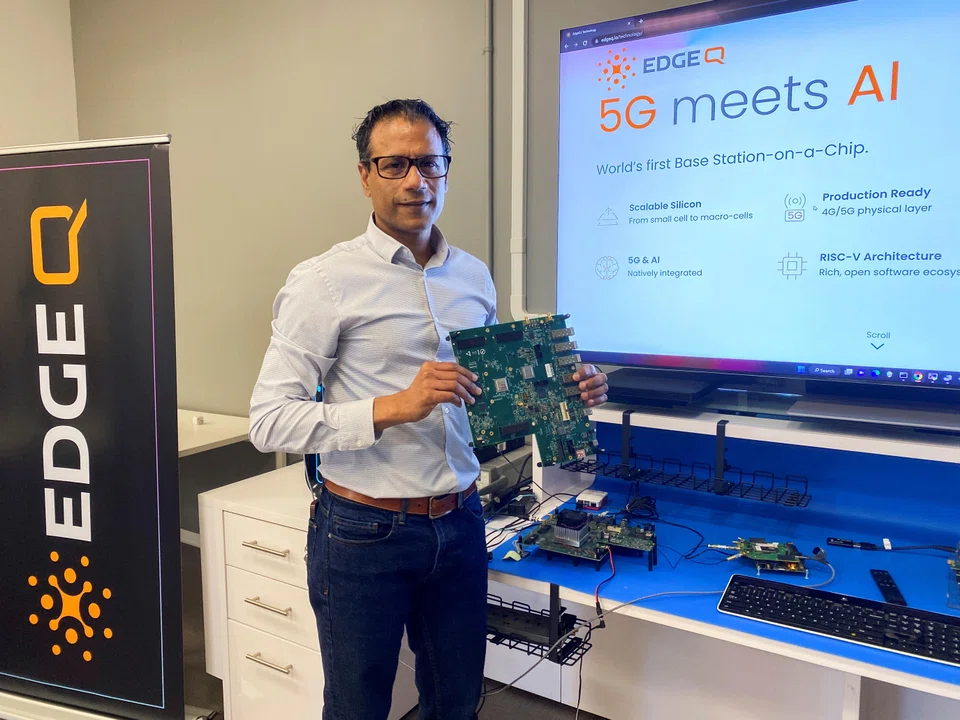
SILICON Valley 5G chip startup EdgeQ said on Wednesday (Apr 19) it raised US$75 million to help fund a ramp up in production as the company starts selling its technology to customers, including telecom operators.
It also announced that Lattice Semiconductor CEO Jim Anderson is joining EdgeQ’s board of directors.
EdgeQ makes semiconductors that power base stations for 5G telecom towers and for 5G access points that can be installed inside places like factories to run robots and autonomous vehicles wirelessly, said Vinay Ravuri, CEO and co-founder of EdgeQ. The chips can also handle 4G cellular signals, he said.
“WiFi is considered best effort, meaning it isn’t guaranteed,” said Ravuri. “If it’s a precise welding machine and it needs to move exactly this much, that has to happen within a microsecond or a millisecond, and you can’t do that in a best effort way.”
The fundraising shows that companies viewed as promising by investors are able to secure financing even though funding has dried up for many startups following the collapse of Silicon Valley Bank and the ensuing banking sector turmoil in March.
EdgeQ has a valuation of “hundreds of millions of US dollars”, said Ravuri, adding it was “definitely less than” US$1 billion.
The recent advent of a new open standard chip architecture called Risc-V has made it possible to design its new 5G chip more cost effectively, he said. That has helped EdgeQ bring down the base station cost by about 50 per cent compared with existing options today, he said.
EdgeQ, started in 2018, builds products that are based on OpenRAN, an open standards body that allows operators to mix and match suppliers in their radio networks, emerging as a competitor to the likes of Ericsson, Huawei, and Nokia that dominate the global telecoms equipment market with their proprietary technologies. REUTERS
Decoding Asia newsletter: your guide to navigating Asia in a new global order. Sign up here to get Decoding Asia newsletter. Delivered to your inbox. Free.
Share with us your feedback on BT's products and services