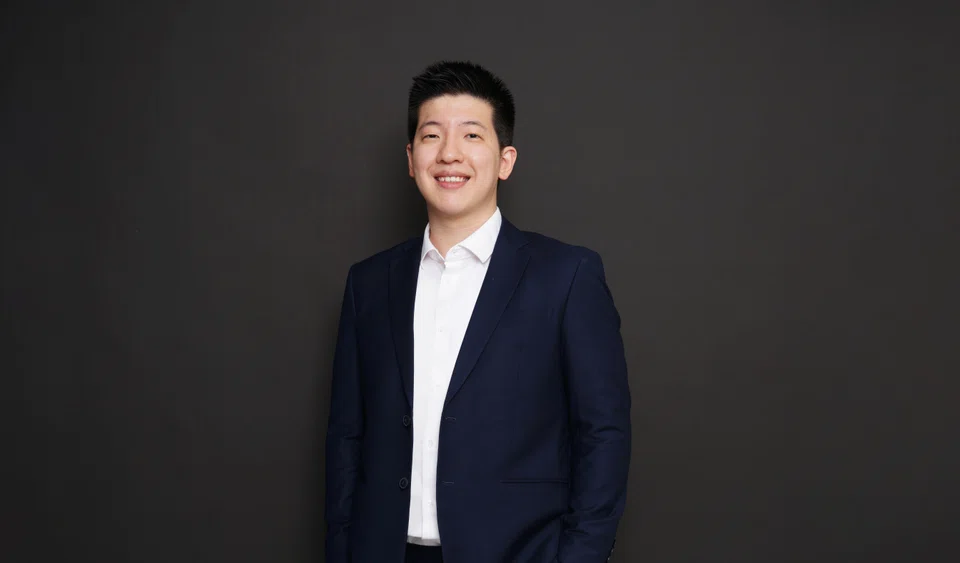
5 Questions with Fandy Cendrajaya, partner at Kopital Ventures

FANDY Cendrajaya began investing in early-stage startups during the pandemic – an experience that left such a deep impact on him that he decided to go all in.
Today, he runs a US$12 million fund with fellow angel investor James Prananto, the co-founder of top Indonesian coffee chain Kopi Kenangan.
The duo’s firm, Kopital Ventures, backs entrepreneurs before their businesses have even gained much traction. The investors of Kopital’s maiden fund include startup founders, venture capital (VC) firms and family offices, such as Saison Capital and Alto Partners Multi-Family Office.
In this edition of 5 Questions, Cendrajaya shares about the importance of empathy in early-stage investing, and why Kopital Ventures could be “the gatekeeper” for the biggest funds in the region.
1. Tell us about your career, and how you ended up running a fund whose LPs are notable VCs and startup founders.
My first foray into early-stage investing started in 2020 alongside some of the best operators in Indonesia. We had an informal angel network called the Kopital Network. For the next year or two, the members invested in over 40 companies.
For most of us, angel investing was a side gig – most have companies to run on a full-time basis. This was not the case for me.
The more founders I came across, the more I fell in love with investing in new entrepreneurs. This was especially true when I came across entrepreneurs whose ambitions are so audacious that their biggest fear is never having the opportunity to go for it.
In the early days, I was aware that my lack of investment track record would hurt more than help the companies I invest in. I went on a mission to meet 30 to 40 people from the industry every single week for several months.
The idea of running a formal fund started to creep into my mind when we exited one of our angel investments. I told myself that if we made several more mini exits, it may be a sign that we are doing something right and the methodology works.
Strangely enough, it did happen. I decided to have a chat with James, a member of Kopital Network who eventually became my partner at Kopital Ventures.
We realised that there may be a gap in the market. Most of the established local or foreign funds have gone to raise larger funds surpassing US$100 million, hence investing a few hundred thousand dollars in a company would not move the needle for them.
This was the lightbulb moment for us. While we do not want to compete with these funds, we would like to be able to complement them by being their boots on the ground and key source for proprietary deal flow. We believed that we could be the gatekeeper for the biggest and most prominent funds in the region.
After nearly a year of pitching the idea to later-stage investors, we were extremely lucky that some of them were able to see value in what we were trying to do. Our investor base now comprises both venture capitalists and founders we had previously invested in.
2. What is the best advice you’ve received?
There are too many to list! I have been given so much great advice throughout my life that have led me to become the person I am today.
The most valuable advice came from my parents, who constantly remind me to be more empathetic and helpful. It was easy to forget this sound advice when I was growing up abroad by myself, especially as a teenager.
I was not the most likeable person and my secondary school friends can attest to that. I was arrogant, quick to dismiss, and more often than not took my relationships for granted. I was a very different individual years ago and would perceive failing a class as “cool”.
The trigger to change only came later when I dropped out of my secondary school. No one reached out to ask how I was doing, which made me realise how unpleasant I must have been as an individual.
That moment reminded me of the simple advice my parents had given me years ago. Ever since then, it was a lesson learnt.
This particular piece of advice is still applicable today as I meet and work with founders from different backgrounds. As a founder, the journey can often feel lonely, hence investors should acknowledge that beyond the business, we are also investing in people as well, and it is an integral part of our role to be there for founders emotionally and mentally.
3. When did you experience your biggest setback, and how did you handle it?
I discovered that an immediate family member was diagnosed with a life-threatening illness, around the same time I was running and trying to keep my F&B business afloat.
My parents always took pride in providing their children access to university education, making us first-generation university graduates. While I may never fully grasp the challenges my parents faced, achieving this goal was deeply important to me too.
Hence, I consider it as my biggest setback due to the ongoing internal struggle between my desire to join the family business, which would bring me closer to my loved ones, and my urge to forge my own path. This setback made me realise the sacrifices entrepreneurs face daily.
While a minuscule percentage achieve long-lasting business success, most encounter failure. However, every individual embarking on the entrepreneurial journey must make profound personal sacrifices. Initially, you won’t get the recognition and financial rewards, but the lessons learned and self-reflection gained are inherently fulfilling.
4. If you could send a message to your younger self, what would it be?
For starters, as mentioned previously, be empathetic, helpful and humble. Embodying these core values will allow you to be open to different opportunities and experiences, and more importantly be welcoming to people from different walks of life and age groups, with unique perspectives.
In order for people to be willing to open up about their experiences, it is paramount that you create a safe space for them.
And after meeting numerous individuals, you will realise that nothing matters more than pursuing the entrepreneur itch and doing what you love every single day. When you truly find what you are passionate about, do not procrastinate, do not get easily distracted, do not doubt yourself when you are faced with hurdles, and keep going.
As you grow older, you will realise that opportunities may not knock on your door again, so be fearless. Life is too short to not be courageous.
5. What do you think still needs fixing in Indonesia’s venture capital landscape?
Indonesia’s venture capital landscape is still in its infancy. There are a lot of areas to improve on.
Local funds can instil trust and provide transparency to foreign funds investing in the region. This is important to develop a sustainable and trusted venture capital ecosystem and pull capital from regional/global funds that have the flexibility to invest in various regions other than Indonesia, in some cases with larger markets.
Secondly, we have yet to see more companies that look at growth through acquisitions. In more mature markets, we have more mature and well-capitalised technology companies that are actively acquiring smaller technology firms.
Lastly, we are seeing an influx of foreign founders setting foot in Indonesia to build the next wave of companies, and they are some of the most impressive founders I have come across. However, most of these founders’ history in their hometown is a black box. This is when local VCs need to rely on their foreign counterparts for reference checks.
TRENDING NOW
‘Not trying to solve world hunger’: GoTo takes pragmatic approach to AI
He built the Vingroup empire. Now South-east Asia’s richest man is handing some key roles to his sons
Malaysian developer Eco World tops bids for Sin Ming area housing plot with S$1,612 psf ppr offer
Singapore’s new data centres must use renewables. Can they overcome the hurdles?