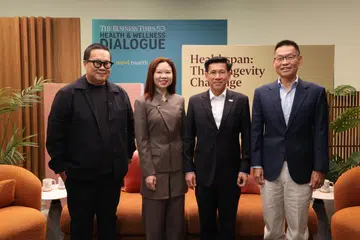
5 Questions with Grab co-founder, Tan Hooi Ling
Benjamin Cher
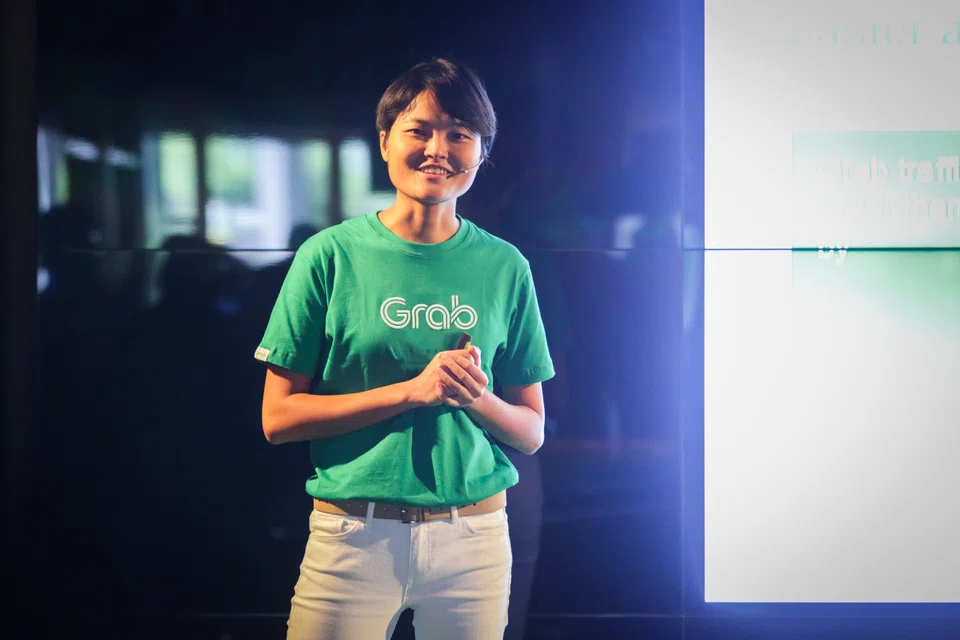
FEW will get a chance to lead a multi-billion-dollar company. Grab co-founder, Tan Hooi Ling, has had the privilege of leading one of the first few unicorns out of South-east Asia.
While the public face of Grab has been co-founder Anthony Tan, the other Tan prefers to work behind the scenes. Likening herself to being the “plumber” in the past, Tan has taken on roles such as chief operating officer previously.
In this month’s edition of 5 Questions, Tan speaks about accepting “not knowing” all the answers and how badminton has become enjoyable again.
1. What were the challenges in transitioning from working in the corporate world to being a founder?
There were many, but one I remembered particularly clearly from the early days was the self-imposed pressure of “having to know all the answers”. As a first-time co-founder, my younger self often (wrongly) thought that my job was to be the smartest person in the room and always know what to do. It was particularly stressful because the stakes were so high, knowing that the decisions we were making affect people’s lives and livelihoods. We were also in a constant fight for survival as a young start-up.
Only after I learnt to accept that “not knowing” is normal, and that the reality of building something new is that there are often never clear or perfect answers, was I able to truly start growing as a leader. I reframed my expectations, accepted that I would never be the smartest person in the room, and re-anchored my definition of success as a leader on the ability to build a team of people much smarter than me. It helps that it’s also a lot more fun and fulfilling solving problems as a team!
On the upside, moving into a founder role was in many ways very freeing. As a young leader in the corporate world, my job was often to execute decisions that came from the top, many levels removed from me. I’d often wonder why decisions were made in certain ways, or what would happen if a different path was chosen. With Grab, it was empowering to be in the drivers’ seat with my co-founder, building something we were confident could make a tangible, positive impact on the everyday lives of the people we cared about. I found the clarity and ownership of working towards a mission we personally cared deeply about very gratifying.
That’s why we want to create an environment where all Grabbers have an owners’ mindset. Though Grab may be a much larger company today, we want every Grabber to have deep clarity and accountability for what we’re driving towards and why we’re doing it. So far, we’ve found that the best way to do this scalably is to share the underlying principles that guide our decision making process and operating model, which we’ve codified in things like the Grab Way.
2. What were the biggest changes to adapt to when Grab morphed from a startup to a listed company?
We listed at a point in time when markets were entering a lot of volatility. And as a listed company it can be easy to get distracted by how the market “evaluates” our performance based on how the stock ticker moves.
We had to find a balance of being market-aware, but not market-driven. That meant having conviction in and focusing on executing against our long-term strategy and opportunities. At the same time, be quick to pivot and make course corrections as necessary to address changes in the macro-environment. We strongly believe that in the long run, this is the best way we can deliver value to our shareholders.
Transitioning into a listed company also meant introducing some changes and updates to certain policies and processes per the SEC’s requirements. For example, enforcing blackout periods. Without broader context on why these blackouts are required, it can feel like tedious and unnecessary restrictions for our employees, so we’ve found it helpful to take disproportionate efforts to explain to our Grabbers the “why” behind the requirements and best practices. And the net result is better – because our people understand the importance of what needs to be done, instead of just going through the motions.
3. What is the biggest setback you have encountered?
As a leader of the tech org at Grab, we face setbacks all the time – some small and some big. For example, when our app doesn’t work as it should, the impact is very real and can be painful. It means our partners can’t work, or our users can’t get their rides or food.
We accept that human error happens and tech sometimes breaks. What’s more important is learning from it and doing everything we can to make sure the same mistakes don’t happen again. So I spend a lot of my time helping to build systems and a culture that heavily emphasises Kaizen behaviours – adaptability through constant testing, experimenting and improving. The key is not to try and avoid failure completely, but to experiment and test rigorously so we fail small, fail fast, and take that feedback to learn and iterate quickly
4. What is one thing you would tell your younger self?
I would tell my younger self to enjoy the learning process and care less about the outcomes!
I used to play badminton competitively in high school and trained a few hours every week. I did whatever my coaches told me to, just because they told me to. Never really spending time to understand “why” they wanted me to do certain things in certain ways, and thus, not enjoying the process of learning itself. There was also a very strong focus on match outcomes, which came with high levels of stress I never quite learnt to enjoy. Over time, I found myself liking badminton less and less and eventually stopped playing for several years.
Recently I picked badminton up again for the exercise, and I’m actually liking it so much more now. Simply because I’m less focused on the outcomes and just enjoying the learning process again.
As I’ve grown older I’ve really come to appreciate the joy of learning new things for no other reason than it being a fun and fulfilling experience. And the more I enjoy it, the quicker I get better at whatever I’m learning.
Would have been nice if this epiphany had come to me earlier!
5. What would you like to be remembered for?
I’m always conscious that in the broader scope of space and time, we are all infinitesimal specks of dust. Considering this, I only hope to be remembered as someone who doesn’t take herself too seriously, and as someone who cares for the people I’ve had the luck to share parts of my life with. Ultimately, I know we are all human and thus imperfect. So as long as I try to do the right thing for the right reasons, no matter how difficult the situation, it’s OK even if I stumble once in a while across that journey.