

5 Questions with managing director of Google Cloud’s AI business Caroline Yap

Benjamin Cher
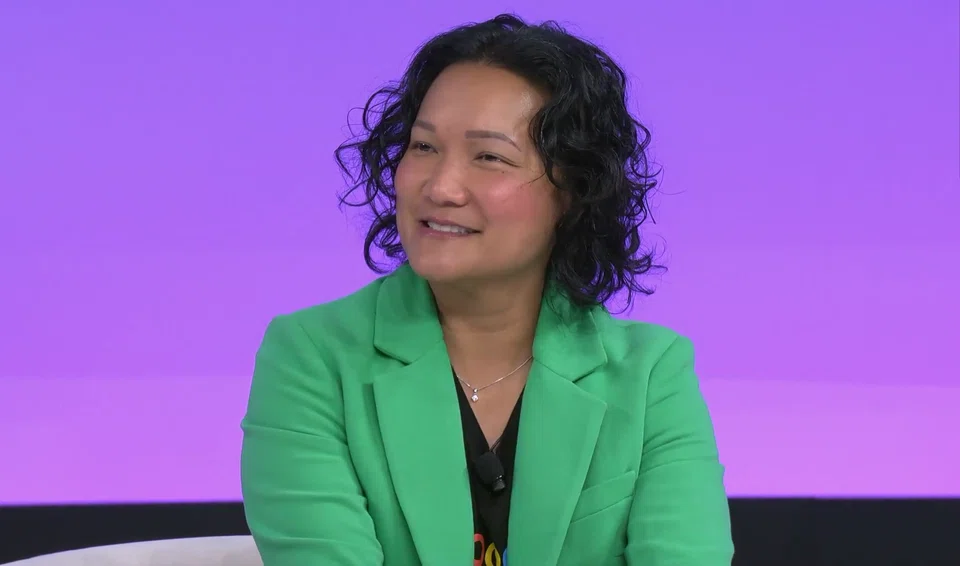
HAVING an interest in computers and fixing appliances formed the foundation on which Caroline Yap, managing director of AI Business at Google Cloud, built her career.
Yap’s journey has been unconventional. She has done everything from fixing TVs at an appliance repair shop, to setting up an Internet cafe and teaching people how to surf the Web and write e-mails. At age 18, the young Malaysian ran away from home and found herself in the United Kingdom, where she secured a job setting up phone systems.
In this month’s 5 Questions, Yap shares how an engineer and not a data scientist ended up at Google Cloud’s AI business and how somebody believing in you can be empowering.
1. How did your past experiences lead to running the AI business at Google Cloud?
When I was 18, I ran away from home in Malaysia and went to the UK. I thought: “I’ll figure it out. If it doesn’t work, I can go back to Malaysia.” But because of my hands-on experience setting up systems and walking people through them, I passed technical interviews and ended up getting a job in old phone systems.
I was an IT specialist and became an IT manager at a small company that installed phone systems. I started to get into the networking side and ended up being in security.
At Motorola, my career in tech really began. They wanted someone who had consulting experience to identify and fix problems from within. So while I was in a technical role, they wanted me to sit with the different businesses, understand what they were trying to do and see if I could solve their problems.
I was working with a team and ended up creating this global kind of virtual private network architecture.
From the five years I was there, I learnt to build something that was user-centric, solve a problem, build in security, be used by different parts of the business while increasing productivity at the same time.
How I ended up in Google Cloud wasn’t because of my background in machine learning. But it was because when I was at Microsoft, I figured out how to get people to pay attention to Linux and open source, and why that part of the customer journey was also important despite the focus on Windows as a product.
I brought the same outside perspective to Google Cloud, and got people to think about what AI should be first on their mind.
That’s paid off, with the last six months having proved my point because experiences were what made AI important to everyone. I don’t think anyone in machine learning thought it was going to be like that.
2. What’s one thing about AI that people don’t understand?
I don’t think many people understand how long machine learning has been around for. ATMs have used machine learning for a long time, but no one ever really thought about it.
But now that you describe ATMs to someone, they’ll think it makes sense that you would know how much money is in there. Over time, technology can figure out which denominations run out the quickest and when to schedule top-ups without customers being unable to withdraw money, based on historical data.
These are all machine learning concepts that never had their breakout moment to the public. I feel that AI can be relatable to everyone as long as we take the time to explain it.
AI can help me to understand the complexity of all the systems that are making my life easier.
3. What is one thing you would tell your younger self?
I wouldn’t change anything. The only thing I would tell my younger self is not to sell that Nvidia stock. I was a gamer and when graphics processing units (GPU) first came out, I was excited about it.
I should not have sold that Nvidia stock, and should have bought more of it – that is what I would say.
I think it is really cool that the technology that was used to render graphics is now revolutionising the way we do deep learning and machine learning. It’s a by-product of the things that we do – we designed it for one thing but the human-centric side of us then found this alternative way to apply the same technology to another use case, which can actually change the world.
4. What is the best advice you’ve received?
It was to continue doing what I was doing. The late Kevin Mitnick’s (computer security expert) big thing to me was: I believe in you. In male-dominated industries from IT, cybersecurity and AI, he was one of those who believed in me.
Along the way, I was very fortunate to have good mentors and men who recognised my potential –they didn’t tell me to stop but instead encouraged me and gave me the protection to do what I was doing.
5. What’s the biggest and worst setback you’ve experienced?
When I first joined tech, I had to adopt my Caucasian partner’s name, but when I joined Google, it was the first time I could be Caroline Yap. I did not have to hide behind another name.
On the career front, it has always been the underestimation of women. I won’t even talk about the golfing or karaoke and the seedier side of the space. There have been many women in tech who had to deal with these things for a long time.
There were many opportunities to be more successful, if you were willing to sacrifice your morals. I’m just glad that more and more of those practices are no longer around.
*Responses have been edited for length and clarity
TRENDING NOW

Government to bring forward raising of retirement age, give employers more financial support to create flexi-load jobs

If Europe goes to war, the fallout will be felt in East Asia

Indonesia stocks suffer worst plunge in nearly 30 years as MSCI proposes standalone status

Vietnam’s northern provinces, not Hanoi or Ho Chi Minh City, are powering near 10% GDP growth

