

5 Questions with Philippine tech evangelist Minette Navarrete

Sharanya Pillai
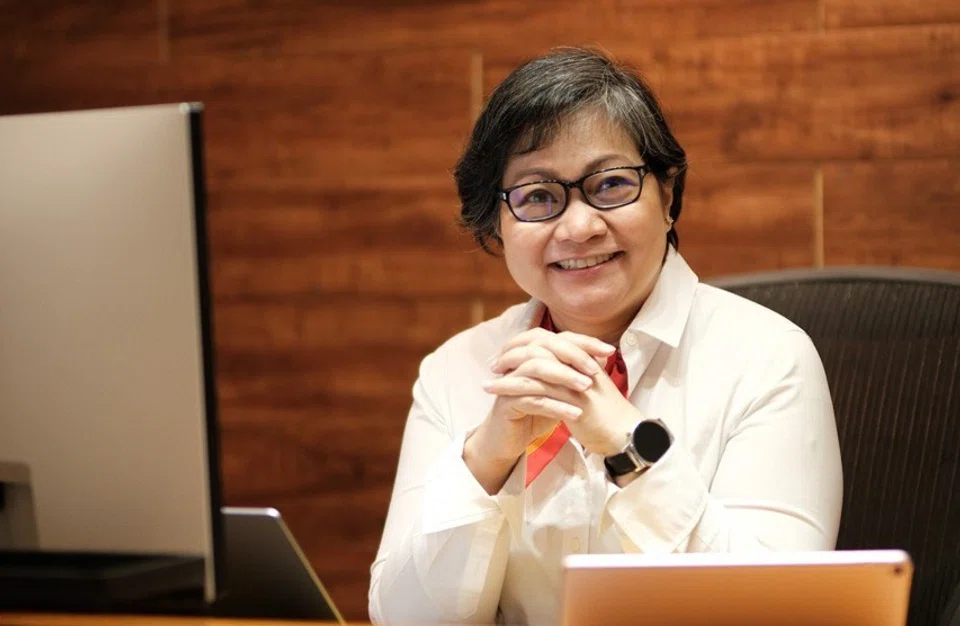
MINETTE Navarrete is a familiar face in the Philippines’ startup scene. Since 2012, she has helmed Kickstart Ventures, the corporate venture arm of major telco services provider Globe Telecom. An early player in the space, her team has backed startups such as livestreaming app Kumu and social commerce platform SariSuki.
In this month’s edition of 5 Questions, Navarrete gives us a crash course on the Philippines’ startup scene and its sheer potential to address deep-rooted, systemic challenges.
She also shares lessons from her own career journey which is, in her words, filled with “crooked lines”, and how constraints can sharpen strategy.
1. Kickstart is one of the first venture capital (VC) firms to be set up in the Philippines. What are the biggest changes you’ve witnessed from the firm’s inception to now?
The ecosystem has grown considerably: the number of promising founders and startups, the activity and awareness, and most importantly, the growth in maturity and experience of many startups.
More than a decade ago, when Kickstart was born, there was not much in the ecosystem. In 2012, most of the available startup solutions were in enterprise software-as-a-service, owing to the country’s established industry for outsourced tech development.
Today, the diversity in industries has grown to cover e-commerce, media and content, and fintech, among others.
There has been an uptick in the number of foreign VCs investing in the Philippines for the first time over the last 12 months – these include globally renowned VCs such as SIG, Tiger Global and Alpha JWC. For local VCs, in the last three years, we’ve seen two times more VC funds being established that are not corporate-backed.
We expect and hope that this growth momentum will continue. The Philippines isn’t the first market that comes to mind when you think of innovation and tech in South-east Asia, but in the last decade there have been promising signs that the country is headed in the right direction and will be a bright spot in the region.
2. What are some facts about technology in the Philippines that many people may not be aware of?
There are many enduring problems and opportunities in the Philippines that we hope to help augment or solve. Here are some jarring numbers:
- Only 23 per cent of Filipino adults had access to insurance, according to a 2019 report
- 10.4 per cent of Filipino families experience “involuntary hunger”
- There is US$10 billion in climate-related losses and damages
- The traffic congestion level in Metro Manilla is 43 per cent
- Six out of 10 patients die without ever seeing a doctor, according to one estimate
Technology stands as a promising solution to these systemic challenges faced by the Philippines.
3. Many investors are holding back now in this “tech winter”. What is your current investing approach, and what is the single most important philosophy you’re adopting?
We will invest where we can add value. As a corporate VC fund, we aim to add value beyond just capital. We provide our portfolio companies with strategic guidance, mentorship, and access to networks and resources. We also actively engage with our founders to help them navigate the challenges of a tech winter and adapt their strategies as needed.
During these uncertain times, we prioritise startups that demonstrate strong fundamentals. This includes a clear path to profitability, sustainable business models and a deep understanding of customer needs. Companies with solid financials and a clear value proposition are better positioned to weather challenging market conditions.
Survivors can thrive after the winter. While the funding environment may not be as vibrant as the highs of 2021 and 2022, the underlying fundamentals remain positive. More importantly, this challenging season helps test and strengthen business models.
4. What are your hopes for the future of the Philippines’ startup scene, and where do you see it going in the next five years?
For founders, we hope that they continue to grow and learn. Being a founder is tough, and it takes a lot of reps and practice to improve. Oftentimes, the best founders are those that have started ventures multiple times. There are many talented founders in the Philippines and all they need is more exposure.
For startups, we hope that the Philippines creates iconic names that can make a mark in South-east Asia and beyond. We hope that the likes of Pickup Coffee, Edamama, SariSuki, Kumu and many others continue to build their names and disrupt the markets they’re in.
5. In your own career journey, what were some pivotal points and lessons you’ve learned?
There’s a saying that “God writes straight with crooked lines” – often attributed to St Teresa de Avila, patron saint of St Theresa’s College, coincidentally where I spent my grade school and high school years.
Judging from my career path, I have taken this saying to heart. My “crooked lines” were intentional: I’ve always optimised for building new skills; the biggest learning opportunities were always in unfamiliar terrain.
I had my first experience with startups when the Philippines didn’t have a big startup scene. Even in the toughest turnaround challenges and economic crises, I’d not had to deal with the risk of not making payroll. I learnt how constraints can sharpen strategy; what scale and virality look like; and how value can be created at the interfaces of core and non-core.
VCs talk about many T’s: TAM (total addressable market), team, tech and traction. For me, the toughest aspect to master has been timing.
On one hand, I envision innovation in terms of decades rather than years; on the other, I am impatient by nature and will be chomping at the bit to execute. I’ve learnt over time, with the guidance of my boss Ernest Cu, to refine my sense of when adoption of a new technology will “pop”.
TRENDING NOW

Government to bring forward raising of retirement age, give employers more financial support to create flexi-load jobs

If Europe goes to war, the fallout will be felt in East Asia

Indonesia stocks suffer worst plunge in nearly 30 years as MSCI proposes standalone status

Vietnam’s northern provinces, not Hanoi or Ho Chi Minh City, are powering near 10% GDP growth

