AEvice brings wearables and the cloud to paediatric asthma treatment
AEvice's solution is a wearable device that continuously tracks a child's respiratory condition. The data can then be uploaded into the cloud
Singapore
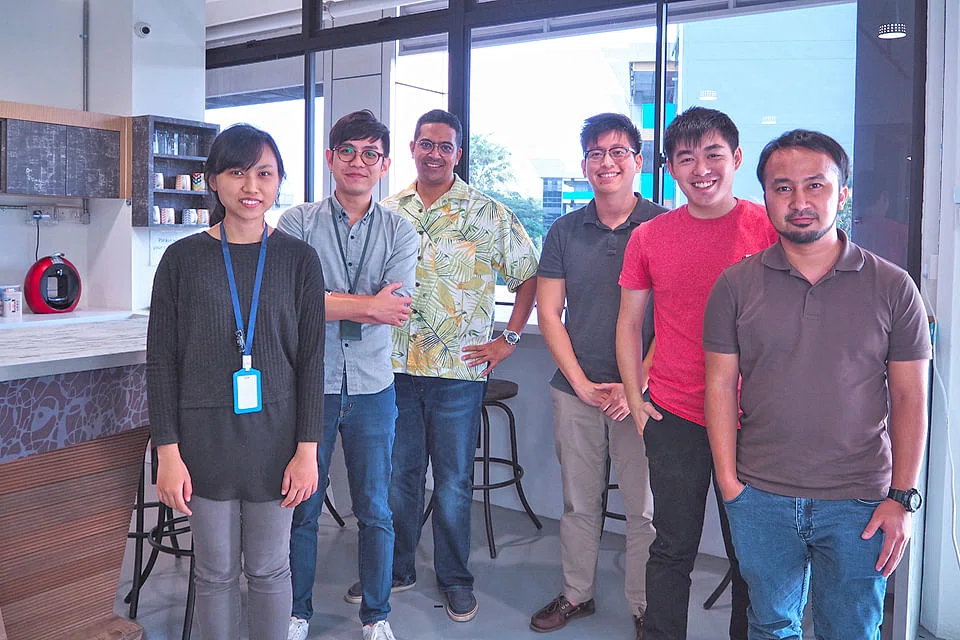
AEvice Health chief executive Adrian Ang had asthma as a child, so he understands how challenging it can be to manage the respiratory condition in young children.
"They cannot articulate well, which delays the asthma treatment, resulting in them having to be sent to the hospital for emergency cases," he said. "In some cases, it can actually lead to death."
AEvice's solution is a wearable device that targets the most rudimentary aspect of asthma - the continuous tracking of a child's respiratory condition. The startup is currently undergoing third party testing in preparation for FDA (Food and Drug Administration) filing.
These tests include performance testing, general safety testing and electromagnetic compatability testing, which evaluates if a device emits safe levels of electromagnetic energy and does not disrupt other such devices in its vicinity. These tests are required to be cleared prior to FDA filing.
The team aims to begin clinical trials in 2020, and to launch the medical-grade device by 2022.
AEvice's founders have bootstrapped the startup with more than S$1 million of seed funding, but they are looking to raise a Series A round in the first quarter of 2020. Proceeds will be used for further clinical studies to support their technology and enhance product development.
Chief technology officer Rex Tan said: "The use of our Series A (funds) is to expand our medical team and expand our regulatory team ... to operate and work very closely in the US and UK to drive our clinical studies."
The startup was one of three winners at the Emerging Enterprise Awards 2018. It was also one of the finalists of the Singapore Management University Lee Kwan Yew Global Business Plan Competition in 2017, and was awarded the best presentation in the Health category.
AEvice Medical is a palm-sized device that can be attached to the chest of a child. Once attached, the device's sensors constantly listen and record key data that can be used to identify respiratory conditions such as wheezing and coughing. Vital information like heart rate is also tracked.
The data is uploaded into the cloud, which allows doctors and caretakers to monitor asthmatic patients before and after medication, enabling round-the-clock holistic care.
Critically, the data is collected even if the patient is an unreliable source of information, such as when the patients are young children who may have trouble recalling or describing the onset of symptoms.
Mr Ang and Mr Tan explained that the constant monitoring and the data-centric solution set AEvice Medical apart from existing options.
The present asthma treatment ecosystem lacks a quantified measure for doctors to assess the severity of asthmatic symptoms, as patients are made to verbalise their conditions to clinicians and insurance companies.
Therefore, these parties currently provide prescription and payouts based on what patients and insurance buyers describe verbally.
Existing solutions do not track and collect data on a continuous scale, which means that doctors and clinicians only get data recorded in short spurts. With continuous data, it will be possible to analyse a full cycle of meaningful information.
"One difference between us and a doctor is that the doctor cannot be listening to you 24 hours a day, but a machine can. There are competitors who do similar things, but they do not listen to your (symptoms). They infer what is going to happen," Mr Tan said.
While the child is the end user of the product, AEvice mainly deals with insurance companies or governments. For those customers, AEvice sees itself helping to reduce costs and improve treatment outcomes.
However, the startup told The Business Times that it will be launching a consumer-grade product over the next two years where parents can purchase the device from them directly to monitor their child.
The product will be priced between S$300 and S$500, AEvice estimated. Although its product can be used by grown-ups, AEvice is focusing on children at the moment, Mr Ang said.
"Where the company wants to focus on right now is the biggest problem that we've seen - it's in young children. The reason is firstly, they cannot articulate. Secondly, they are the most at risk. This is the mission that the company wants to solve and focus on at this moment," said Mr Ang.
Being a medical devices startup has certain challenges, and the gestation period is a significant one, according to Mr Rex.
With no product commercialisation and thus no returns for the starting period of the business, the pool of investors is narrowed to those who are savvy about medical technology, which makes raising funding complex.
The fragmented health markets in various countries, made complicated by varying health systems and regulatory frameworks, also pose an entry barrier for startups.
Mr Ang and Mr Tan are closely monitoring Britain's planned exit from the European Union, and expect Brexit to increase additional costs for medical device manufacturers, including the need to obtain separate regulatory approvals.
The founders declined to go into details about their plans to mitigate the impact of Brexit.
But Mr Ang and Mr Tan see countless opportunities in the area of respiratory health that extend beyond geographical boundaries. The lack of systematic data collection and a clear feedback channel present a gaping hole in the ecosystem, which AEvice Health aims to address.
"For respiratory health, it is difficult because there are no devices collecting data for a long time now. So this is an opportunity for us to move forward, and spearhead the data collection to kickstart the AI era of respiratory health. That is something we are striving towards," said Mr Tan.
AEvice Health at a glance
TRENDING NOW
Grab CEO’s wife Chloe Tong on life with Anthony Tan and finding her purpose
Three ex-employees of Envy group join Ng Yu Zhi in bankruptcy
He built the Vingroup empire. Now South-east Asia’s richest man is handing some key roles to his sons
If AI has a one-in-five chance of destroying us, what do we do with the remaining four?