Build windmills, not walls: How to tap Indonesia's digital economy boom
Interesting conversations from four panellists at the recent BT webinar 'Investing in the Indonesian Digital Economy'

Singapore
INDONESIA'S digital economy is thriving with opportunities, and traditional players should build windmills - not walls - to embrace the winds of change.
This was one sentiment that surfaced at "Investing in the Indonesian Digital Economy", an hour-long webinar hosted by Garage, the startups portal of The Business Times, on Aug 31. The event attracted over 1,000 sign-ups.
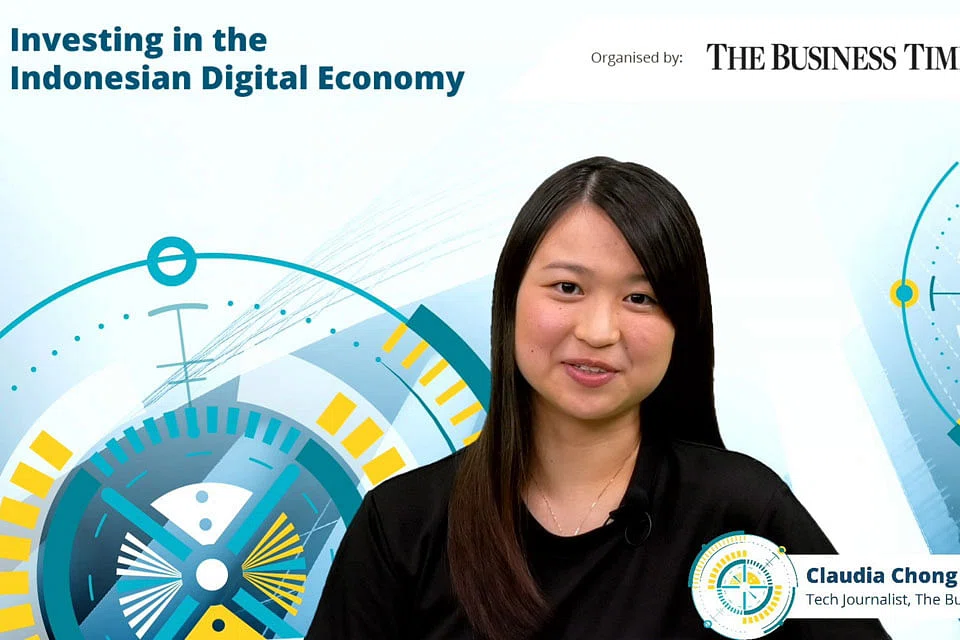
The session was moderated by Claudia Chong (above), a tech journalist at BT. Members of the discussion panel were four prominent individuals in South-east Asia's tech ecosystem:
- John Riady, chairman of Siloam Hospitals and managing partner at Venturra Capital;
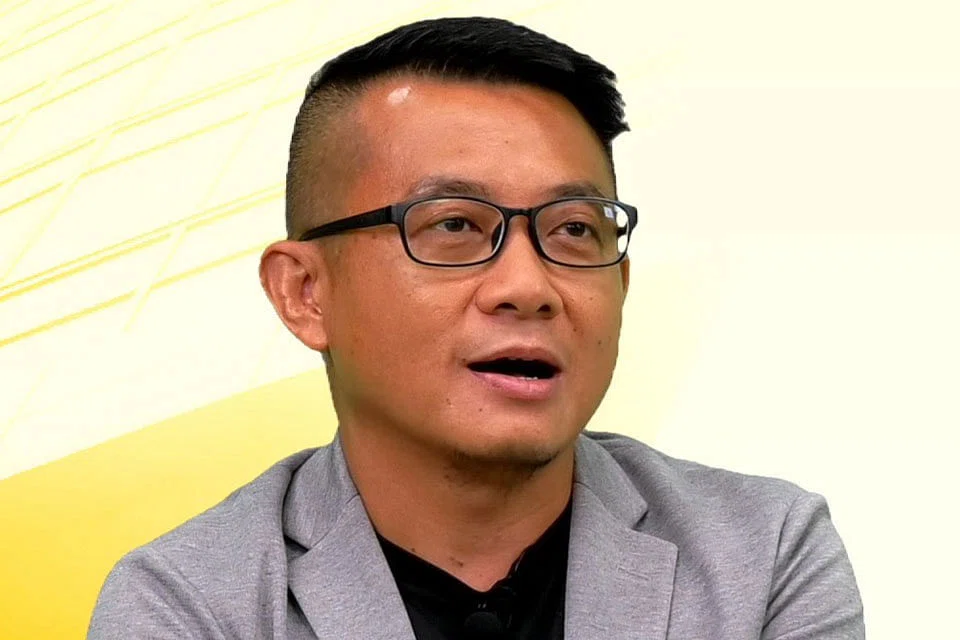
- Jeffrey Seah, a partner for the Asia Fund at venture firm Quest Ventures;
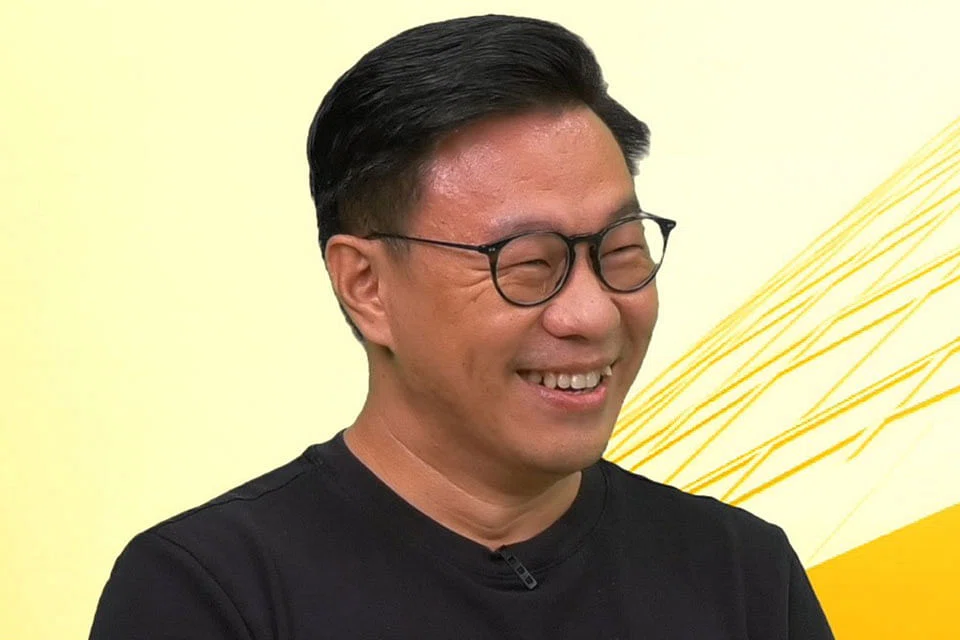
- Willson Cuaca, managing partner at venture capital firm East Ventures
- Jonathan Sudharta, chief executive and co-founder of Indonesia-based healthtech startup Halodoc.
We revisit several interesting conversations during the webinar and the insights that panellists shared. (Note: The excerpts have been shortened and edited for clarity)
Chong: Tell us more about your experience in the Internet economy. What is one big trend in Indonesia that you're closely watching?
Mr Cuaca: We started 12 years ago, in the year 2009. Up till today, we have invested in over 200 companies. We are one of the oldest (venture) firms actually in Indonesia, probably in South-east Asia as well.
When we started investing in Indonesia, there was only an Internet population of about 30 million, about 13 per cent of the 230 million population. As of today, we have about 200 million Internet users. What's interesting is, with over 200 portfolio (companies), I work round the clock 24 hours, like 7-11.
Mr Seah: I am an accidental venture capitalist. I spent 25 years in the corporate world, the original disruption place: the advertising and marketing world with big data. I remember partnering Alibaba, Tencent, Google, Facebook, when they were like five-person strong in South-east Asia.
In working those markets, many of my clients wanted to sit in Indonesia, because Indonesia is the biggest market and represented the coming of South-east Asia... I think this market continuously attracts the attention of big corporates all over the world, and I think digital (tech) has now driven economic growth.
Mr Riady: We have been investing in the South-east Asian technology space since 2014... This is a space that has grown 1,000 times over the last seven years; it's an extremely dynamic and fast-growing space. I think interestingly, we're just getting started.
Over the next couple of years, this should be a US$500 billion industry. And for this reason, this technology and digital space in Indonesia has become a core part of what our group does. Beyond the value creation opportunities, what I find most exciting is working with entrepreneurs; so many gifted and talented entrepreneurs changing the business landscape here in Indonesia.
Mr Sudharta: We are a digital healthcare platform that tries to simplify access for healthcare from connecting patients to 20,000 doctors, to getting medicine sent to your hand within 31 minutes, on average, from the closest pharmacy... I think it's a very interesting time.
Today, Indonesia has gone through a period of Covid-19, just like any other country in the world. And I think a very interesting part about Indonesia is that the government is very open in working together with digital healthcare companies like us, among others, to help solve the Covid problem.
We are working together with them, by providing consultation for patients and the medicine is actually given for free by the government.
Chong (addressing Mr Riady) You've been credited with helping to scale Lippo group into the digital age, in areas such as e-commerce, e-payment and tech investment. I know that there are a lot of us here today in the audience who are anxious about the digital economy, because they come from traditional sectors. What advice do you have for them?
Mr Riady: I'm not sure I'm here to be giving out advice, but you know there's a Chinese saying that goes: When the winds of change began to blow, some people build windmills, while others build walls.
We live in a world today where the winds of change have begun to blow. We're about to witness one of the biggest transformations, not only generationally, but in humankind. And so this presents huge opportunities.
Today, we are a consumer services group that serves about 40 million unique individuals every year in Indonesia, and yet I think as we enter this digital era, we have to change. We've got to transform, we've got to learn. And if we do that, I think there's so much more we can do.
Chong (addressing Mr Cuaca): You've been investing in startups in Indonesia for over a decade now. Now Indonesia is emerging on the global stage and the capital flows are changing. We're also seeing more international money coming in, from the US and China. How does this impact the local VCs?
Mr Cuaca: I think the impact is positive to everyone. More money means that you can develop the product faster, you can develop the market faster, you can educate more users. It's a clear distinction between local VC and international VCs.
A nascent ecosystem like Indonesia is like a jungle in the beginning. Who is the best guy to navigate the jungle? The local kampung boy who lives nearby. Because in an emerging ecosystem, a lot of times, you have to use your intuition.
And as it goes, you build a path, and now everybody comes and uses the road. That is fine, everybody can enjoy the scenery in the jungle. So that is how we look at that.
We welcome all the investment from abroad because they not only bring money, they bring knowledge, so it's a value-add to the ecosystem.
Chong: Word on the street is that these investors, having invested globally, tend to do things like drive up valuations or even write cheques much faster. Has there been any sense that the local VCs might get edged out of the important deals?
Mr Cuaca: No, we are in the information age. For example, for East Ventures, we have over 200 portfolio companies. What does this mean? It means we have almost 500 founders or C-level founding members in our networks.
We have a compounding of information going on within our network, and that creates network effects. (When) we talk about historical data points, we have the data points of 12 years' experience, of what's going on in Indonesia.
You can't take that away. I think that's still valuable; this is what we call local wisdom.
Chong (addressing Mr Sudharta): You have a very interesting investment from the Bill and Melinda Gates Foundation. How did that come about?
Mr Sudharta: It comes from a stroke of luck, I would say, and a bit of hustling. I remember I had the luxury of being invited by Bill Gates for a very close-session lunch, 20 people. We were all told to come to this lunch in a very formal suit and whatnot.
At that time, I wanted to stand out. So I thought in my head, okay, I want to wear this Halodoc shirt... but I know they will stop me. So I wore this shirt, this very red shirt that I wear today, and actually, I put a suit on top of it and waited for Bill Gates to come.
Not just the suit, but I actually put on a jumper, to make sure that nobody could see this red shirt. My friends were asking me, are you sick? I said I'm fine, I'm fine. It was very hot. In Seattle, it was summer, but I was wearing all of this.
So when he came in, I opened my jacket, opened the whole thing. Over the lunch, I asked a particular question, and pitched about Halodoc. After my pitch, he said, okay, why don't you talk to my director? Two years after that, they invested in us.
I don't know whether that (move) actually created that opportunity... it took another two years for me to have conversations with the directors and so on. That's how we started.
But I think that because of the alignment of mission, that makes life a lot easier for us to partner with them.
Chong (addressing Mr Seah) We did see investor interest in Bukalapak's IPO. As more South-east Asian unicorns head to the public markets, what kind of fundamentals should investors look out for?
Mr Seah: I think that this is actually the time of awakening for us. The digital economy has yielded quite a lot of benefits... The public markets allow retail investors and customers of the services to also partake in their growth.
Now the question has always been the definition of a public market stock... In certain Asian countries where savings is a big thing, when they look at stocks, they look for blue-chip stocks that are doing a dividend return.
When you look at some of the more advanced markets... they are able to withstand the fact that some tech companies, like in the US, don't pay dividends for 10, 15 years.
But back home in South-east Asia, there is a new normal of what is a stock, a redefinition of what is investing... Going into the public market also brings many startups into the real mainstream world.
You are now up against the boys, the pressures are not from VCs like Willson and myself, (but) you have to go up against shareholders, activist blocs, folks coming to your AGM (annual general meeting) and challenging what you are planning.
If you can't deliver numbers, they will ask you to fire people, or ask what you can do to bring the margins back. So those are the pressures that will come.
I think this is a great space for us, because it actually closes the final loop of what the digital economy is about.
Chong: Going back to the Bukalapak example - since this is a pioneer tech company listing - the share price has decreased about 16 per cent from its first day close (as of Aug 30). Some investors are profiting from the initial share price rise. What are your thoughts about this?
Mr Seah: I think Facebook's price dropped 20 per cent two weeks after the IPO. So those lucky folks who bought at that price benefited quite a lot... The challenge before the management of a company is to continuously communicate with the market, what their plans are, what they are doing and how they go forward.
I think they must have lots of experience after all these years pitching to VCs for money, and then building their book to go IPO. Now they should continuously reinforce the story, what new problems they're trying to solve.
Chong (addressing Mr Sudharta): How close is Halodoc to an initial public offering?
Mr Sudharta: I think an IPO would be every founder's dream. We have built the company over five years. We've been through stages of product-market fit, where we educate the market, give some freebies. Then we reached that critical point of the next level, which is that people have actually solved the problem.
So we grow now into the next stage of profitable product-market fit. We have successfully reached that particular solution as well.
There are many aspects of going public, not just on the business itself but in the structure and everything. I don't think we should underestimate that fact.
To be honest, there are a lot of details where I have to ask guidance from very senior investors like John Riady and all the panellists here.
I have to say it will not be this year. But it would not be too far in the horizon.
- Garage is BT's startup vertical. Read more news, analyses and opinions at bt.sg/garage
TRENDING NOW
He built the Vingroup empire. Now South-east Asia’s richest man is handing some key roles to his sons
Quarter of Singtel special discounted shares sold ahead of CPF Board transfer
Why Tan Aik Keong of digital solutions specialist Agmo wants to make himself less indispensable
Asia needs new energy security architecture