

China's iQiyi expands in Singapore with 'eyes wide open' amid streaming war

Singapore
THE Over The Top (OTT) streaming business may be challenging, but Chinese streaming giant iQiyi is expanding out of its home market with "eyes wide open" to the challenges, Kuek Yu-Chuang, the firm's vice-president of international business, told The Business Times in an interview.
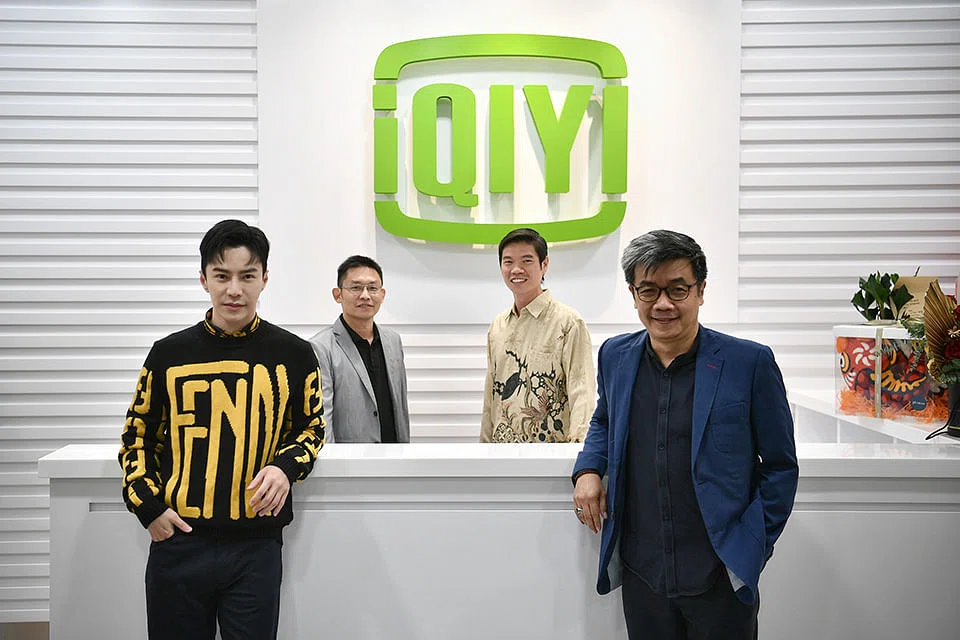
Mr Kuek was speaking ahead of iQiyi's launch of its new international headquarters in Singapore on Tuesday.
The firm has taken up close to 8,000 sq ft of office space at 71 Robinson Road and plans to hire 200 staff in Singapore over the next few years, in roles including content, marketing, sales and business development.
Acknowledging that the regional OTT streaming market has gotten more crowded, Mr Kuek expressed confidence that iQiyi can replicate its success in China here.
"The Chinese market is highly competitive, and if you track our growth 10 to 11 years ago, we actually were a late entrant to the market; we came from the back. We worked hard," said Mr Kuek, who was formerly a vice- president at Netflix. He added: "We are no stranger to competition; we are coming into this marketplace with our eyes wide open. I would say that it really boils down to execution. We would like to be judged... on how successful we have been in bringing top Chinese content to a global market and with production experiments."
Founded in 2010 and backed by Chinese Internet giant Baidu, iQiyi has grown into one of the most popular streaming services in China, where it had 104.8 million subscribers as at end-September.
The Nasdaq-listed company soft-launched its international business last year, with the majority of its talent based in South-east Asia.
The firm has offices in Bangkok, Kuala Lumpur, Jakarta and Manila.
South-east Asia is a tough nut to crack for OTT firms. One of the biggest hurdles they face is in the high costs of licensing and content production in a fragmented market. It is also getting harder to stand out, with the expansion of international players such as Netflix, Disney+, Tencent and Hong Kong's Viu in recent years.
The high costs have claimed some victims along the way, such as Singtel's streaming service Hooq and regional startup iflix.
Addressing these challenges, Mr Kuek pointed to iQiyi's approach of focusing on both subscription and advertising revenue. The latter helps the firm offer new viewers some free episodes, with the aim of making them subscribers.
"We actually think that we do all these (content) titles a greater service by allowing people to sample the content first when it is ad-supported. And if they like what they see because they've sampled it, they can convert to a subscription model," he said.
Spearheading innovative content formats is another means for iQiyi to stand out from the competition, he said.
He highlighted how iQiyi gained traction in China with its "Mist Theatre" series, featuring unconventional noir-style suspense dramas. The series even gained viewership in overseas markets including Singapore, South Korea and Japan.
"We are in the prime spot to bring top trends from one of the biggest entertainment markets in the world, (China)... We are seeing this Chinese content grow an audience outside of China that goes beyond the Chinese diaspora. We are also seeing on our social listening that a lot of them are mentioning Korean and Chinese stars interchangeably. They are really (sending) out this demand signal for the content," Mr Kuek said.
Other than distributing Chinese content abroad, iQiyi will also double down on localised original content. For instance, it has collaborated with Singapore's G.H.Y Culture and Media on a new series, The Ferryman: Legends of Nanyang, set to be released in 2021.
Besides G.H.Y, iQiyi has also partnered production houses mm2 Asia, Clover Films, and CJ ENM HK, to innovate on more Asia-centric content.
As Mr Kuek puts it: "Fundamentally, we want the world to see us as the home of beloved Asian content... And I think that this kind of focus will really differentiate ourselves from a content strategy point of view."
TRENDING NOW

Philippine power giant First Gen rebuffs foreign offers, plans up to US$2.6 billion in expansion

Vietnam’s data-centre investment rush faces reality check on power and site constraints

Singapore should prepare for prolonged haze until November, says Grace Fu

Is stagflation returning? That mostly depends on the Iran war

