

Chinese tech giants on talent poaching spree in Singapore


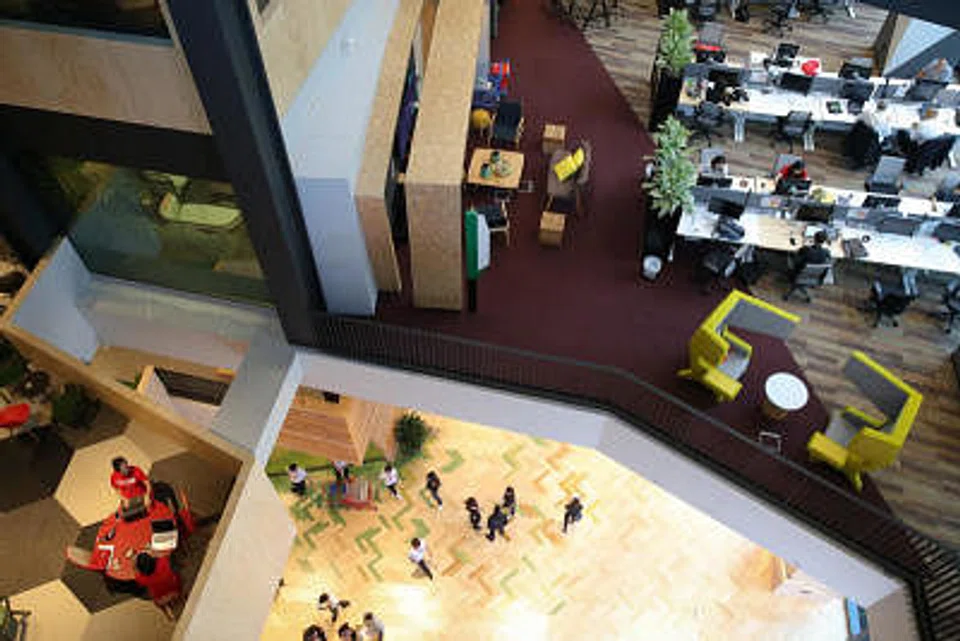
THE hunt for tech talent in Singapore has Chinese tech companies flashing serious cash in order to bulk up their presence here in South-east Asia, with even interns benefiting from their efforts.
Fighting in a limited talent pool, the usual big-name companies are seeing their talent poached by Chinese tech companies that make better offers, sparking a cycle of poaching from others to replace lost talent. This has resulted in higher salaries and perks to attract and retain talent.
For instance, salaries at ByteDance can range from S$6,000 to S$7,000 on average for fresh graduates in junior tech roles, according to tech career site NodeFlair. Salaries for junior tech roles across the board were ranging between as low as S$3,000 and S$7,250 for Q3 2021.
Average salaries for mid to senior-level hires at ByteDance can range from S$9,000 to S$11,000. In Q3 2021, mid to senior roles across the board saw their median salaries hit S$6,500 and S$7,750 respectively, according to Nodeflair.
Hiring has gotten so competitive that observers note companies that previously shunned fresh grads are now looking to hire from the graduating pool.
ByteDance has the fastest rate of growth in hiring among big tech and mature startups in Singapore, according to the Jobs-in-Tech SG Q4 survey by talent consultancy ConnectOne.
The company is actively hiring for a variety of roles, with some 400 openings listed on its jobs portal as at Dec 22. Over half of the openings are for research and development functions, such as a data centre capacity planner and cloud infrastructure tech lead.
The openings at ByteDance are not just for its flagship app TikTok, but also for other enterprise products, such as collaboration software Lark and AI software provider BytePlus.
These roles include front and back-end and full-stack engineers, DevOps and product managers.
ByteDance's strengthening of its footprint in the city-state comes as it hired a Singaporean, Chew Shou Zi, to lead TikTok, leasing a bigger office along with a hiring spree to fill it up.
Similarly, Ant Group has also been hiring product and research talent in Singapore, for digibanking and its cross-border payments solution Alipay+. The company, which is poised to launch a wholesale digibank in Singapore, had 5 openings here on LinkedIn as at Dec 22.
Fresh graduates can command S$5,500 to S$6,000 monthly on average for tech roles at Ant, while seniors command S$9,000 to S$11,000, said Ethan Ang, co-founder of NodeFlair.
"To our knowledge, Ant is slightly on the lower end of the spectrum for fresh grads in the market, but on par from the mid-level onward," he said.
Mo' money
Besides Ant, many crypto and fintech Chinese companies are entering the market and in need of developers proficient in Golang or Java, noted Ang. They are typically willing to offer pay jumps of at least 20 per cent - in some cases even going up to 70 per cent, albeit not frequently.
"Such occurrences are more frequent in crypto-related companies. Their budget can range from S$5,000 to S$22,000, which is pretty extreme," said Ang.
Elena Chow, founder of ConnectOne, makes a similar observation. "Anecdotally, we have startups that have lost a few of their tech teams at one time to these companies, with pay increases of up to 50 per cent for junior to mid-level hires and an average of 20 to 30 per cent for very senior tech leaders."
Sam Lee, partner at advisory Paloe, noted that Chinese tech firms tend to have a set budget for salaries, rather than benchmarking against the last-drawn pay. For instance, a friend who had applied for a marketing manager role at a Chinese tech firm was told that the salary budget was over 30 per cent higher than what he had last drawn in a Series B startup.
There is also stiff competition even at the intern level. NodeFlair has seen interns having competing offers and being paid over S$5,000 in total for a 3-month internship.
"It is causing quite a bit of difficulty for smaller companies to hire, as they are right now fighting for both full-timers and interns," said Ang, noting that startups attempt to match the pay, but struggle against tech giants' deeper pockets.
To keep themselves competitive, tech companies are increasingly conducting formal compensation benchmark exercises to get board approval for upward adjustment in salaries, said Chow.
Still, pay isn't everything, as Paloe's Lee noted that in-demand talents don't always go to the highest bidder. "In fact, they tend to value impact and autonomy more," he said.
That's where startups might have an edge over these giant tech companies. In a smaller outfit, there are possibilities to learn via additional responsibilities and gain experiences in settings that a large organisation would not traditionally allow.
"The chance to grow and develop as an all-rounder will rarely be available in a larger organisation due to how most of their job scopes and hierarchy have been clearly defined," said Oswald Yeo, chief executive and co-founder of online recruitment platform, Glints.
Management also makes a big difference. "A startup that we worked with has a chief technology officer who is technically strong but lost many in his team to big tech companies, including the Chinese ones, as he wasn't as good a manager," said Chow, adding that this insight was derived from exit interviews.
Culture, culture, culture
Culture has always been a big factor in employment, and in the case of Chinese tech companies, the "996" ethos of working 9 am to 9 pm, 6 days a week might seem daunting. But it appears that this is not a complete dealbreaker.
"In general, there is apprehension but many are also attracted to the rare opportunity of being part of a 'revolution' - especially with ByteDance," said Chow of ConnectOne.
"It all comes down to their career aspirations at this point in their lives - and some are ready to sacrifice their personal time in the short term."
Meanwhile, many Chinese tech giants are also trying to shed the 996 image to increase the diversity of hires, said Chow.
"For one top Chinese tech company that we worked with, they deliberately tried to create a different brand and culture distinct from their parent group's notorious 996 in their international operations, firstly by hiring a non-native Chinese leader, followed by a diverse team," she added.
But the reality on the ground is still far from ideal - as long as headquarters is working 996 hours, it's hard for the international team not to. The requirement for communication in Chinese also makes diverse hiring tough, said Chow.
There are signs that work cultures might be converging, as Chinese tech companies set forth across the world. Rather than exporting the 996 culture, more effort might be made to mimic large Western tech companies' cultures instead.
"As these Chinese tech companies are attracting an internationalised talent pool, I would say that the culture will converge more closely with other US tech giants," said Lee.
Read more:
- Tech talent most in demand as hiring activity picks up in 2022: recruitment firm surveys
- China tech majors step up talent initiatives in Singapore
- Tech firms offer mouth-watering pay as they ramp up on Singapore hiring
TRENDING NOW

Knight Frank’s Tan Tee Khoon leaves firm, Nicholas Keong takes over auction business

Keppel Energy, Sembcorp Utilities and Tuas Power to supply biomethane in pilot project
GovTech retrenches another 38 staff in second round of layoffs

Take-up of new private homes dives 45% in Q3 as prices accelerate with 1.4% rise

