

DeepSeek founder Liang’s funds surge 57% as China quants boom
High-Flyer’s strong performance could boost the cash available for the AI start-up
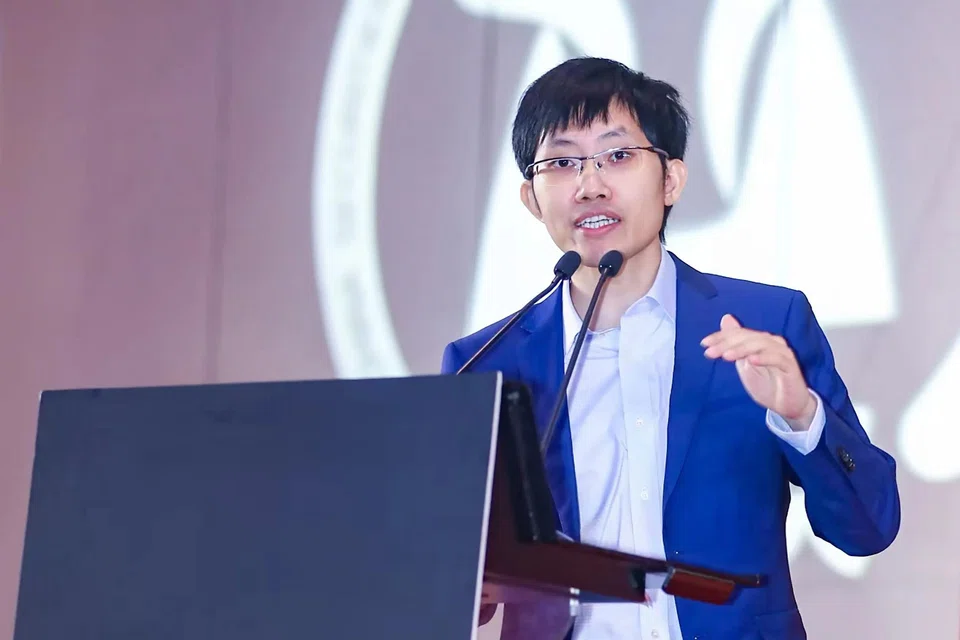
[BEIJING] DeepSeek founder Liang Wenfeng’s quantitative hedge fund generated returns of more than 50 per cent last year, boosting the potential war chest for a company that has already shaken up the global tech landscape despite spending far less than rivals.
Zhejiang High-Flyer Asset Management, which oversees more than 70 billion yuan (S$12.9 billion), posted an average return of 56.6 per cent across its funds in 2025, according to data compiled by consultancy Shenzhen PaiPaiWang Investment & Management
That made it the second-best performer among Chinese quant funds managing more than 10 billion yuan, according to PaiPaiWang. It was beaten only by Ningbo Lingjun Investment Management Partnership, which led the country’s top quants with a gain of more than 70 per cent.
High-Flyer has become a cash cow for Liang, who still holds a majority of the asset manager and stopped taking outside money for the funds a few years ago. Its strong performance could boost the cash available for DeepSeek, the AI start-up which he also owns a majority stake in – and which was incubated by High-Flyer in 2023.
“Liang now certainly has more money to support a bigger team and buy more computing power and hardware for DeepSeek,” said Li Minghong, investment director at Shanghai-based E Tiger Private Fund Partners LLC. “When your first startup is doing well, you can better incubate a second one.”
The fund’s blistering run last year could have generated it revenues of more than US$700 million, reckons Li, who assumed a 1 per cent management fee and a performance fee of 20 per cent. That is orders of magnitude higher than the reported budget of less than US$6 million DeepSeek required to develop its market-shaking AI model, although some rivals have cast doubts on those cost claims.
DeepSeek’s research was funded by High-Flyer’s R&D budget, Liang said previously.
Two products managed by Xu Jin, a co-founder of High-Flyer, rose by an average 58.6 per cent, according to PaiPaiWang. The eight products run by chief executive officer Simon Lu averaged 56 per cent. Lu also ranked No. one among top quants by risk-adjusted returns for stock strategies last year, with a Sharpe ratio of 2.8 per cent as of Dec 19.
Those funds, which all seek to beat the underlying stock indexes, are now High-Flyer’s main product line, after it made an exit from market-neutral offerings in 2024 to go “all-in” on long-only strategies.
SEE ALSO


The gains underscored a bumper year for China’s quant funds, whose 30.5 per cent average return last year was more than double their global rivals’, according to PaiPaiWang and data provider With Intelligence.
Chinese quants’ long-only strategies averaged a 35 per cent return last year, beating their discretionary rivals by more than 10 percentage points, according to PaiPaiWang. The number of quants managing more than five billion yuan jumped to 91 as of Nov 30, up from 63 at the end of 2024.
PaiPaiWang’s rankings are based on products for which fund management firms share data. The pool shrank last year after regulators tightened disclosure rules. BLOOMBERG
Decoding Asia newsletter: your guide to navigating Asia in a new global order. Sign up here to get Decoding Asia newsletter. Delivered to your inbox. Free.
Share with us your feedback on BT's products and services
TRENDING NOW

He built the Vingroup empire. Now South-east Asia’s richest man is handing some key roles to his sons
China’s Pinglu Canal likely to benefit Singapore, other South-east Asia ports in the long term
Suntec Reit to increase Singapore focus, sell three Australia properties
Despite the de-dollarisation debate, demand for dollar liquidity in Asia is growing

