Deliveroo sees room to grow grocery, food delivery in Singapore despite competition

THE market for food delivery has been “intensely competitive” in Singapore, but UK-based Deliveroo still sees room to build on its presence here. It wants to grow its grocery delivery business too, and may expand its offerings to include other on-demand products and services.
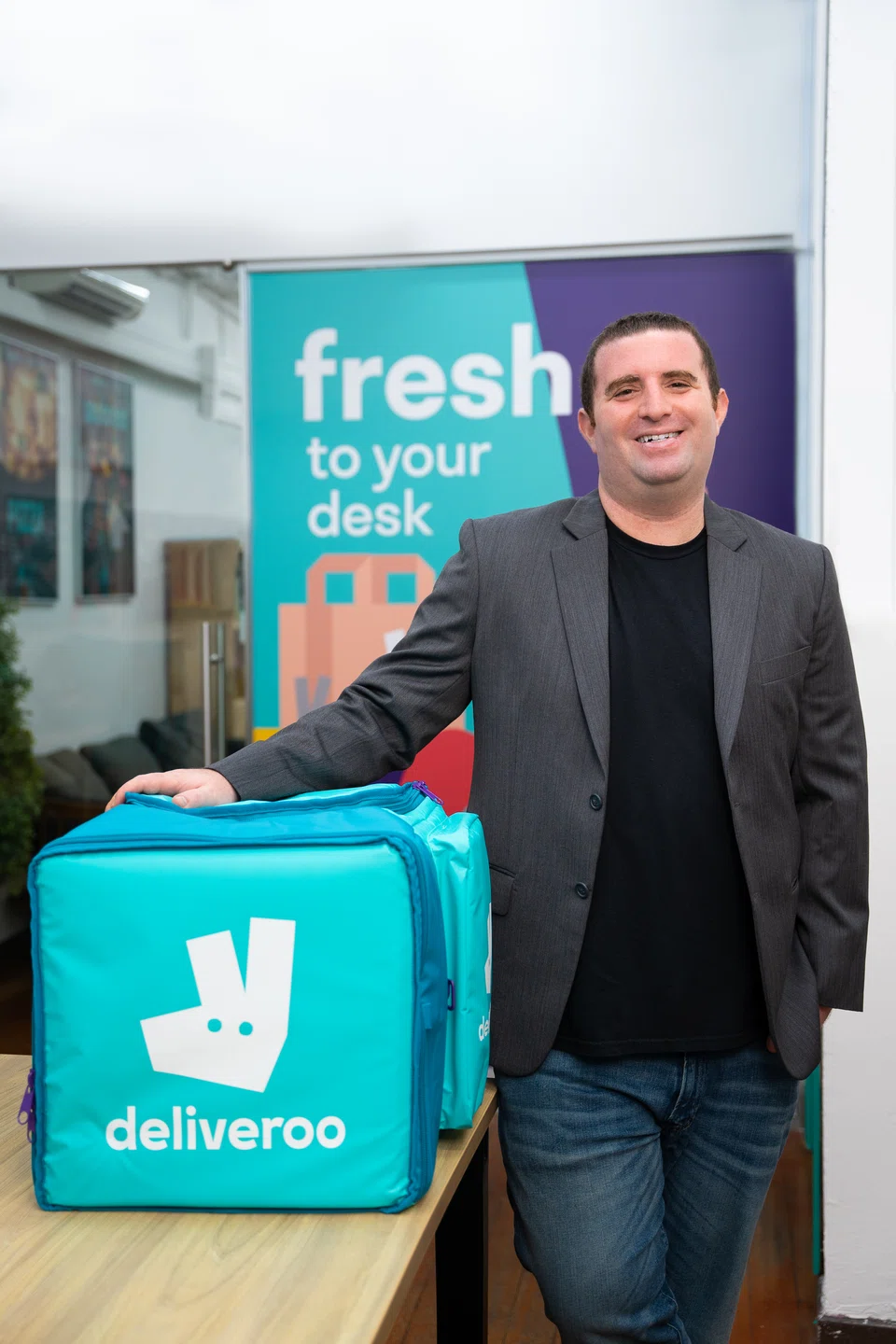
“I think it’s still a pretty sizeable market and there’s room for all players to compete… We’ve continued to build a very strong business here, and I see that continuing into the future,” the company’s Singapore general manager Jason Parke told The Business Times.
The 37-year-old took the helm at Deliveroo’s local office in March this year, after serving as its head of operations for two years. He had previously worked in various tech and finance companies before founding and running Schmear, an F&B joint in Sentosa that specialised in New York-style bagels.
Regulatory filings of Deliveroo’s local entity suggest its business here is profitable. Deliveroo Singapore recorded a S$1.3 million profit for FY2021 ended December, down from a S$1.5 million profit the year earlier. Revenue grew 10.1 per cent, from S$89.1 million to S$98 million, in the same period.
On a global level, however, Deliveroo is loss-making and facing pressure to turn a profit. It posted a £67.9 million (S$110.4 million) loss in adjusted Ebitda (earnings before interest, taxes, depreciation and amortisation) for the first-half of this year, wider than the £25.8 million loss in the year-ago period, amid higher marketing costs and overheads. This was even as revenue grew 12 per cent to £1 billion.
Parke declined to comment on financial figures, but said the company is focused on profitable growth.
“Gone are the days of just throwing money at everything; we need to be much more targeted in our approach – in terms of how and where we deploy our capital,” he said.
In a bid to cut costs, Deliveroo has reduced its overseas presence. It shut its operations in Australia last month, describing the market as “highly competitive with four global players”, and also exited the Netherlands.
In 2021, it had withdrawn from Spain – citing the need for a “disproportionate level of investment with highly uncertain long-term potential returns”. This came after the country recognised delivery riders as employees. The company’s remaining international markets include Hong Kong, the United Arab Emirates and several European countries.
Parke said that there are no plans for an exit from the Singapore market or a downsizing of its presence. The company employs about 80 staff here; its pool of delivery riders who were active at least once in the past month is about 10,000. It works with just under 9,000 restaurants in Singapore.
Deliveroo has engaged in some cost-cutting moves here in recent years. It laid off a quarter of its employees here in 2020 during the pandemic. In June 2021, Deliveroo ceased operations at one of its delivery-only kitchens at CT Hub 2 on Lavender Street.
A company spokesperson said that it wanted to focus its investment on the other two cloud kitchen sites, at Katong and Alice@Mediapolis, while looking out for “more promising growth opportunities”. It still sees delivery-only kitchens as a growth opportunity.
Asked if the company has also cut spending on incentives, Parke said: “It’s not necessarily a cut. It’s really around making sure we use it in the smartest way possible; continuing to use data analytics and everything that we have at our disposal to make the best possible decisions for the business.”
Challenging outlook
Market watchers expect that 2023 could be a challenging year for on-demand food delivery, given inflation and Singapore’s upcoming increase in goods and services tax.
Beyond that, new regulations could be another headwind. From 2024 or thereafter, Singapore will make it compulsory for platforms such as Deliveroo to provide gig workers with insurance aligned with the Work Injury Compensation Act.
The platforms will also need to pay Central Provident Fund contributions, which will be mandatory for those aged under 30 in the first year of implementation. Asked about the cost impact, Parke said that it is still too early to tell.
“We’d have to go through a lot of the implementation steps before we can really (have) a firm understanding of exactly what the size of the cost impacts are going to be. We’ll work through that over the next couple of years,” he said.
He believes the market will work out a new equilibrium. “As the advisory committee said in its report, everyone that’s involved in the ecosystem is going to have to be willing to pay more; and that’s part of the social compact of Singapore,” added Parke.
Deliveroo plans to grow its grocery delivery offering in Singapore. This was launched in 2020 with retail chain Marks & Spencer as its partner. It has since added locally listed DFI Retail Group Holdings’ brands Giant and Cold Storage, as well as others.
“We continue to add on to that offering, and we may look even beyond grocery to other non-food items that people may have an immediate need for,” he said. Deliveroo is still exploring what these items could be, which may range from flowers and electronics to health and beauty products.
The company has no plans to go into the asset-heavy space of owning warehouses and inventory in Singapore, although it had launched a physical grocery store in the UK in October – in partnership with Morrisons.
“We’re continuing to gain learnings from that to see if it is an area that makes sense for us to push into further as a business; whether it makes sense to have our own stores or to use the technology to empower a partner,” said Parke.
Decoding Asia newsletter: your guide to navigating Asia in a new global order. Sign up here to get Decoding Asia newsletter. Delivered to your inbox. Free.
Copyright SPH Media. All rights reserved.