

Deliveroo shuts cloud kitchens in Singapore amid high operating costs
Restaurants are also pausing their expansion plans due to economic pressures, says a Deliveroo spokesperson

FOOD delivery giant Deliveroo has ceased operations at its remaining two cloud kitchen sites in Singapore, amid higher operating costs and waning demand from restaurants.
A Deliveroo spokesperson told The Business Times that operating costs at its cloud kitchens have “risen significantly”, as rent and utility rates continue to increase over the last few years.
The spokesperson also noted that its restaurant merchants “are slowing some of their expansion plans due to economic pressures”, including food inflation and rising wages.
“In light of this context, we have decided that we will not renew the leases at our two Deliveroo Editions sites in Singapore.”
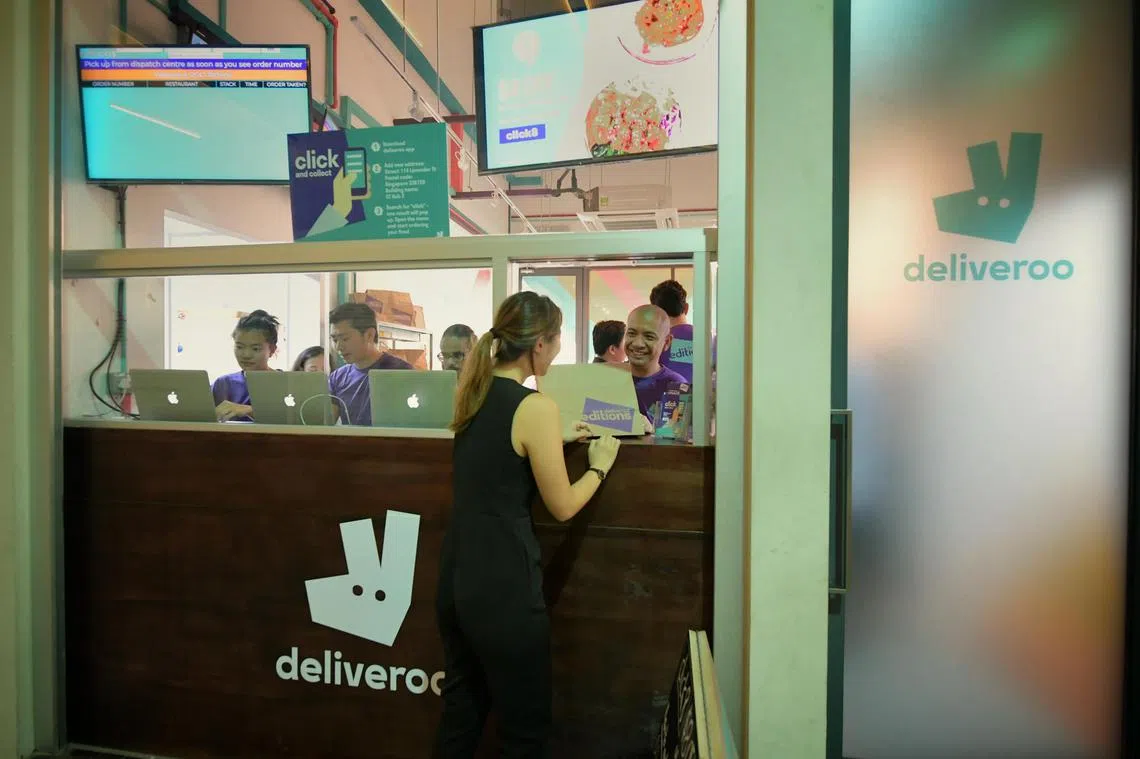
Deliveroo Editions are the company’s delivery-only kitchen concepts, which provide kitchen facilities to restaurants for the preparation of meals purely for delivery.
Operations at Deliveroo’s two remaining Editions sites in Alice@Mediapolis and Tanjong Katong have been suspended since Aug 20.
The company has notified affected restaurant merchants and is working with them to support their transition.
The spokesperson added: “Deliveroo Singapore will continue to focus on growth in our delivery business, and remains steadfastly committed to working closely with our restaurant and grocery partners to market and grow their pickup and delivery businesses, reaching more customers and growing revenue.”
Deliveroo’s cloud kitchen site at Alice@Mediapolis in one-north opened in March 2019 to much fanfare.
At that time, then general manager of Deliveroo Singapore Siddharth Shanker had touted the space – which spanned over 3,000 square feet – as the company’s “biggest and most innovative site” yet.
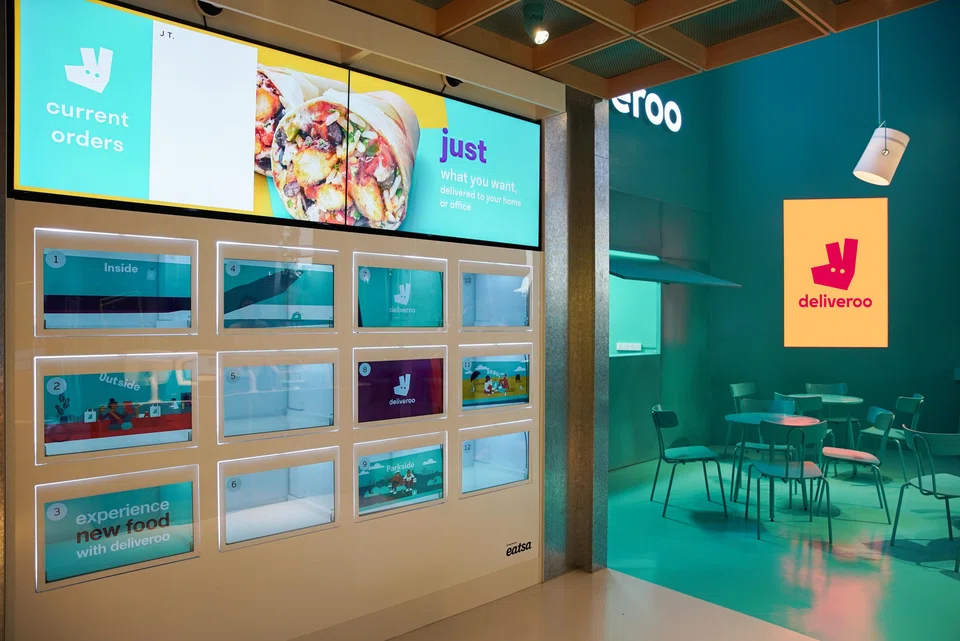
Called Deliveroo Food Market, it built on the concept of the company’s delivery-only kitchens, with 10 kitchens and the addition of a 40-seater dine-in space with a fully automated ordering system.
The site housed a total of 11 food concepts from seven restaurant operators, including Vietnamese noodle bar NamNam, Korean eatery Bonchon and Greek restaurant Blu Kouzina.
Customers could order food through self-serve kiosks and pick up their food from digital cubbies. They could also order food for delivery to neighbouring areas such as Queenstown, Holland Village and Bukit Timah.
There were earlier signs that Deliveroo’s cloud kitchen business was not doing well.
In June 2021, the company shut its cloud kitchen site at CT Hub 2 at Lavender Street.
In response to this, a Deliveroo spokesperson at that time said the company wanted to focus its investment on its other two cloud kitchen sites at Alice@Mediapolis and Tanjong Katong. It also still saw delivery-only kitchens as a growth opportunity.
According to regulatory filings, Deliveroo Singapore posted a profit of S$612,961 for FY2023 ended December, down from a profit of S$842,978 the year before. Revenue stood at S$56.7 million for the year, down from S$82.5 million.
The closure of Deliveroo’s delivery-only kitchens comes as food delivery sales in the region stagnate, having eased from pandemic-era highs.
A report by consultancy Momentum Works showed that South-east Asia’s food delivery platforms’ gross merchandise value (GMV) grew at a modest 5 per cent for the second year in a row to reach US$17.1 billion in 2023, from US$16.3 billion in 2022.
In comparison, GMV for these platforms spiked 183 per cent in 2019 to hit US$11.9 billion in 2020. It subsequently grew 30 per cent year-on-year to reach US$15.1 billion in 2021.
Since the lifting of Covid-19 pandemic measures, Deliveroo and its food delivery counterparts have been focused on cutting costs and moving away from unprofitable markets.
In February 2023, Deliveroo founder and chief executive Will Shu said the company would be laying off 9 per cent of its global workforce, which amounted to about 350 roles.
But things have been picking up for the UK-based company on a global level.
Deliveroo posted its first ever profit in the first half of 2024 since the business launched in 2013. It inched into the black with a profit of £1.3 million (S$2.2 million), reversing from the £82.9 million loss recorded during the same period last year.
Revenue edged up 1 per cent to £1.03 billion, from £1.02 billion the year before. About 60 per cent of this was contributed by operations in its home markets of UK and Ireland, with the rest from international markets.
This was on the back of higher gross transaction value as orders returned to growth, the company said.
Operating costs for its international operations, however, remain higher.
The UK and Ireland posted a gross profit margin of 11 per cent – expressed as a percentage of gross transaction value – for H1 2024. International markets posted a gross profit margin of 9.5 per cent for the same period.
TRENDING NOW

Britain’s mansion tax shows the difficulty of targeting wealth

Once staunchly pro-China, Malaysian Chinese businesses are now distancing themselves from Beijing

The only common thing in S-E Asia is that we all eat rice: Cisco’s Asean president
Singapore data centre operator DayOne opts for US IPO at likely US$20 billion valuation

