E-commerce 2.0: Shein and Temu fight for the global market
Next-gen players are reinventing the supply chain for cross-border commerce, but face a host of challenges.


NEED some new pants? Here’s a pair with a design you’ll love – based on your past searches – for just US$10. Throw in another dollar and you could get those sunglasses everyone’s discussing on TikTok. There’s free shipping and a tonne of discount codes.
This is the sweet proposition offered by two new-age apps with Chinese links: fast-fashion player Shein and budget shopping platform Temu. Both have taken the world by storm, with a potent combination of ultra-low prices and personalised recommendations.
Shein, founded in the Chinese city of Nanjing in 2012, surged during the pandemic to become one of the world’s largest fast-fashion retailers, threatening rivals Zara and H&M. The company, which has its global headquarters in Singapore, is said to be most recently valued at US$64 billion, down from US$100 billion last year.
Shein is reportedly planning for a US initial public offering (IPO) in the second half of this year. It is also said to be aiming for an annual revenue of US$58.5 billion in 2025, more than double the US$22.7 billion figure in 2022, according to a Financial Times report in February.
Hot on its heels is Temu, the Boston-based unit of Nasdaq-listed PDD Holdings, which operates the popular group buy app Pinduoduo in China. Selling everything from T-shirts to toasters, Temu promises that everyone can “shop like a billionaire”.

The platform was only launched in September 2022, but is already the top downloaded app in the United States, while also serving Canada, Australia and New Zealand. It recently started selling in European markets such as France, Germany and Italy, but is presently not in Asia.
While Temu’s business model is distinct from Shein, both companies are in stiff competition for consumer wallets. Temu’s North American unit has an internal target to beat Shein in at least one day of gross merchandise value (GMV) before Sep 1, Bloomberg reported, citing anonymous sources.
In the already cut-throat world of e-commerce, the likes of Shein and Temu have raised the bar on the promise of “faster, cheaper and better”, challenging e-commerce stalwarts like Amazon and Alibaba. But these next-generation players also face a challenging road ahead, with scrutiny around issues like supply chain transparency and geopolitical tensions.
Global from the get-go
Shein and Temu are distinct from the earlier wave of Chinese tech giants – like Alibaba and Tencent – in one key aspect: both were made for the international market, right from the outset.
“(This) is also the fundamental difference from WeChat (or) Taobao. The latter platforms experienced great success in China, but didn’t replicate their success in international markets,” says Wang Xiaofeng, principal analyst at Forrester.
Roshan Raj, partner at Redseer Strategy Consultants, reckons that the global-first strategy of Shein and Temu is aligned with broader macroeconomic conditions in China. Economic growth has slowed compared to the post-2008 period, while domestic competition is as stiff as ever. “So it’s less conducive to just operate domestically as opposed to looking at opportunities outside,” he explains.
Why target the US and Europe? Some experts believe that Shein and Temu are bridging what has been a long-standing market gap: the inability of Chinese manufacturers to directly access Western consumers.
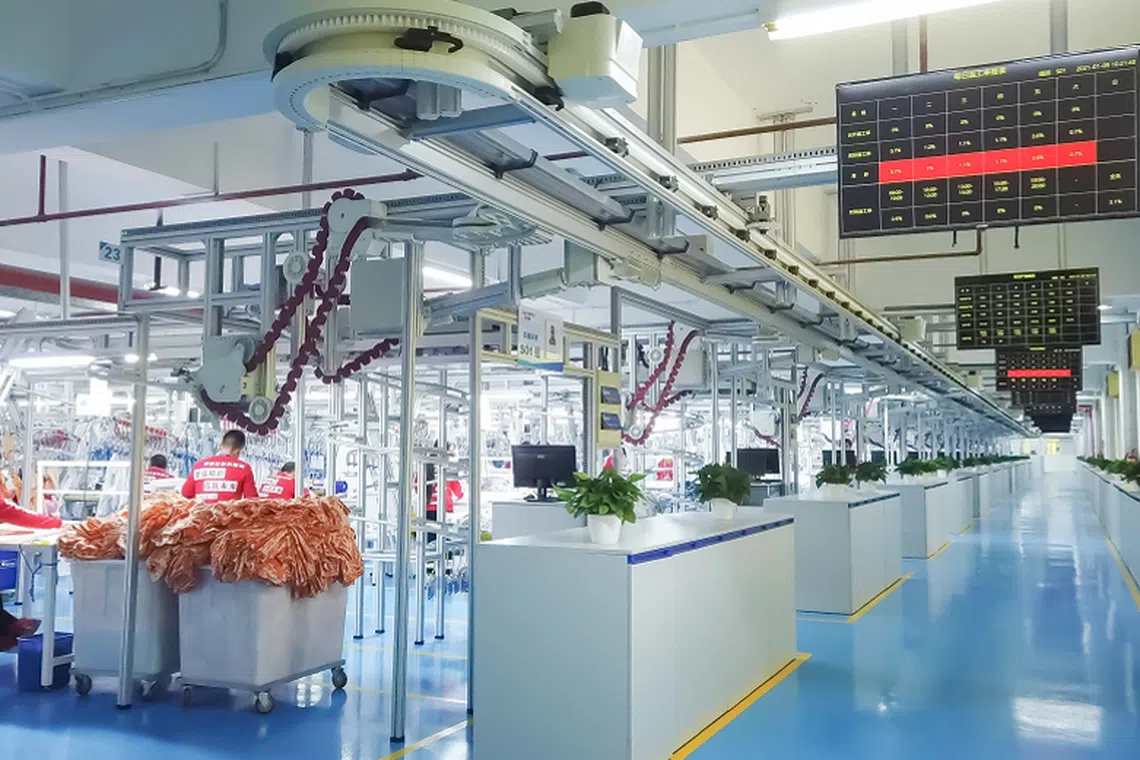
“Ever since the late 1970s, when China ramped up its manufacturing production and began to open its economy to the world, its small and mid-sized factories struggled to gain access to the large consumer markets of the US and Europe,” notes John Deighton, a professor of business administration, emeritus at Harvard Business School, in an Apr 25 blog post.
“American consumers bought Chinese products, but typically they did so under globally recognised brand names, including the private labels of mass merchants such as Walmart, Costco, and Target. Most of those profits accrued to the brands, rather than the Chinese suppliers.”
It is therefore not surprising that Shein and Temu emerged with a solution: a direct-to-consumer (D2C) model that can “match consumer demand to dispersed production by a collection of factories in China” says Deighton.
Amazon had in fact attempted a similar model, recruiting Chinese manufacturers to sell on Amazon Marketplace since 2013, he adds. But this was challenging for China’s small factories, as they “knew little of fast-changing American consumer fashion tastes”.
How did Shein and Temu crack this information gap? Enter the world of data-driven commerce.
Lean, mean efficiency machines
Chris Xu, the elusive founder of Shein, is said to be something of a whiz in search engine optimisation. That affinity for efficiency appears to be reflected in Shein’s approach to the fast-fashion business. Instead of mass-producing designs, the company taps analytics to pursue what it calls “small-batch, on-demand manufacturing”.
“We only produce 100 to 200 pieces of any product at launch for the global market, compared to the mass production by traditional retailers who need to stock shelves in their stores around the world,” says Shein’s Singapore general manager Leonard Lin, in emailed responses to queries from The Business Times.

Shein then provides real-time feedback on the sales to the suppliers it works with, so that they can adjust their output “with agility”. For instance, if there is greater demand for a particular design, the factory can ramp up production of it over less popular ones.
“This agile production model enables us to limit excess inventory to single-digit percentages, resulting in substantially less waste (and) allowing Shein to provide affordable products to customers,” says Lin.
He adds that traditional retailers typically end up with between 25 per cent and 40 per cent of excess inventory, which then has to be stored and eventually dealt with or disposed of. With its on-demand production model, Shein identifies trends with greater accuracy than traditional forecasting.
This “small order, quick reorder” model, alongside supply chain efficiency, is one of the key factors for Shein’s success in the global market, says Jianggan Li, chief executive of tech advisory Momentum Works.
A report by consultancy BCG in March similarly notes that Shein “has built a strong ecosystem comprising small and mid-sized suppliers that specialise in small-order production”.
“The company offers competitive payment terms – weekly, bi-weekly, and 30 days, facilitated by its D2C model, instead of a more typical 90 days for the industry – to help its suppliers improve their liquidity and profitability throughout the year,” the report adds.
Power of relationships
Like Shein, Temu is also seen to be tapping the power of supplier relationships, riding on PDD’s expertise in the segment.
“(PDD) is good at doing business with source factories on the merchant side – only then can they achieve absolute low prices. And on the user side, they excel at marketing and (using) long-term low prices to attract users. Temu also carries this DNA,” says Jamie Chen, an analyst at Third Bridge.
She notes how Pinduoduo succeeded despite being a latecomer in the already saturated e-commerce market in China, “which indicates that their team’s (operations) and execution are highly efficient”.
Raj of Redseer believes that Temu may be able to succeed where another direct-from-China shopping app, Wish, has struggled. “They perhaps did not have the kind of scale that PDD has in China (and) the domestic understanding... of sourcing,” he says, adding that Temu will likely be a strong competitor for Shein.
Rocky road ahead
While the meteoric rise of Shein and Temu has been impressive, the jury is still out on the long-term success of these platforms. One big factor will be their business fundamentals – whether both companies can keep cash burn in check, while offering low prices.
Third Bridge’s Chen says of Temu: “It remains to be seen whether it can achieve healthy operation in the future, whether supplier merchants can withstand price pressures and whether repeat purchase rates can improve with reduced subsidies for consumers.”
Shein, meanwhile, is said to have been profitable for four consecutive years, according to the FT report in February. However it also appears to be facing more cost pressures, with profit falling from US$1.1 billion in 2021 to US$700 million last year, due to high air freight costs and rising production costs, according to the report.
Beyond the bottom line, both companies also face scrutiny on environmental, social and governance (ESG) issues. The fast-fashion and e-commerce industries have been facing allegations of promoting waste with a “buy and throw” culture.
Shein, in particular, has also been accused of labour exploitation, with a Swiss advocacy group alleging that some Guangzhou workers were found to be working 75-hour weeks. Last December, Shein committed US$15 million to improve standards at its suppliers’ factories.
With IPO ambitions on the horizon, it will be critical for Shein to brush up its ESG image. On Apr 25, Shein vice-chairman Donald Tang said at a World Retail Congress event that the company aims to become more focused on sustainability, with efforts like allowing customers to pick more sustainable materials and providing a platform to resell used clothes.
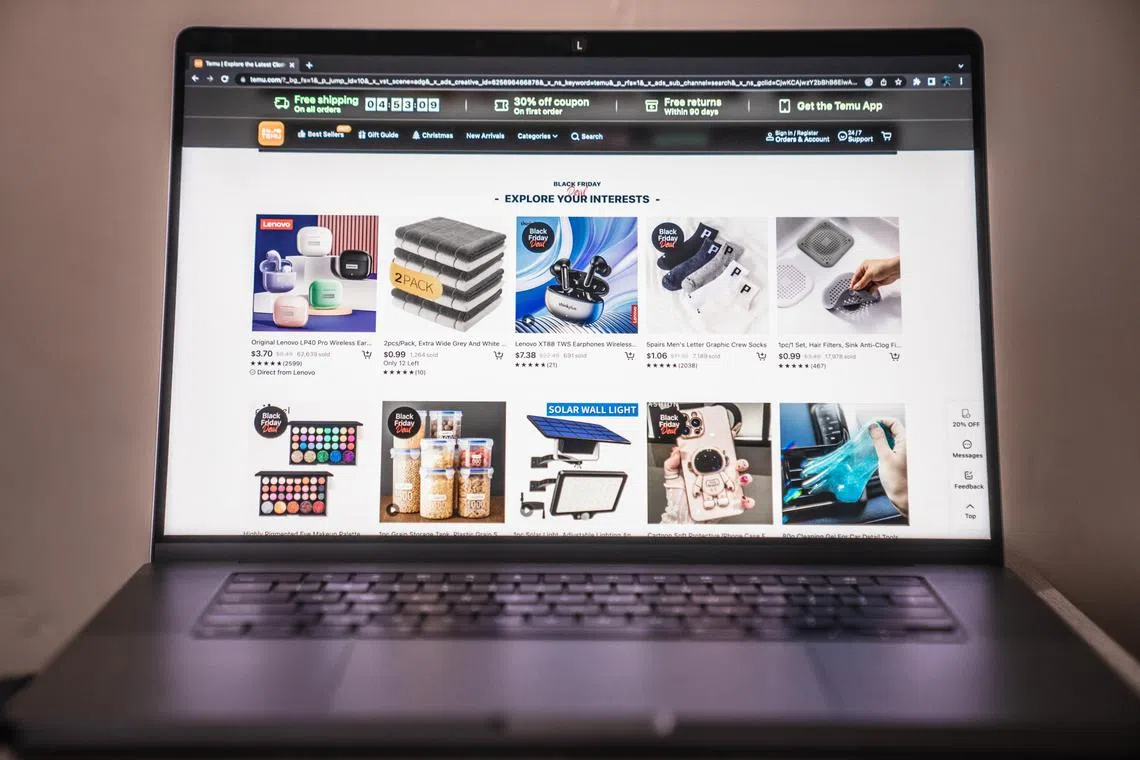
Along with ESG concerns, another key challenge for Shein and Temu lies in geopolitics. In April, a commission formed by the US Congress released a report raising questions on the production practices of Shein and Temu as well as data and intellectual property risks. Prior to that, US lawmakers flagged concerns that the firms may be using a trade loophole to avoid duties for shipments under US$800.
Where US lawmakers go from here with Shein and Temu remains to be seen, and could be shaped by broader developments in US-China tensions.
But if the companies manage to navigate this tricky terrain, they could pave the way for many more e-commerce challengers from China to break into the Western market. Cross-border commerce could yet again be reinvented – alongside other industries.
“Apart from these e-commerce companies, we are seeing many Chinese renewable energy tech and digital industrial tech solution companies, such as those that cover industrial Internet of Things, digital twins and robotics, going overseas to meet growing demand for ESG and smart manufacturing products and solutions,” says Ben Kwan, Greater China leader at EY-Parthenon.
Many companies may not succeed in their global ventures, but “the few that do will dramatically transform the competitive dynamics in the markets they enter, making it an intriguing subject for the startups in the region to learn from and compete with”, says Li of Momentum Works.