Geothermal finds footing in the energy market with Temasek-backed technology

CANADA-BASED geothermal technology company Eavor Technologies has raised over C$100 million (S$106 million) from investors globally, including Temasek, Vickers Venture Partners, and the venture arms of oil majors BP and Chevron.
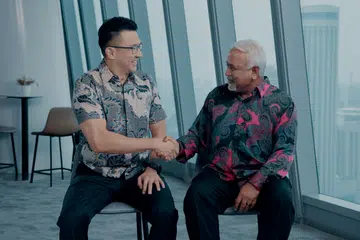
"Singapore has the highest chunk of our equity of any country," said Eavor's president and chief executive officer John Redfern, referring to the combined stakes of Vickers (20 per cent) and Temasek (8 per cent).
Why the vested interest in geothermal energy? Historically, geothermal has been regarded as a form of niche renewable energy due to its cost and practical challenges.
Traditionally, geothermal systems require certain geological features such as hot springs and geysers. Underground water bodies can be artificially created by fracking but this could lead to earthquakes and water contamination.
However, geothermal energy is proving to be too attractive a carbon-free power source. As such, companies, researchers and governments have been trying to make it feasible.
Founded in 2017, Eavor is one such company. Its advanced geothermal technology is a closed-loop system called the Eavor-Loop.
The Eavor-Loop consists of 2 vertical wells drilled 3 kilometres underground, connected by multiple horizontal wells. A fluid circulates within this loop to conduct heat, which can be used for direct heating, cooling and generating electricity.
When Finian Tan, founder and chairman of Vickers Venture Partners, first heard of the technology, he was surprised by its simplicity, likening it to a "radiator". Vickers first invested in Eavor's C$15 million Series A round in 2019.
But geothermal energy is not so hot with renewable energy investors.
According to data from the International Renewable Energy Agency, geothermal attracted investments of 1 per cent annually from 2013 to 2018, whereas its solar and wind counterparts secured about 40 per cent and 30 per cent of investments respectively in the same period.
Solar and wind are attractive to investors as the plants are cheap to install and energy produced is priced competitively, in part due to government incentives.
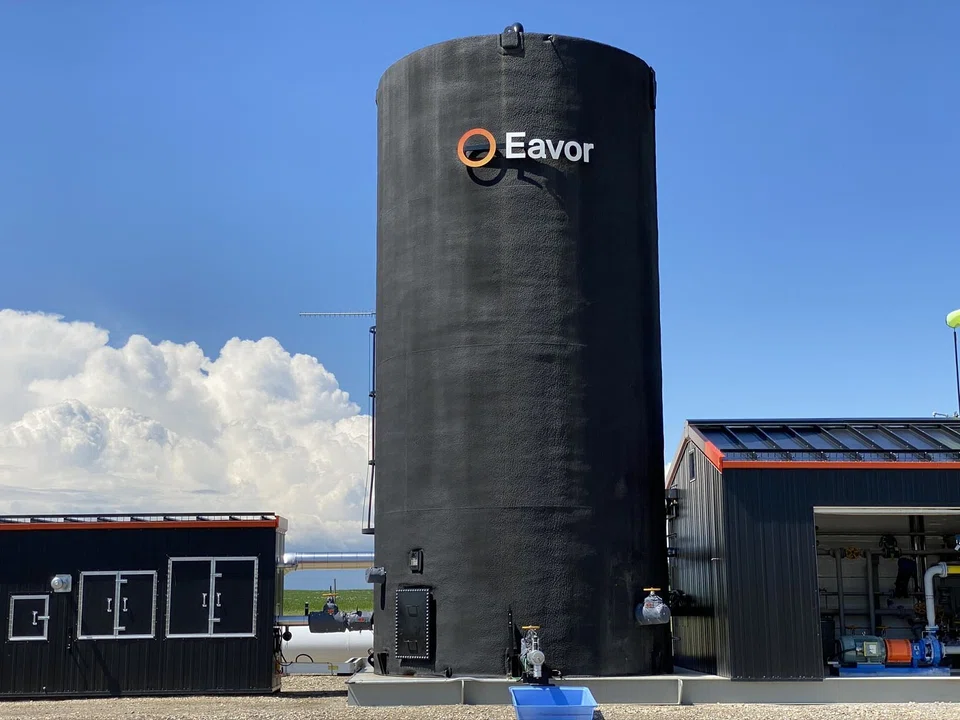
While Eavor has yet to market Eavor-Loop commercially, it has proven the validity of its concept in a C$10 million pilot project in Alberta in 2019. Currently, it has ongoing projects to license its proprietary technology to other project developers, said Redfern.
Markets Eavor is pursuing include the US, Europe, Japan, Canada, the Caribbean and Singapore.
Despite its promising technology, Eavor has a huge hurdle to overcome - cost.
Even Eavor's CEO admits that it is producing at a high levelised cost of electricity (LCOE), which refers to the revenue required to build and maintain a power plant over its economic lifespan. Eavor claims its plant will last for 30 years.
The LCOE is dependent on local cost structures and the underground temperature gradient, he said.
Redfern is looking to start in economically viable places, such as the western US where volcanic activity is present, or Germany where incentives like a 20-year high feed-in tariffs (FIT) of €251 per megawatt-hour (MWh) can compensate for the high cost.
Eavor is working with a geothermal project developer, Enex Power Germany, in a German town at a fixed power price of €227/MWh until 2042.
Hoping to ease the learning curve with advancements in technology, Eavor is targeting an LCOE of C$60/MWh, albeit higher than its solar and wind counterparts.
US-based companies GreenFire Energy and SAGE Geosystems are also driving the advancement of geothermal technologies and have their versions of closed-loop systems.
Other ways to lower the LCOE include drilling deeper to reach higher temperatures and increasing the number of loops to get more energy out of a single power plant, according to Mark Lim Jian Wei, adjunct principal investigator at the Energy Research Institute at Nanyang Technological University (ERIA@N).
In the US, Eavor wants to mine 300 degrees celsius of heat and drill 7 kilometres into the ground - "the deepest geothermal well in history", according to Redfern. It expects to begin work on the project in Q2 of 2022.
Lim's ERIA@N research team is working with the Energy Market Authority (EMA) to study the potential of deploying geothermal energy systems in Singapore. The Republic only recently recognised geothermal as a power generation option. A 2020 report from the National Climate Change Secretariat mentioned that geothermal energy is not commercially viable in land-scarce Singapore.
However, about a year later, the EMA announced that following new developments in technology, it will study the feasibility of geothermal energy - a potential source of indigenous clean energy, apart from solar.
The narrative has changed as emerging systems could allow geothermal energy to become economically viable in Singapore. Researchers are starting to understand the Republic's geology better and consequently, where to potentially deploy these systems, said Lim.
Still, there is a high cost to pay. Eavor's early commercialisation projects involve sums of between C$50 million and C$200 million, according to Redfern. "Going forward will require hundreds of millions more in finance for each Eavor project," he said.