

GIC, BlackRock funding makes Skyroot Aerospace first space unicorn in India
Investment arrives at a pivotal moment as space-tech firm prepares for maiden flight of Vikram-1
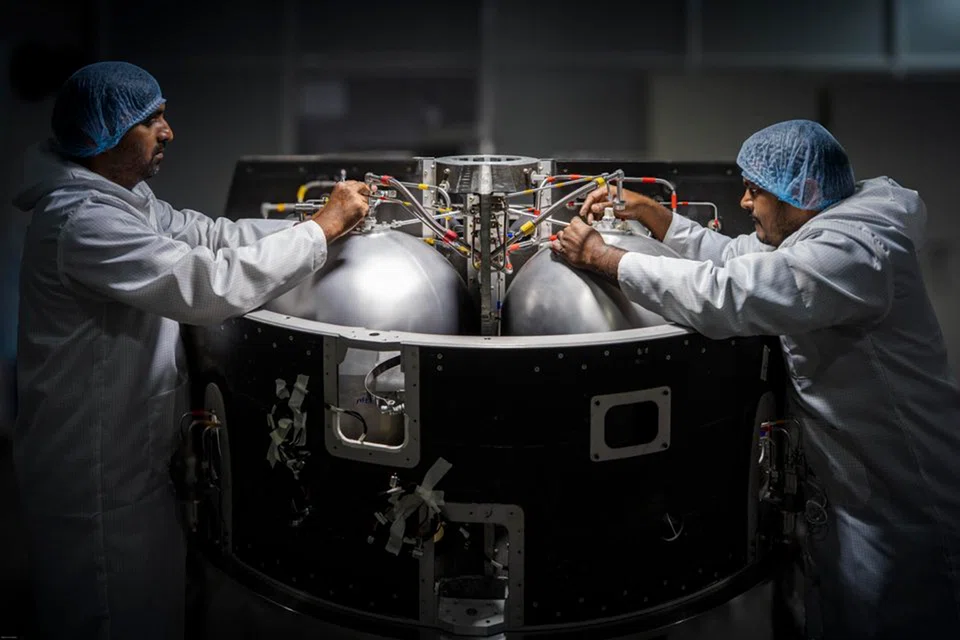
[BENGALURU] Skyroot Aerospace has become India’s first space-tech unicorn after securing US$60 million in fresh funding from GIC and Sherpalo Ventures, lifting its valuation to US$1.1 billion.
The round also saw participation from funds managed by BlackRock, taking Skyroot’s total capital raised to US$160 million, the company said in a statement on Thursday (May 7).
The investment arrives at a pivotal moment. The Hyderabad-based startup, which was founded in 2018, is preparing for the maiden flight of Vikram-1, set to be India’s first privately designed and developed orbital rocket.
The funds will be used for launch operations, expanding manufacturing capacity and accelerating development of the more capable Vikram-2, the company said.
The funding secures Skyroot’s capital requirements through its transition to commercial flight, Pawan Kumar Chandana, co-founder and CEO. The firm “will start to make some money” once missions begin, at which point it will re-evaluate the need for raising more funds, he said in an interview after the funding announcement.
Skyroot will carry out a couple of more test launches after the maiden flight, and commercial launches will start after that, he said.
The deal will help add global expertise to Skyroot’s bench, by bringing in Ram Shriram – founder of Sherpalo Ventures and an early Google backer – to its board.
Skyroot’s rise mirrors a broader transformation in India’s space sector. What was once a government-dominated domain is rapidly evolving into a high-growth, dual-use ecosystem for civilian and military purposes.
The number of space startups has surged from just one in 2014 to more than 300 by early 2026, positioning private companies as central to India’s ambition of capturing 8 per cent of the global space market by 2035.

The shift comes as the Indian Space Research Organisation faces renewed pressure after a second consecutive orbital launch failure in early 2026.
At the same time, India’s security agencies are increasingly turning to private players to build so-called bodyguard satellites and other defensive space assets amid heightened geopolitical tensions.
India plans to launch over 50 spy satellites and add night-time imaging systems to enhance its national security capabilities, with help from domestic startups. BLOOMBERG
Decoding Asia newsletter: your guide to navigating Asia in a new global order. Sign up here to get Decoding Asia newsletter. Delivered to your inbox. Free.
Share with us your feedback on BT's products and services
TRENDING NOW

Once staunchly pro-China, Malaysian Chinese businesses are now distancing themselves from Beijing

Looking beyond looming CEO succession, should UOB potentially pursue a transformative merger?

Could stablecoins be the future of money?

Grab CEO’s wife Chloe Tong on life with Anthony Tan and finding her purpose

