SINGAPORE LABOUR: GIG JOBS

Gig economy: legal framework needed to avert social costs

Claudia Chong
Published Tue, Feb 23, 2021 · 09:50 PM

    Singapore

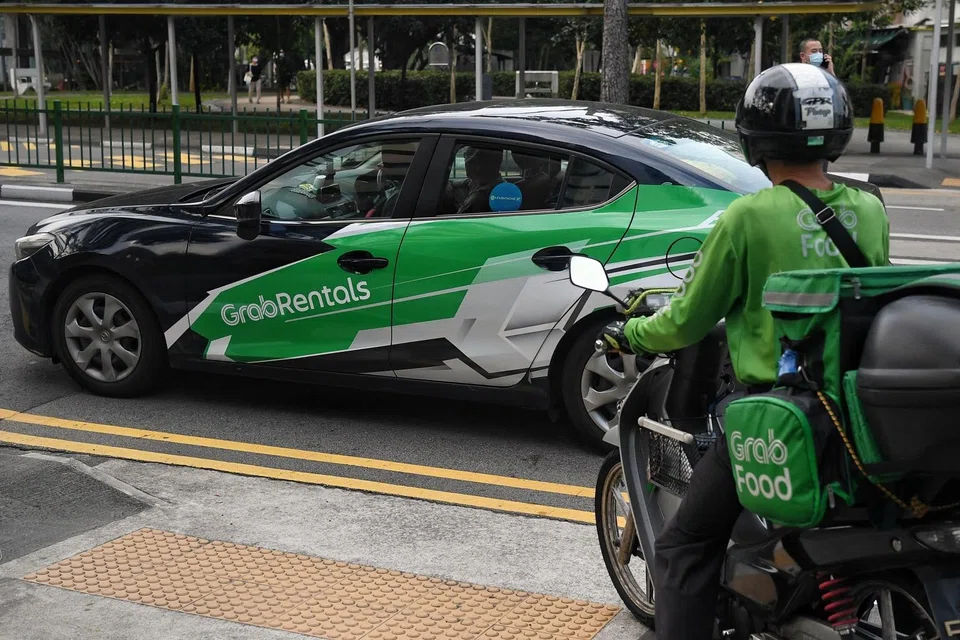
    WITH legislation surrounding gig workers likely to be debated in Parliament soon, pertinent issues to be addressed include safety nets for self-employed persons as well as skills development in order to maintain employability and mobility between sectors.

    Any update in legislation would have huge implications for all stakeholders. Tech companies, which have built their on-demand businesses on a large pool of flexible "freelancers", could find themselves scrambling to adapt their cost structures should Singapore decide to acknowledge these people as employed workers.


    But a failure to protect gig economy workers could mean the government bearing the social costs in the long term, industry observers said.

    "The gig economy is not necessarily good for Singapore because a lot of the safety nets that we have, such as CPF and Medisave, are built around the compact between employer and worker," said Abel Ang, chief executive of medical devices group Advanced MedTech and a frequent commentator on issues related to tech.

    "If you don't have an employer-employee relationship, that's a critical safety net that's removed. That becomes a hole in our support structure for citizens," Mr Ang said.

    It is well due for labour laws in Singapore to be updated to reflect an evolving job landscape brought about by the digital economy, said observers.

    Ian Lim, a partner at TSMP specialising in employment law, noted that Covid-19 has accelerated the trend of people taking up gig work amid a loss in full-time employment and the burgeoning demand for such services during stay-home measures.

    In a blog post on Tuesday, National Trades Union Congress (NTUC) assistant secretary-general Patrick Tay said he will seek to review various legislations to better represent self-employed persons.

    The labour MP cited the example of the UK Supreme Court's judgment on an Uber case. The claimants were found to be "workers" and entitled to protections such as minimum wage and holiday pay.

    Eugene Tan, a law professor at the Singapore Management University, told BT that Singapore could be more proactive about establishing a framework to ensure a minimal level of protection and rights for these gig economy workers.

    "If the gig economy results in a tiered economy based on unequal workplace rights, entitlements and protections, then we will have a growing socio-economic and political time bomb in our hands," said Prof Tan.

    He added that the law can attempt to be definitive as to who is an independent contractor, rather than allow companies to self-define or self-categorise.

    In determining whether a person is a gig economy worker, he said, three factors are worth considering: the extent to which the company controls or directs the person's work; the person's services and how it is related to the company's core business; and whether the person who is engaged operates independently and is primarily involved in the same trade or business as the work performed.

    Laure de Panafieu, partner and head of employment and incentives for Asia at Linklaters, noted that given the growth of alternative flexible working models, the Tripartite Partners' Report on Self-Employed Persons and the Tripartite Standard on Contracting with Self-Employed Persons might be reviewed.

    To be sure, tech firms have provided some benefits to gig workers in their private capacity.

    Grab, for instance, provides group personal accident insurance to all private hire drivers.

    It also matches drivers' Medisave contributions up to S$100, subject to certain conditions.

    Gojek has partnered with Gigacover for medical leave insurance that includes earnings payouts and subsidised medical consultation. The plan is provided to upper-tier drivers at no cost.

    These are good initiatives, but there has to be a formal agreement between private companies and the government for the former to make measurable commitments for their workers, said Bob Aubrey, a strategic adviser to the Asean Human Development Organisation.

    "It can't just be left to moral attitude," he said.

    Mr Aubrey also emphasised the importance of skills training for gig workers to ensure mobility within Singapore's workforce.

    But observers noted that the push for basic protection and training for gig workers could add to the cost of doing business here.

    Associate Professor Lawrence Loh from the National University of Singapore's Business School said: "Somewhere down the line, consumers might have to be willing to bear the brunt of the increased costs. But ultimately, a balance has to be struck and the welfare of workers is the most important."

    Mr Ang agreed. "When you do business with someone, you cannot walk away and say that you have no responsibility - especially if that person is a critical part of your supply chain and your business cannot function without them."