

Gig work: Any alternatives to a union must still have teeth
Time for a clearer indication of how Singapore will uplift platform workers’ collective voice

Sharanya Pillai
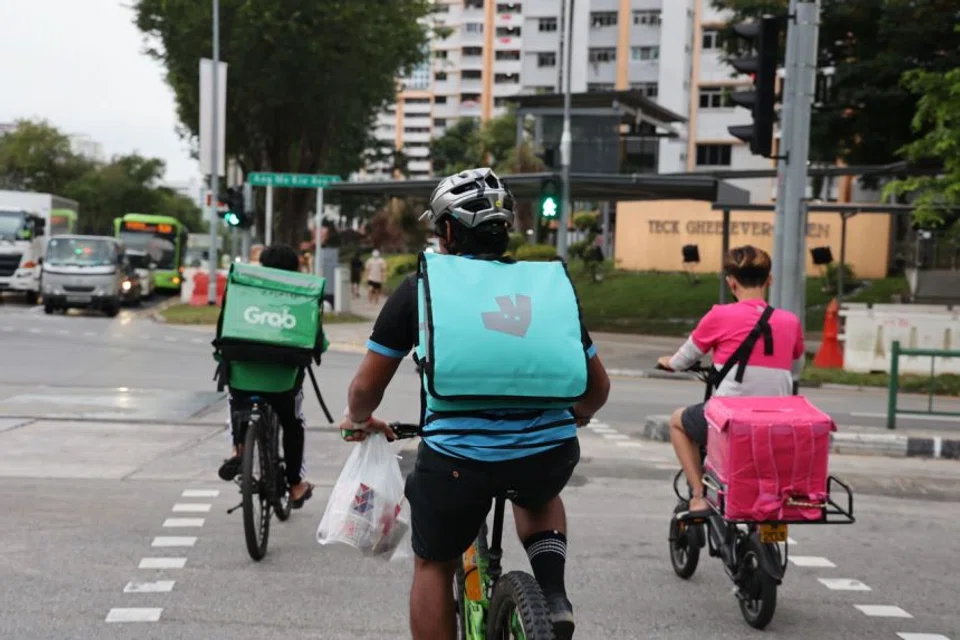
SINGAPORE is deliberating how to close the bargaining power gap for platform workers – which include cabbies, ride-hailing drivers and on-demand delivery persons. A new workgroup was formed for this on Tuesday (Aug 30) and is expected to complete its work in 2023.
Called the Tripartite Workgroup on Representation for Platform Workers (TWG), it is chaired by executives from the Ministry of Manpower (MOM), the National Trades Union Congress, and the Singapore National Employers Federation.
It also includes members from ComfortDelGro, Grab, Lalamove and foodpanda, representing the taxi, ride-hailing, goods delivery and food delivery industries, respectively.
The TWG has 3 deliverables: (1) to propose a framework for a body representing platform workers, (2) to decide on the scope of issues that can be negotiated between the body and a platform company, and (3) to come up with a dispute management framework.
There are no further specifics, but the timing of its formation is notable. The group has been set up even before it is clear whether Singapore will treat platform workers as employees – and hence able to unionise – or take a different approach.
Last September, MOM convened an advisory committee to look into platform workers’ basic job protections. The advisory committee is still in the midst of deliberations and is only expected to present its recommendations to the government by the end of this year.
If it turns out that Singapore will reclassify platform workers as employees, unionisation would be the next natural step – and the TWG’s work would be fairly clear-cut.
But we may enter unchartered territory if the Republic takes a different approach – such as creating an intermediate category of “workers” who are neither employees nor freelancers.
In such a case, the TWG would face the more complex task of ensuring the representative body it comes up with has enough teeth to protect platform workers, even if it is not a traditional union.
This could be challenging, considering that the TWG has a wide range of members with varying interests: from the government and the labour movement, to the platforms, which have their own profit-maximising objectives. With interests that will be at odds, coming to a consensus may be challenging.
Some platform workers have already been recognised as employees in Spain, while the European Union is similarly mulling reclassification. Even if Singapore chooses not to go down that path, platform workers deserve a strong union – or an equivalent association with more power – given their employee-like attributes.
These workers are in a precarious position. Many work long hours for pay that is governed by platforms’ incentive systems, whose methodology is not transparent. Since they are classified as independent contractors, platform workers are not entitled to contributions in the Central Provident Fund (CPF) savings scheme, nor protection under the Work Injury Compensation Act (Wica).
To be sure, the latter position could soon change. In July, Senior Minister of State for Manpower Koh Poh Koon indicated that the advisory committee is looking at whether Wica could be applied to platform workers.
As The Business Times previously reported, some observers also expect CPF contributions for platform workers to be introduced, but possibly at a lower rate and in phased stages.
It is also perhaps time for a clearer indication of how Singapore will close the bargaining power gap that platform workers face.






