Hong Kong’s WeLab takes its wealth management playbook to Indonesia

Benjamin Cher
Published Thu, Sep 29, 2022 · 02:41 PM
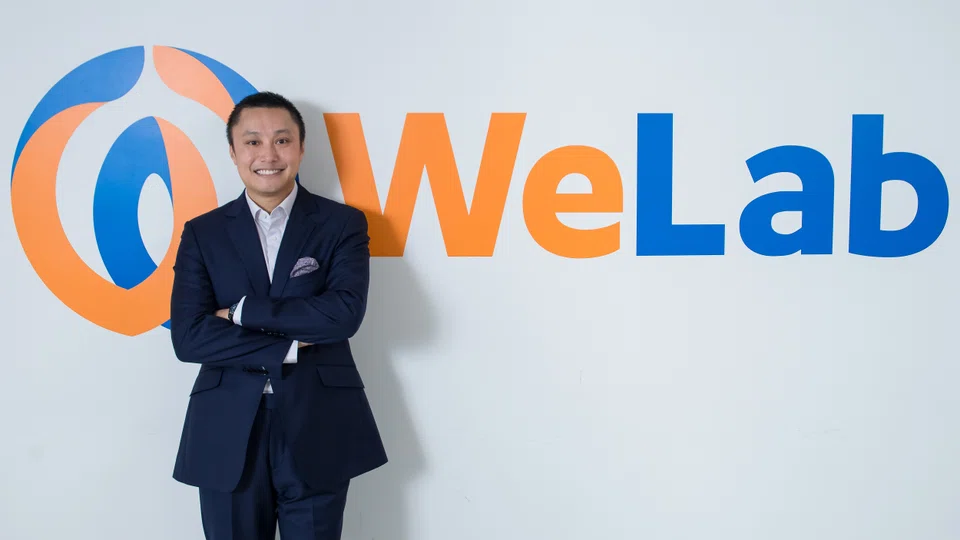
    • WeLab founder and CEO Simon Loong says: “Banking in general is not a winner-take-all kind of situation unlike e-commerce; there is always space and opportunities for good players.”
    • WeLab founder and CEO Simon Loong says: “Banking in general is not a winner-take-all kind of situation unlike e-commerce; there is always space and opportunities for good players.” PHOTO: WELAB

    THERE is no shortage of companies buying traditional banks in Indonesia to begin a digital bank play, with the latest being Hong Kong-based fintech WeLab and Indonesian conglomerate Astra International.

    WeLab and Jardine Matheson-controlled Astra have acquired Bank Jasa Jakarta for US$510 million with plans to transform it into a digital bank by end-2022.

    With an estimated 77 per cent of Indonesia’s 270 million population remaining unbanked, the market, according to WeLab’s chief executive Simon Loong, is big enough for multiple players. Having competition too is a good thing, with customer education taken on by more parties allowing for the tipping point for digital banks to be reached much earlier.

    “Banking in general is not a winner-take-all kind of situation unlike e-commerce; there is always space and opportunities for good players,” Loong told The Business Times.

    WeLab is looking to initially target retail and micro, small and medium enterprises in Indonesia, in tier 1 and 2 cities. Loong says that WeLab’s own track record in fintech, from consumer lending platform WeLend to Hong Kong digital bank WeLab Bank, gives it a good foundation in attracting tech-savvy young adults.

    Coupled with Astra’s ecosystem, from car dealerships to mining, the digital bank will have an existing customer base to capture.

    “A target we also find relatively interesting is the gig economy - it has unique needs on how it separates existing personal and side income. We are looking at a couple of opportunities like that,” said Loong.

    The strategy to enter the market for WeLab’s digital bank isn’t going to be promotional interest rates which will see customers sign up in droves, only to leave when the rates normalise to match the market. In Hong Kong, digital banks introduced no-fee accounts, which incumbent banks copied almost immediately.

    The key difference between incumbent banks and digital banks is that incumbents have a larger balance sheet to absorb costs of copying any promotional rate.

    “There is a market rate for deposits and you can subsidise the market rate for a period, but it is a conscious expense, and you can’t do it forever,” the chief executive explained.

    Deposits isn’t a revenue generating product, and WeLab’s bank will instead focus on lending and wealth management in differentiating itself from the competitors and build a path to profitability. Citing numbers from its Hong Kong digital bank operations, Loong says that average revenue per user has risen 50 per cent quarter on quarter, and achieved positive net interest income for the first quarter of 2022. (*See Amendment Note)

    “The initial strategy should be financial inclusion, how do you open as many bank accounts as possible. The second strategy should be credit-led strategy, bringing access to small ticket lending to people,” he added.

    Entering the lending space, WeLab’s digital bank would be up against fintechs already established in the space. But in an environment of rising interest rates, the cost of funding lending operations will rise, while digital banks will have deposits as a cheaper source of funds for lending.

    In such an environment, winners are those who have a real risk management model in assessing customers for loans.

    “Many of these players run a model where they try to give loans to everyone, and they have high interest rates so it covers the costs. This model doesn’t work anymore,” said Loong.

    Offering wealth management in an emerging market like Indonesia is an interesting choice, as other digital bank players have so far indicated their preference for credit products to drive revenues. Wealth management would generate fees rather than interest, and is at almost no risk of defaults or non-payment.

    WeLab Bank rolled out GoWealth in partnership with Allianz Global Investors in July, being one of the first to launch wealth management among the digital banks in Hong Kong. Most digital banks in the region only offer deposit accounts, loans and payments, noted Loong. “It will take them a few years to get the basics right and then move on to something sophisticated. We are willing to try, and I’m willing to bet that the world will be more digital than brick-and-mortar driven in time.”

    Having witnessed the battle between digital banks and incumbent banks play out in Hong Kong, Loong has seen customer acquisition costs spike and banks burning cash in order to carve out a share in the market. This is happening in Indonesia, and will likely continue to happen, but Loong believes that WeLab’s Indonesian digital bank has an advantage.

    “I think in many of these markets, after we’ve gone through Hong Kong, there is a second-mover advantage,” he added.

    * Amendment Note: A previous version of this story said that WeLab’s Hong Kong digital bank had doubled its average revenue per user q-o-q and achieved breakeven for Q1 2022.