

How e-scooter pioneer Neuron Mobility left South-east Asia and found its sweet spot

Claudia Chong
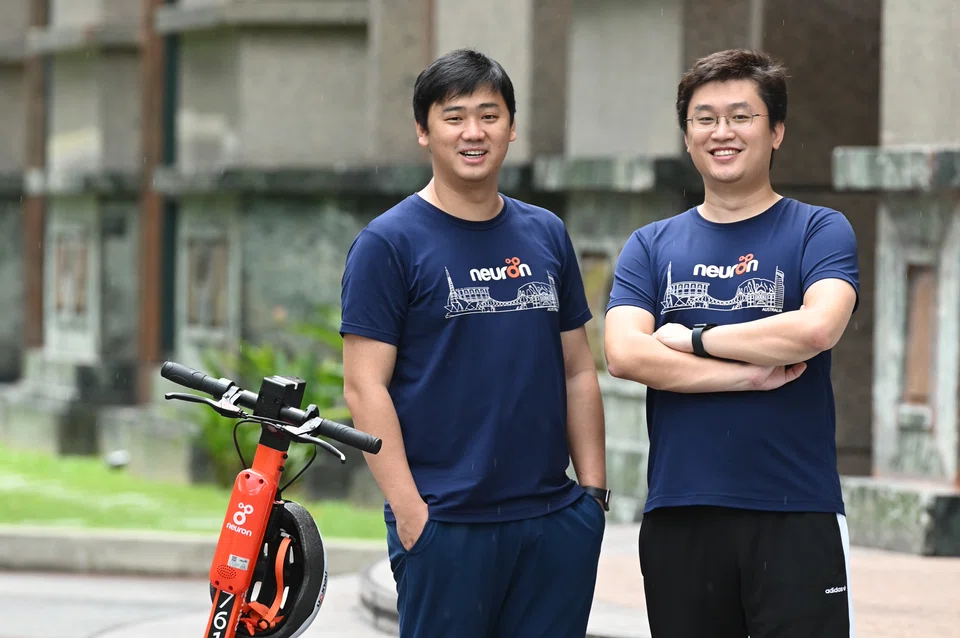
NEURON Mobility, an early entrant to the e-scooter sharing business, has had a tumultuous couple of years.
The startup was on the rise in 2018 amid a global boom in the sharing economy. It had built its own scooter aimed at solving many teething issues in the nascent business. But soon, its days of fast regional growth came to a halt.
A spate of e-scooter accidents and intense public flak pushed regulators in South-east Asia to hurriedly clamp down on the micromobility sector. Neuron was banished from the pavements of its home country of Singapore in 2019, and left South-east Asia completely after also exiting Malaysia and Thailand.
But that was also the year the company won a government tender to operate 600 out of 1,000 e-scooters permitted in Brisbane, Australia. Neuron has chosen to enter only highly-regulated markets ever since, and today it operates around 14,000 e-scooters and 2,000 e-bikes across 26 cities in Australia, New Zealand, the UK, Canada and South Korea.
It is poised to enter more cities this year, following a recent US$43.5 million Series B fundraise. The company said on Wednesday (Apr 27) that GSR Ventures and Square Peg co-led the round, and Singapore government-linked EDBI joined in.
"It’s been quite a journey," said co-founder and chief executive Zachary Wang.
"We have been through many markets, different environments and regulatory changes, and sort of found in the end a pretty unique product-market fit that helped bring the company almost global," he told The Business Times. “Every step of the way has been really important in forming the eventual strategy for the company."
Being in South-east Asia, for instance, taught the startup about the importance of infrastructure for micromobility services. Neuron's strategy is to choose markets where basic infrastructure is in place and being enhanced, and where regulators have a clear framework and goals.
Such controlled operating environments with quality players bode well for the unit economics of the business, Wang said.
Take the days of the bike-sharing boom, for instance. Markets were so flooded with operators that companies began competing on pricing and fleet size. Bikes were being tossed into canals, players folded one by one, and the sector eventually imploded.
Neuron wants to avoid going through that now, and is steering clear of unregulated markets. "If I take Germany for example, it's basically a free-for-all. There's no permit governing the system, and whoever wants to launch tomorrow can launch tomorrow. Many parts of the world are like that," said Wang.
Being in these "free-for-all" markets would subject the company to risks beyond its control. Malaysia, for instance, has banned the use of certain micromobility vehicles – including e-scooters – on the roads, news outlet The Star reported on Apr 26.
Neuron's approach to South-east Asia differs from that of its similarly well-funded peer Beam, helmed by the former head of South-east Asia at the now-defunct bike-sharing giant ofo.
Beam in February raised US$93 million, the largest micromobility funding round in the region. The company is bent on conquering South-east Asia.
Its CEO Alan Jiang told news site The Ken that demand for micromobility services is surging, and the company is working hard on scooter-tracking technology and partnering regulators – both of which were absent during the bike-sharing boom.
Wang said of Beam: "Different companies probably have different trajectories and expansion plans." He said Neuron hasn't had to worry about having many competitors because very few operators actually get selected for the government trials it is in.
He believes Neuron's e-scooter, built in-house, helped convince regulators of its disciplined approach to safety and business sustainability. Part of the funds raised in the Series B round will be used to launch more technology features.
Its latest technology is able to pinpoint the location of a scooter to within 10 cm, instead of the industry norm of 5 to 10 m, said the company. It also includes a range of smart sensors and a system to detect dangerous riding.
Wang declined to say how much it costs to manufacture each e-scooter, but said the vehicles can easily last 3 to 5 years.
Users typically ride them for about a mile (1.6 km) each time and spend an average of 10 to 12 minutes per trip, though this is in the context of controlled zones where e-scooters are allowed.
In Australia, the company's core market, users pay A$1 to unlock the scooter and 45 cents per minute for the trip. Subscriptions allow users to ride for up to 90 minutes daily for A$3.30 per day, with no unlocking fee. Wang said the rates come close to the price of public transport.
Over 200 employees work full-time for Neuron, and 50 roles might be added in its Singapore headquarters as the company expands over the next 12 months.
Despite its twists and turns, e-scooter sharing is still a nascent industry and it is not clear if regulators have found a way to allow such operations on a large scale. But Wang remains optimistic.
All around the world, governments are trying to get people out of cars and put a stop to traffic congestion and a lack of parking space. Micromobility can also play a huge role in the trend towards the electrification of vehicles.
And critically, issues with rider behaviour that have long impeded the progress of the micromobility sector are starting to be reduced, now that cities have better infrastructure, said Wang.
"The reality is that scooter riders don't want to get on a sidewalk if there are bike lanes. I can go faster on a bike lane; why would I want to go on the sidewalk?"
TRENDING NOW

Government to bring forward raising of retirement age, give employers more financial support to create flexi-load jobs

If Europe goes to war, the fallout will be felt in East Asia

Indonesia stocks suffer worst plunge in nearly 30 years as MSCI proposes standalone status

Vietnam’s northern provinces, not Hanoi or Ho Chi Minh City, are powering near 10% GDP growth

