Indies Capital bets on boom in South-east Asian unicorns with secondaries play
The Singapore-based firm hit the first close of its second fund focused on regional tech secondaries

Singapore
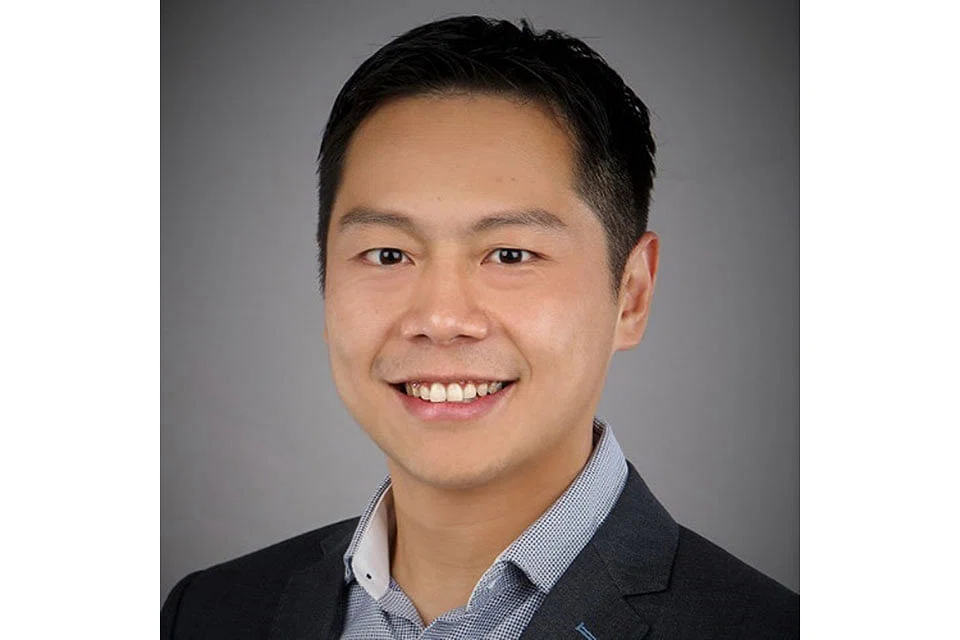
STARTUP secondaries - or shares held by founders, early employees and investors - present a unique investment opportunity, reckons Harold Ong, partner of alternative asset manager Indies Capital Partners.
Back in 2018, the Singapore-based firm launched Indies Pelago Investments (Fund I), to invest in secondaries of South-east Asian startups - whether by buying them from employees or early-stage investors. Fund I raised just over US$70 million.
The fund has since been fully deployed, with investments including Grab, GoTo and the recently-listed Bukalapak.
Seeing healthy demand from Fund I, Indies Capital has launched a successor fund, called the Indies Strategic Technology Fund II (Fund II), to dive deeper into the tech secondaries market. On July 14, Fund II hit its first close, with commitments of over 70 per cent of its targeted US$80 million fund size.
With the fresh capital in hand, Mr Ong is on the hunt for more secondary investment opportunities in mature South-east Asian tech players, generally those with valuations above US$300 million. This is a space that he believes is only set to heat up further.
"The whole digital ecosystem in South-east Asia has a long way to go, penetration rates are still very low. We are now just seeing a lot of the first-generation unicorns and 'decacorns' trying to go public. And I think there's a lot of companies that are going to become unicorns in this next five-year cycle," he said.
Mr Ong added: "But we still see a lot of companies in that mid-growth stage, and that's when they start coming under our radar screen. Naturally, that's when they are around five to eight years old, and will have investors who start looking for intermediate liquidity."
Such companies are usually "one or two fundraising steps away" from an initial public offering, said Mr Ong, but may be looking to offer early employees and backers some interim returns.
Secondary shares can typically be bought at a discount of about 15 per cent to 30 per cent to the startup's most recent valuation, he added. Shares with less preferential terms come at a steeper discount.
Besides Grab and the Indonesian big boys, Fund I also backed Thai e-commerce enabler aCommerce, Singapore-based retail analytics startup Trax, as well as SiCepat, an Indonesian last-mile logistics player.
Why do Indies' investors (otherwise known as limited partners, or LPs) want to back a secondaries fund, when there are plenty of venture firms buying primary shares in such startups?
"We think we offer something completely different: a good risk-adjusted return for someone who wants to invest into the digital ecosystem of South-east Asia... but to do it in companies that are a bit later-stage in life; not true venture risk," Mr Ong said.
"These companies are often beyond the 'startup' phase. They're still tech companies, but a lot bigger and more scaled-up."
LPs of both Fund I and II include financial institutions, corporates, family offices and ultra high net worth investors. Many traditional businesses are eager to "learn about what's happening in the new economy", he said.
To be sure, investing in startup secondaries is still risky. This is where Indies taps its industry know-how to conduct adequate due diligence, Mr Ong said.
Founded in 2009, Indies has long specialised in alternative financing, such as private credit, structured equity and replacement capital.
One of its managing partners is Denny Goenawan, who previously worked in the special situations investment arm of Salomon, part of Citigroup, for a decade and became its managing director and head of South-east Asia.
The firm's other managing partner is a familiar name in Indonesia's tech circles: Pandu Sjahrir, the commissioner of the Indonesia Stock Exchange. Mr Sjahrir is also Indonesia chairman of internet group Sea.
Mr Ong joined Indies in 2018, after 14 years at private equity player The Carlyle Group. Seeing the rise of South-east Asia's first crop of unicorns, Mr Ong became intrigued by the tech scene. And he was also hungry to "invest in my own backyard".
"I'm not really trained as a VC (venture capitalist), so instead of investing early-stage and doing another VC fund, why not provide something new to the market, investing in the mid-to-late stage while trying to target secondary shares? Then I add something new to the ecosystem. Nobody was providing this need for intermediate liquidity, and on the flip side, I felt that there would be a lot of supply," he recalled.
Mr Ong spoke to Indies about the idea, which led to him joining the firm. Three years on, he believes that Indies is well-positioned with its secondaries strategy.
It has already identified seven companies for Fund II. In total, the fund will have about 15 portfolio companies, a few of which may be those that Fund I backed.
Mr Ong reckons that there will be no shortage of deal flow ahead. "It's not going to stand still. The tech ecosystem is very dynamic," he said.
- Garage is BT's startup vertical. Read more news, analysis and opinions at bt.sg/garage