From minnow to competitor: Tada on track to be Ebitda positive in 2023

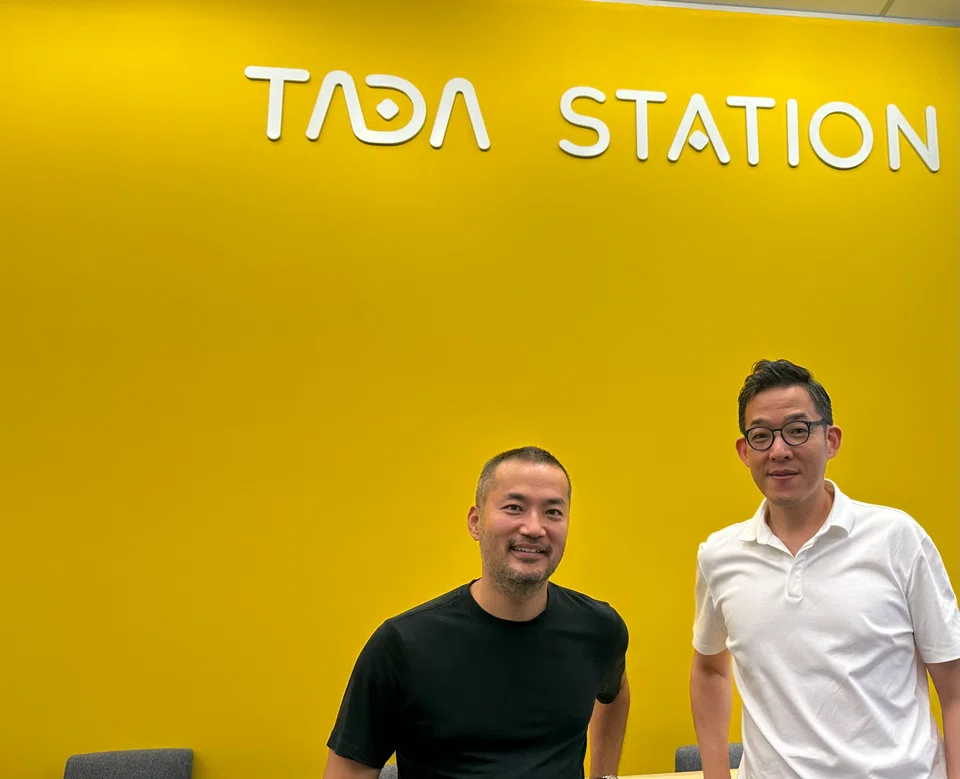
RIDE-HAILING platform Tada is poised to report positive earnings before interest, taxes, depreciation and amortisation (Ebitda) for 2023, having battled it out with Grab and Gojek over the last five years.
Launched in July 2018, Tada entered the mobility space just after a huge shake-up, with Grab acquiring Uber’s South-east Asia business in March 2018. Almost all the players were looking to grow the pie rather than make a profit.
Taking zero commissions from drivers has helped Tada to reach positive Ebitda, said Sean Kim, chief executive officer of Tada. This structure creates some room to find the optimal price point between supply and demand, where passengers benefit from a lower fare and drivers get more income.
“When we were smaller, we were struggling to find the optimised price point; but as we grew, there were more data points to give us more insight to find the best pricing according to the hour of the day,” said Kim.
However, taking zero commissions is not enough to attract drivers, as their priority is to earn more income rather than save money from no commissions. Woo Kay Kyeongsik, chief executive officer of Tada’s parent company Mvllabs, noted that the group had to start spending some money to grow.
So far Tada has kept marketing costs to slightly over S$300,000 a month, and it is trying to keep a lid on spending.
“We have utilised the money to capture the market in a cost-efficient manner,” said Woo.
Tada’s diminutive size has helped with its resilience against market dynamics, according to Kim. Less marketing spending meant fewer layers were needed in the company to track, report and review the effectiveness of the marketing dollars spent.
The latest financial filings with the Accounting and Corporate Regulatory Authority of Singapore showed Mvllabs revenue for 2022 rising to S$27.5 million from S$6.3 million the year prior. Losses have also narrowed in tandem to S$5.6 million in 2022 from S$9.7 million in 2021.
The ride-hailing platform has also shifted some focus to corporate customers, a natural evolution for the company, said Kim. Business accounts would offer Tada drivers more consistent trips and allow the group to tap transportation budgets at companies.
“The two key components for selecting a ride-hailing platform are fare and availability, and we are quite confident that we are quite competitive,” said Kim.
So far, Tada has focused on small and medium enterprises, but it is shifting its sights to bigger organisations. Getting a foot in the door at such enterprises will also help with branding and lead more consumers to become aware of, and use, Tada.
Even as the company approaches positive Ebitda, it has not stopped entering new markets. Besides operating in Singapore, Cambodia and Vietnam, the ride-hailing platform also just stealth-launched in Thailand this month.
“A new market will never help us with the bottom line immediately. It may grow the top line in the first two to three years,” said Kim. The company will also have to continue investing in the new market to hit profitability.
Being based in Singapore and having a point-to-point licence from the Land Transport Authority is also a competitive advantage. As markets in the region start to adopt their own ride-hailing licences, having qualified for Singapore’s makes the other markets easier for Tada to enter, said Kim.
Tada is also not immune to the supply crunch impacting ride-hailing players, and having zero commissions has helped to attract drivers. While loyalty is not a given with drivers, Kim said that the company is trying to build mutual trust, with some benefits going back to drivers. These include giving out S$100,000 in student bursaries to eligible drivers as well as a S$200 voucher for Popular bookstore.
Aside from the ride-hailing business, Mvllabs also has an electric three-wheeler or tuktuk, the Onion T1, from its Onion Mobility business. Cambodia is the only market that is operating the electric tuktuk, with Tada having partnerships with energy companies to host battery-swopping stations.
The supply of drivers in Cambodia has improved as those who lease the electric tuktuks also drive for Tada. Discussions are ongoing to bring the Onion T1 to Thailand, where interest in the cargo versions of the three-wheeler has emerged.
But the main focus now is on reducing the cost of production.
“We’ve identified a 30 to 40 per cent cost reduction, which makes it an affordable vehicle,” said Woo.
Mvllabs is also looking to collaborate with Japanese partners to purchase the electric tuktuks and then lease them to drivers. This will give the drivers access to the electric tuktuks, while providing investor returns for the Japanese companies.
On the ride-hailing front, Tada’s plans for 2024 involve maintaining the growth momentum in Singapore. Thailand will be the next focus, as it is the first big market in the region outside of Singapore.
“We are planning to enter a new market, and we are in the midst of looking at our options,” said Kim.