

Mirxes applies for Singapore mega IPO, but HK beckons with possibly higher valuation

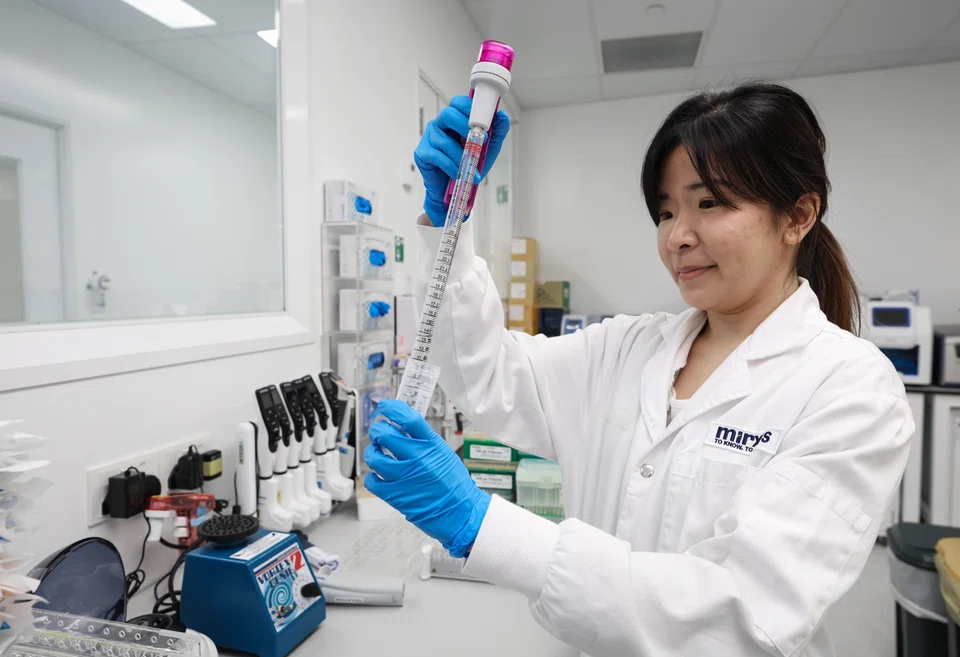
HOME-GROWN cancer diagnostics company Mirxes has made its first submission of documents to the Singapore Exchange (SGX) for an initial public offering (IPO) that could raise between US$100 million and US$200 million, according to people familiar with the matter.
Mirxes would be one of the rare biotech startups to go public on the Singapore bourse, amid a broader push by the government to have tech startups listed locally.
The offering, which might value the company at up to US$700 million, could mark Singapore’s biggest IPO in over a year. The local market has been quiet, even as the pace of IPOs in the rest of South-east Asia has been picking up.
Food and beverage play YKGI has been the only listing this year, raising US$12.6 million, a small fraction of the US$332 million raised in the first quarter (Q1) of last year.
Mirxes is in advanced talks with new and existing investors for a pre-IPO funding round that could raise up to US$70 million, the sources said.
But even as deliberations for the Singapore IPO are ongoing, Mirxes could drop plans for a local listing in favour of listing in Hong Kong – where bankers are floating a higher valuation of as much as US$1 billion, said a person familiar with the discussions.
The source added that concerns over the local market’s ability to price biotech IPOs competitively have fuelled several of senior management’s conversations. The company is deliberating whether a dual listing makes sense, said the source, asking not to be named as the information is private.
Mirxes declined to comment on IPO and fundraising matters.
Mirxes’ conundrum reflects the struggles of several Singapore-based biotech companies, which are caught between their ties to the ecosystem that nurtured them and the lure of more attractive growth opportunities overseas.
Hong Kong’s stock exchange has aggressively courted companies over the years. New rules, announced last month, allow the listing of pre-commercial companies that apply science and/or technology. This latest reform follows a 2018 initiative to allow pre-revenue biotech companies to list in Hong Kong.
Such flexibility has been a key draw for Singapore biotech companies, which have raised concerns about listing on their local bourse. Industry players often cite low liquidity and a lack of a deep institutional investor pool as reasons to turn elsewhere.
Led by chief executive and scientist Zhou Lihan, Mirxes was spun off from government-owned research agency A*Star in 2014. It develops tools that use microRNA detection to diagnose early-stage cancer.
The company’s backers include state-owned EDBI and CR-CP Life, a joint venture between China Resources Group and the Charoen Pokphand Group. The latter is one of Thailand’s largest conglomerates.
For years, Singapore has been attempting to build a pipeline of biotech listings while promoting the city-state as a biotech hub.
But SGX has hosted only a handful of biotech companies so far. Among them was cancer diagnostics company Biolidics, which raised S$6.1 million in 2018. iX Biopharma, whose pharmaceutical products include medical cannabis, raised S$29.7 million in 2015.
Singapore-based drug developer Cennerv Pharmaceuticals tried twice to list, but was unable to draw sufficient investor interest.
Investors on the local bourse have largely flocked to real estate investment trusts and blue-chip counters in search of stable income.
Biotech companies, in contrast, are typically loss-making for a long period of time, as money is poured into research and development before products are commercialised.
Lucence, another A*Star spin-off that developed a blood test for cancer detection, is also said to be eyeing a US listing, subject to market conditions.
Several tech companies have delayed going public after rising inflation and interest rates battered the market for tech stocks. Global IPO proceeds fell 61 per cent in Q1 of this year.
Still, IPO activity across South-east Asia appeared encouraging, said EY, which compiled the data. A total of 51 deals raised US$1.4 billion in proceeds, up from 29 IPOs raising US$1 billion a year ago.






