More VCs pour into Asean, but await elusive exits
Those who belatedly see the rich valuations behind some Asean startups may be in for a rude shock
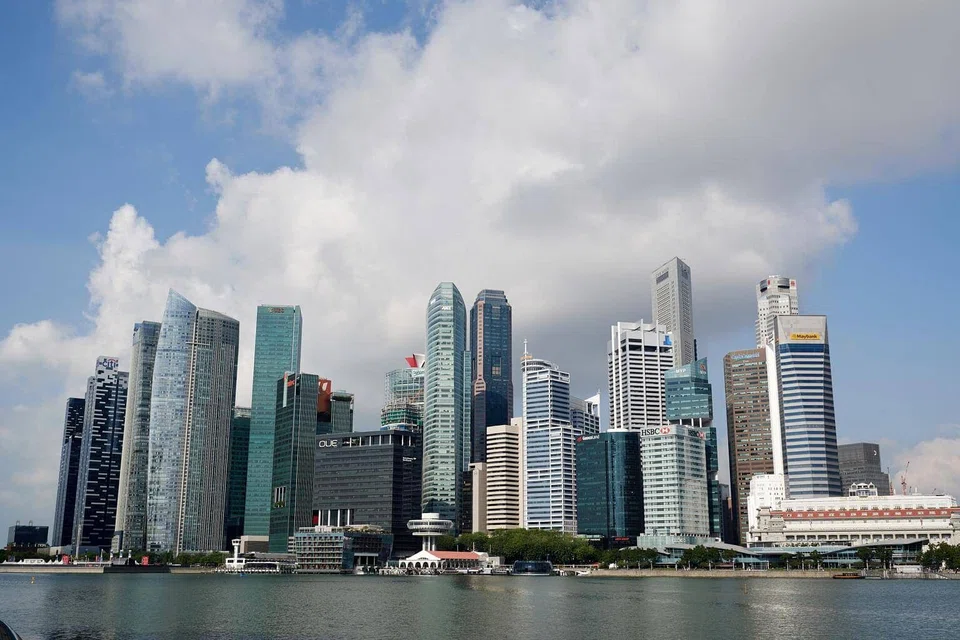
Singapore
VENTURE funds are pouring into the region at an unprecedented rate as big venture capital (VC) names from China and India jostle to tap on growth in South-east Asia.
But industry players caution that exits through initial public offerings (IPOs) or trade sales are still slow amid toppish valuations.
Chinese VC outfit Qiming Venture Partners set up an office in Singapore this year to work on deals out of South-east Asia. Qiming Ventures' partner Helen Wong, a Singaporean and veteran in the VC space, plans to relocate back to Singapore in time to cover the region, and will look to hire more staff at the Singapore office, she told The Business Times over the phone from Shanghai.
Qiming Ventures is still evaluating plans for an Asean-focused fund, and is investing in the region out of its existing fund for now. It is mainly interested in tapping the e-commerce boom in Southeast Asia, with its focus on Singapore, Indonesia, and Vietnam.
"We look at models that have worked in China," Ms Wong told BT, referring to Chinese e-commerce giant Pinduoduo as an example. In a similar vein, it has invested in Singapore-based budget hotel booking platform RedDoorz, hoping for it to reflect the success seen in China with the rising demand of budget hotels.
Acknowledging that China and South-east Asian markets are different, she said VCs can track reviews on social media platforms to gauge the strength of an e-commerce service. Qiming Ventures' due diligence on these social media reviews goes so far as to contact reviewers to ensure that these are genuine customers.
Similarly, VC firm GGV Capital officially set up an office in Singapore just this month. At the Cutting Edge forum organised by The Straits Times and The Business Times, GGV Capital's managing partner Jenny Lee said many South-east Asian tech players are now emerging, possibly inspired by the successes from the Chinese technology front.
"Whether it's Thailand or Vietnam, we see a new wave of innovation. We see the youngsters now learning from what they have seen in China," Ms Lee, a Singaporean, told forum participants in March. "Don't ever forget the power of the startup. If they cannot find a job in the factories, maybe they will be a Jack Ma."
Ms Lee further told BT she will be back in Singapore about once a quarter to help in securing deals in Asean. Sectors of interest include fintech, social commerce and e-commerce.
Indian investors are also making their presence felt in South-east Asia. Singapore-based fund Tanglin Venture Partners is reportedly looking to invest some US$50 million in this region as well as in India. Some of the funds raised are said to be from the founder of Flipkart, the Indian e-commerce giant that in 2018 found a new controlling owner in Walmart under a US$16 billion deal. Tanglin Venture Partners did not respond to BT's queries by press time.
Chin Chao, CEO of venture lender InnoVen Capital's Singapore and South-east Asia business, said the momentum in this region is unprecedented, and noted that VCs are mirroring China's progress to what could be in this region, some 15 years on.
"I like the momentum that is being created. I hope that valuations don't go crazy because of the influx of additional capital," he told BT.
"People who came to South-east Asia looking for cheaper valuations were rudely surprised. For certain funds that invest globally, when they go to their global community and compare things, they have been surprised at how expensive certain sectors in certain countries are (here)."
Mr Chao further cautioned that exits - such as IPOs or trade sales - in Asean have been sorely lacking. "Everybody would love to see more exits. It's number one on people's wishlist at every VC gathering. It's not just about valuations going up, but actually (seeing) real money going through the cycle," he said.
"I really do think it's just a matter of time. The question is how long."
Data from VC fund Cento Ventures showed that in 2018, exits at between US$5 million and US$20 million stood at eight, up from six a year ago. Exits valued between US$50 million and US$100 million were at four, just one more from 2017.
Still, Qiming Ventures' Ms Wong said the exits are coming through in the region, with names such as Razer going public.
To add, part of Asean's attraction is that it is a target market for Chinese giants such as Tencent and Alibaba. Notably, Alibaba has since 2016 been building its controlling stake in Singapore-based online retailer Lazada.
Qiming Ventures has meanwhile invested alongside Alibaba's Ant Financial in Indonesia-based fintech startup Akulaku.
"Alibaba and Tencent have a tremendous war chest. We expect that they will make more acquisitions," said Ms Wong.
But she made clear that VCs build companies over the long term, so a sale is not first on their minds. "We don't just invest in companies to sell them. We want to create value."
Chua Kee Lock, CEO of Singapore-based Vertex Holdings, also pointed to market anomalies today, where secondary markets for unlisted securities are emerging for VCs to exit outside of the IPO or trade-sale route. He told BT that investors such as private equity funds are approaching early-stage VCs to get in at a lower valuation, before a maturing startup finally hits the public market.
Slowing exits also make up a broader trend around the world. The best example may come from tech firms out of Israel, which have been criticised for selling too early. This is changing. In 2018, first exits by Israel's tech firms valued at at least US$5 million fell 33 per cent to 61, a report by PwC Israel showed. The average deal value also dropped.
Vertex Israel general partner Emanuel Timor told BT that avoiding hasty exits comes down to convincing the founder of his startup's fullest potential.
"For him, it's a life-changing event. Suddenly, he meets US$10 or US$15 million, he's rich. He and his kids, and maybe his grandsons, will be okay. But for us, that's not enough."
As the Israeli tech ecosystem matures, VCs such as Vertex may now advise entrepreneurs to go for a partial liquidation. With an offer on the table, the VC can propose that the founder sells about 10 per cent of his ownership, but continues to grow the firm.
"Psychologically, (the founder) knows that if things do not work out, he's earned his apartment," he said.
Back in South-east Asia, InnoVen's Mr Chao said broader stresses in this region ahead are unlikely to hit the levels seen in the dot-com bust.
But there will be casualties.
"Because the South-east Asian ecosystem is still relatively young, the challenge will be when the bad times hit, how are all these funds going to react? And that is a big question mark."
Additional reporting by Sharanya Pillai
READ MORE: