NOVI Health fights chronic diseases person by person, behaviour by behaviour

Sharanya Pillai
Sharanya Pillai

Published Wed, Jul 24, 2019 · 09:50 PM

    Singapore

    DOCTORS often advise diabetes patients to eat less white rice; but without any support at home, it is hard for patients to change such a deep-seated habit, noted Dr Sue-Anne Toh, a specialist trained in endocrinology and internal medicine.

    "The burden of lifestyle conditions is already upon society . . . But to address these challenges, it's not just (about) medical intervention, but tackling the root of the issue, the choices that one makes around lifestyle habits - food, physical activity, stress management and sleep . . . and scaling this from an individual level to a population level," she said.

    This is the gap in health care that Dr Toh hopes to fill with NOVI Health, the bootstrapped healthtech startup that uses technology and data to take health care beyond just diagnosis and treatment, and into behavioural changes and live monitoring.

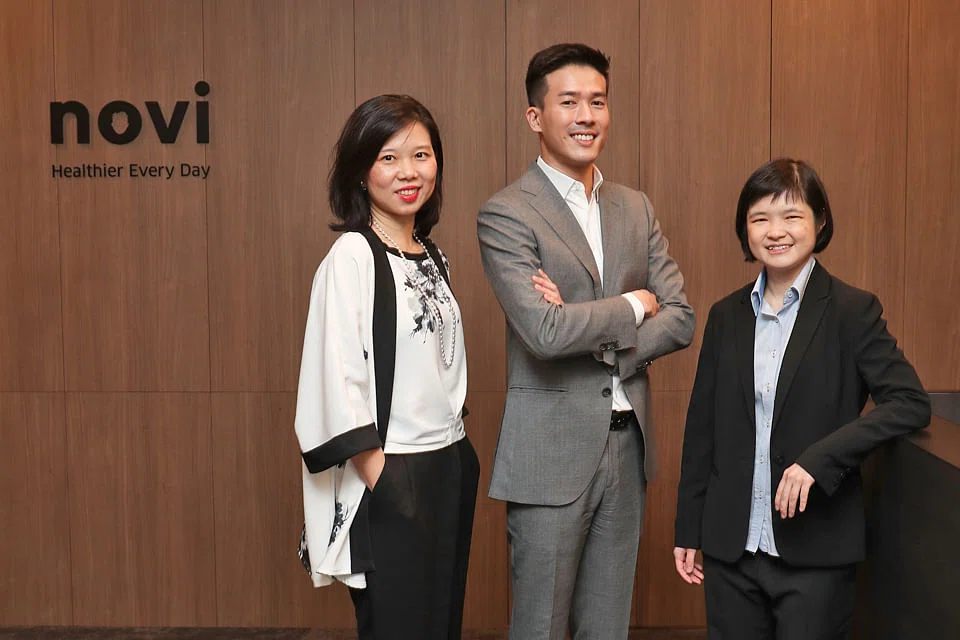
    Founded in January, the startup is the brainchild of Dr Toh and fellow healthcare professionals Dr Joanne Tay, a public health specialist; and Dr Kyle Tan, a specialist trained in preventive medicine. All three have held senior leadership positions in Singapore's public health system.

    "NOVI is a technology-enhanced holistic health solution. Our mission is to prevent, manage or even reverse chronic conditions that are lifestyle-associated, and empower everyone, not just those with diseases, for healthier lives," said Dr Toh, who is NOVI's chief executive.

    NOVI has a physical clinic on Robinson Road, where its founding doctors and five health coaches assist patients not just in managing conditions such as diabetes or high blood pressure, but also in setting health goals and designing programmes for lifestyle change.

    Opened in March, the clinic has served about 150 patients, including those with chronic conditions such as diabetes and high cholesterol, as well as healthy and at-risk patients who want to prevent these conditions.

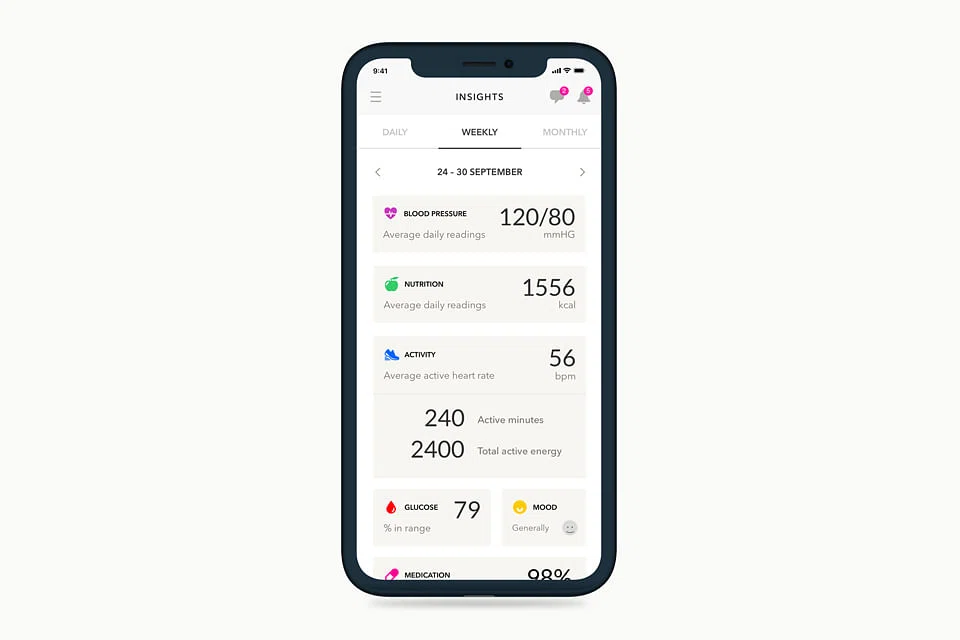
    Complementing this clinical care, NOVI has built its own health app, NOVIFY, which provides patients data insights - recorded by wearables and visualised - along with customised recommendations, goal-setting and curated healthcare articles.

    NOVI's care team can set targets for patients, and monitor their progress through the app. NOVIFY also comes with a messaging feature where patients can chat with doctors or health coaches.

    Most of the patients who visited NOVI's clinic have been using NOVIFY since the app's launch in June. Some patients worked with NOVI to achieve specific goals, such as losing 5 per cent of their body weight to tackle obesity or managing gestational diabetes. Others have used the app for general health improvement.

    NOVI charges a subscription fee that varies by use. For instance, for at-risk individuals such as pre-diabetes patients, a four-month bundle could cost between S$199 and S$299 per month.

    "That would be for a very intensive package, with the app having daily goals and recommendations, tracking and personalised messaging. It also includes wearables (provided by NOVI)," explained Dr Tan, NOVI's chief product and business development officer. The bundle also includes in-person coaching sessions.

    "Novi" is Latin for "new" and likewise, the startup is hoping to chart a new model of care, where a personalised, data-driven approach treats patients in a more holistic manner, explained Dr Tay, who is the startup's chief operations officer.

    It is an ambitious mission, but NOVI's founders have the credentials to match. Dr Toh was the founding director of the Singapore Population Health Improvement Centre at the National University Health System (NUHS), which promotes population health research and innovation.

    Dr Tay led the taskforce overseeing Singapore's "war on diabetes" initiatives and was the former director of the health services integration and development division at the Ministry of Health. She also contributed to Singapore's Beyond Healthcare 2020 roadmap for the sector.

    Dr Tan was the former deputy head of planning and development at the Regional Health System Planning Office of NUHS, where he worked on big data and predictive models that can identify high-risk individuals for targeted therapy.

    "A lot of healthtech solutions today are very fragmented; they either cover purely the medical or the lifestyle aspect, or are fancy tech tools looking for a use case . . . But understanding clinical outcomes are also part of the equation. With our (medical) backgrounds, we have first-hand experience, networks and the ability to bring to bear some of these components," said Dr Toh.

    Moving forward, NOVI is now exploring growth in the business-to-business (B2B) space. It is in talks with "a few" insurers and large companies to explore how it can customise solutions for their policyholders and employees respectively.The startup declined to reveal specific numbers.

    In addition, NOVI is also in discussion with other healthcare providers on possible partnerships "where we support them to be super- doctors . . . because we take the work out of figuring out how to collect meaningful data from patients that can guide decision-making", Dr Toh said.

    In such partnerships, NOVI's team would interact with patients on the app, while also working closely with the patients' care providers. But in the future, NOVI plans to provide a platform where the partnering healthcare providers can interact with the patient, supported by NOVI's team as needed.

    "We have been very clear that our growth is really through B2B. We have been working very hard to advance partnerships . . . There are multiple contracts in progress. And that will take us from servicing hundreds (of patients) to (over a) thousand in the coming year," Dr Toh explained.

    NOVI, which has been self-funded thus far, is open to external funding from investors who "can appreciate the time it might take to see this through", she added. NOVI has been approached by venture firms, corporate venture arms and angel investors, but has not taken on any investments thus far.

    "Many (VCs) are looking for exponential growth . . . We are realistic that in this line, we are aiming for linear, rather than exponential growth. It's more about sustainability and impact," Dr Toh said.

    As the young startup forges ahead, its founders are mindful of the difficulty of navigating digital health. But perhaps it is up to the veterans to dare to try something new.

    Dr Tay, who came up with the name "NOVI" after more than four hours of brainstorming, said: "The word 'new' came to my head, because . . . we wanted to promote a new model of care in combining human and digital aspects. We also wanted to give patients a new way to understand how their lifestyle impacts their condition. The eventual aim is that they will become a new, healthier person."

    NOVI Health at a glance