Pandemic gives Singapore biotechs a shot in the arm
But young upstarts cannot rely on city-state's small market, say industry players
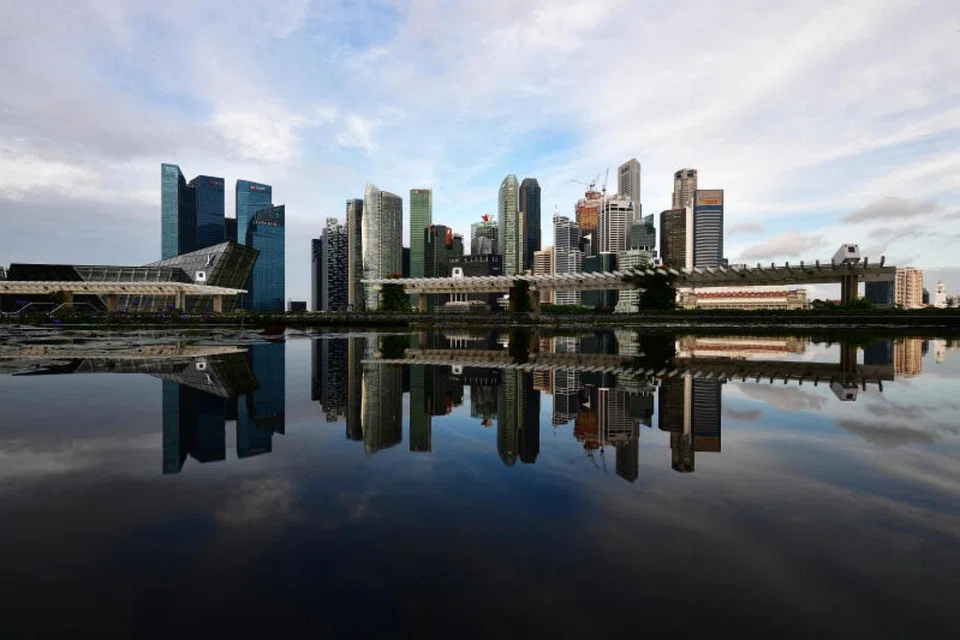
Singapore
IT'S only halfway through 2021, but biotech startups in Singapore have attracted a record amount of capital from venture funds, giving the oft-sidelined sector a fillip amid some tailwinds from the pandemic.
So far, the city-state's biotechs have raised US$360 million, according to Preqin data. This trumps the previous US$65.5 million record raised in 2018 by more than five times (see graph). The year's figures are dominated by larger rounds from Singapore-based startups such as Engine Biosciences, Esco Lifesciences, and Hummingbird Biosciences.
Startups in the space have likely benefited from a confluence of factors that make a recipe for success: spillover effects from exuberant biotech public markets overseas, a budding ecosystem 20 years in the making, and significant leaps of innovation in the biopharma space.
To be sure, significant hurdles remain. For one, young biotech upstarts cannot rely on the small market here. Industry players to whom The Business Times spoke noted that it is almost imperative that the city-state's biotech startups establish some presence in the United States, China or even Europe. There, they can be closer to more sophisticated investors, as well as access a wider talent pool and market.
"Singapore, being a small market, is a great place to start," said Dr Zhou Lihan, co-founder and chief executive of homegrown diagnostics company MiRXES. "But we have to ask ourselves what's next. What's next for us as Singapore companies? What's next for us in fundraising, since most of the funds are now based in the US and in China; and considering the Nasdaq and the Hong Kong Stock Exchange are prime listing destinations.
"If you look at the companies that have raised money in recent months, almost all have a significant overseas presence. We are thinking of how to rebalance and continue to develop in Singapore, while also getting access and recognition in the bigger markets."
More often than not, growing biotechs will move operations and gravitate towards the US or even China. For instance, Singapore startups like Immunoscape, Engine Biosciences, Hummingbird Biosciences and MiRXES all have operations both in the US and Singapore. Most have plans to start clinical trials in the US. Some - including MiRXES and Esco Lifesciences - have offices in China as well.
The US is by far still the "deepest market for both capital and the end market, as well as the regulatory gold standard", remarked Chik Wai Chiew, CEO and executive director of biotech investor Heritas Capital. "It is a huge draw... Biotech startups in Singapore and elsewhere will have to consider growing their presence in these markets, especially at the clinic development stage."
Kenneth Harrison, a partner at biotech investor Novo Ventures, added that the United States Food and Drug Administration "likely provides more precedent from a regulatory perspective than any other regulatory authority".
"(With this precedent), there's at least a knowledge base that investors can apply to the assessment and due diligence of a biotech startup's clinical development strategy."
Despite that, observers are hopeful that there are still merits to nurturing the biotech ecosystem here.
There is still space for the city-state to function as a hub, they said, especially in attracting and nurturing world-class scientists and researchers to develop their technologies here as a starting point.
The past decade has seen a wave of biotech innovation that has allowed scientists to engineer biology, and incorporate machine learning algorithms into science.
By honing in on this, players believe that Singapore can be well-positioned to ride the biotech wave, which could be a defining industry of this decade.
"Just like how the integrated circuit helped spur the digital age, I think the innovations in synthetic biology will help spin a whole biotech revolution," said Dr Chong Yoke Sin, managing partner at iGlobePartners, an investor in synthetic biology.
She added that Singapore has the ingredients to grow this particular sector well: good talent, support and resources. "We don't have to own the entire drug or clinical development process, but we at least have to be plugged into the global biotech ecosystem."
And biotechs here are plugged in now, more than ever. Industry players BT spoke to said that global biopharma investors are venturing out of their own ecosystems in the US, UK and China to take a closer look at startups in Singapore, where the biotech ecosystem is showing some promise.
Besides a burgeoning pool of good talent and science, part of the appeal also comes from the Republic's robust regulations for patent protection, as well as political stability, said Immunoscape's CEO Ng Choon Peng.
Additionally, the strong interest towards biotech stocks in public markets overseas have helped to fuel fresh venture capital (VC) interest too. More VC funds are now looking to take a bet on the massive growth opportunities in the sector, Mr Ng added.
Biotech venture funds are "definitely increasing in size and the frequency at which they raise new funds", noted Jeffrey Lu, co-founder and CEO of Engine Biosciences. "What we also see is that there's an increasing amount of interest from non-biotech specialists investing in the sector.
"Many are technology-oriented VCs that are increasingly interested in how technology and data are going to change the pharmaceutical industry. Some others also include generalist investors who are putting money behind certain long-term ESG themes like the increasing health care needs of the world."
The renewed interest in this sector bodes well for the ecosystem here in Singapore. Some reckon the time and conditions are now ripe for the city-state's biotech community to shine.
Amit Kakar, senior partner and head of Novo Holdings Asia, added that it "takes a while" for an ecosystem to develop. Ideas and opportunities take time to come out of academia and mature to a level where it starts to attract outside VC funding. More time is again needed for commercialisation.
Dr Tan Yann Chong, CEO of Nuevocor - a spin-off from the Agency for Science, Technology and Research (A*Star) - agreed: "If somebody is training to be a good scientist, we can expect them to spend four years for a bachelor's degree, five to six years for a PhD. Then there could be another four to five years of postdoc, that adds up to about 15 years."
"From this perspective, it looks like the time is right and it's all finally coming together."
- Garage is BT's startup vertical. Read more news, analyses and opinions at bt.sg/garage.
READ MORE:
- Covid-19 putting Singapore on global deeptech radar
- GIC backs Esco Lifesciences in oversubscribed US$200m Series A round
- Singapore's iGlobe starts US$100m fund for fintech, biotech
- Life science investor Novo Holdings to open Asia office in Singapore
- Temasek-backed online pharmacy seeks funds at US$4b valuation: sources
TRENDING NOW
Simba admits exceeding spectrum limits amid failed M1 deal; parent company Tuas’ full-year profit surges 277%
He built the Vingroup empire. Now South-east Asia’s richest man is handing some key roles to his sons
Ex-execs of CW Group, Allied Tech charged with offences linked to lawyer’s S$76 million misappropriation
Singapore to prioritise high-value AI infrastructure as Asean markets play to their strengths: Tan Kiat How