

Platform workers caught between autonomy and security in retirement planning

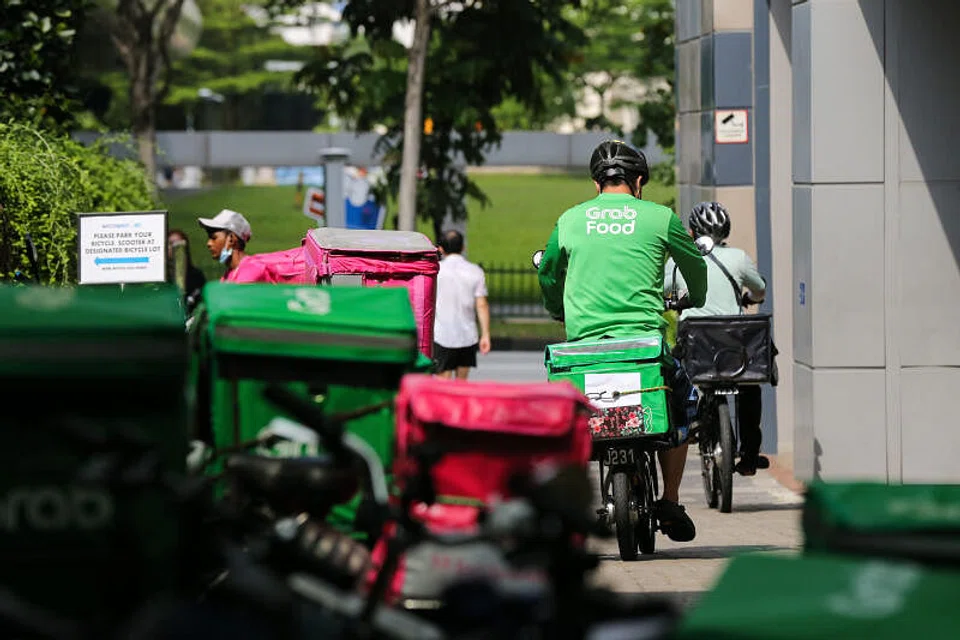
AT the recent committee of supply debate, platform workers came to the fore again, with Senior Minister of State for Manpower, Koh Poh Koon, noting key concerns around Central Provident Fund (CPF) and retirement planning. This issue has everyone from the prime minister to the uncle at the coffee shop chiming in.
Discussions about platform workers' protections have always led to talk about diminishing their income and the impact on the benefits of autonomy and flexibility of gig work. This has been a contentious issue between governments and platforms. While governments are concerned that workers need more job security and income protection, businesses argue that the increase in costs that this will impose on companies may impact the platform workers' income.
In Singapore, contributions to platform workers' CPF accounts are voluntary since they are considered self-employed and the platforms are not required to make any contributions.
While the private sector can offer some value in retirement planning, governments may have to step in for longevity and security through boom and bust years.
"That is something that I don't think any startup can provide or guarantee to be around for the next 15 to 30 years, the core facilitator of this has to be the government," said Amerson Lin, co-founder of platform worker insurance platform, Gigacover.
Surveys and studies of platform workers show contrasting views about CPF and retirement planning.
According to a study by the Institute of Policy Studies (IPS), 84 per cent of respondents were worried about whether they had enough retirement savings. Half of the respondents which were mostly private hire drivers, did not voluntarily contribute to their CPF, while 21 per cent contributed less than 5 per cent of their income. Only 6 per cent contributed 20 per cent or more of their income voluntarily.
A respondent in the IPS study lamented the inflexibility of CPF. "If they make me put into CPF, hopefully they let me use a bit 10-15 per cent every year, cannot just lock it all up, need to enjoy it," said a platform worker interviewed for the study.
Another study by Blackbox Research focusing on delivery riders painted a different picture. While 55 per cent of riders contribute to their CPF Medisave account, only 22 per cent of the other 45 per cent would do so if compelled to.
Reasons for not contributing range from not having a fixed monthly income (64 per cent), not having as much savings to directly manage (46 per cent) and reduced disposable income (33 per cent).
The study goes as far to say caution should be taken in implementing mandatory CPF contributions which would eliminate the benefits platform workers enjoy for heavy opportunity costs. These studies raise questions about how we should view the current employment models.
New models
Traditional employment models have frameworks for full-time, part-time and freelance employment, with the requisite protections and benefits prescribed for each category. Platform workers have had a somewhat paradoxical existence - they rely on a platform for work while at the same time are considered as the same employment class as a freelancer, with no boss to answer to.
There is another model emerging from neighbouring Malaysia with gig worker platform GoGet, which provides gig workers for a range of jobs from logistics, administration, operations, sales and household chores. GoGet recently announced an integration with Employee Provident Fund (EPF), Malaysia's CPF equivalent. This allows their platform workers to contribute a portion of their net income which includes incentives to EPF. (see amendment note)
"If you want to be taken as a serious option in the labour market, we have to ensure that similar employment benefits that are given to a full-time worker, are also provided to a flexible worker on a flexible basis," said Francesca Chia, founder, GoGet.
The company's move is a novel one but the implementation came about after requests from GoGet's own platform workers who wanted to have their income sent to different accounts. This new model is about meeting the motivations of both the government in covering the platform workers, while giving the platform worker the autonomy to choose how much they want to contribute.
GoGet had about 1,000 platform workers opting-in just a day after announcing the integration on Mar 4, a 50 per cent adoption rate from about 2,000 GoGetters encountering the option on the app. The majority of GoGetters according to Chia are not doing gig work on a full-time basis but part-time.
Platform measures
Platforms in Singapore said they are collaborating with the Advisory Committee on Platform Workers on measures to deal with the issue of retirement planning and adequacy, while maintaining the same flexibility and autonomy workers have today.
"Some considerations would include how this may affect the flexibility of gig workers' current work arrangements, the ability of platforms to invest in new earning opportunities for them, and any potential loss in demand for their services due to higher costs," said a Grab spokesperson.
The companies continued to emphasise the flexibility and autonomy aspects that platform workers are drawn to: allowing workers to calibrate their income and work to their circumstances.
"There is no one-size-fits-all solution given the unique nature of platform work, but we are actively working with industry stakeholders to look at ways to address these needs, tailored to drivers' considerations and the characteristics of platform work," said a Gojek spokesperson.
Grab on its part has introduced a financial literacy programme for its platform workers to educate them on basic financial planning and retirement planning. The super-app has also been encouraging its platform workers to contribute to their Medisave accounts by matching contributions up to S$100 monthly.
"Ultimately, the goal is to co-create sustainable solutions that can benefit gig workers but are sustainable for all aspects of the delivery ecosystem - including merchant partners and consumers - in the long run," said a foodpanda spokesperson.
Whether or not a new type of employment category is created or CPF contributions are mandated, balancing the equation between platform workers, consumers and merchants is one that policymakers will have to get right.
"Singapore is well positioned, particularly as some of the large companies have their regional headquarters here, it is really important that we get this right, there's a big stake in Singapore moving forwards," said David Black, chief executive officer of market research firm, Blackbox Research.
This is something that Gigacover's Lin agrees with. "Singapore could be leading with the definitions in South-east Asia and be the reference standard for the region," he said.
READ MORE:
- Mandatory CPF, job stigma keep food delivery riders up at night: study
- Platforms offer driver rebates, discounts to switch to non-petrol vehicles as higher fuel prices bite
Amendment note: The previous version of the article stated that GoGet matches EPF contributions with incentives, rather than stating that incentives are part of a GoGetter's net income.
TRENDING NOW

If Europe goes to war, the fallout will be felt in East Asia
Stocks to watch: Seatrium, MIT, Keppel Reit, Clint, UI Boustead Reit, Digital Core Reit, ST Engineering

Chairman’s role in spotlight with raft of proposed new rules for Singapore boards

Mapletree Industrial Trust posts 6.6% drop in Q2 DPU to S$0.0297

